












![[Photo] Inside Samsung OLED FC: Elite Gamers Compete Live on Advanced OLED Displays at Samsung KX](https://www.hawkdive.com/media/samsung-tvs-and-displays-s90f-tvs-odyssey-oled-g6-samsung-oled-fc_thumb932f-218x150.jpg "Elite gamers battle on advanced OLED displays at Samsung KX.")









Our Approach: Distillation and Dialogue
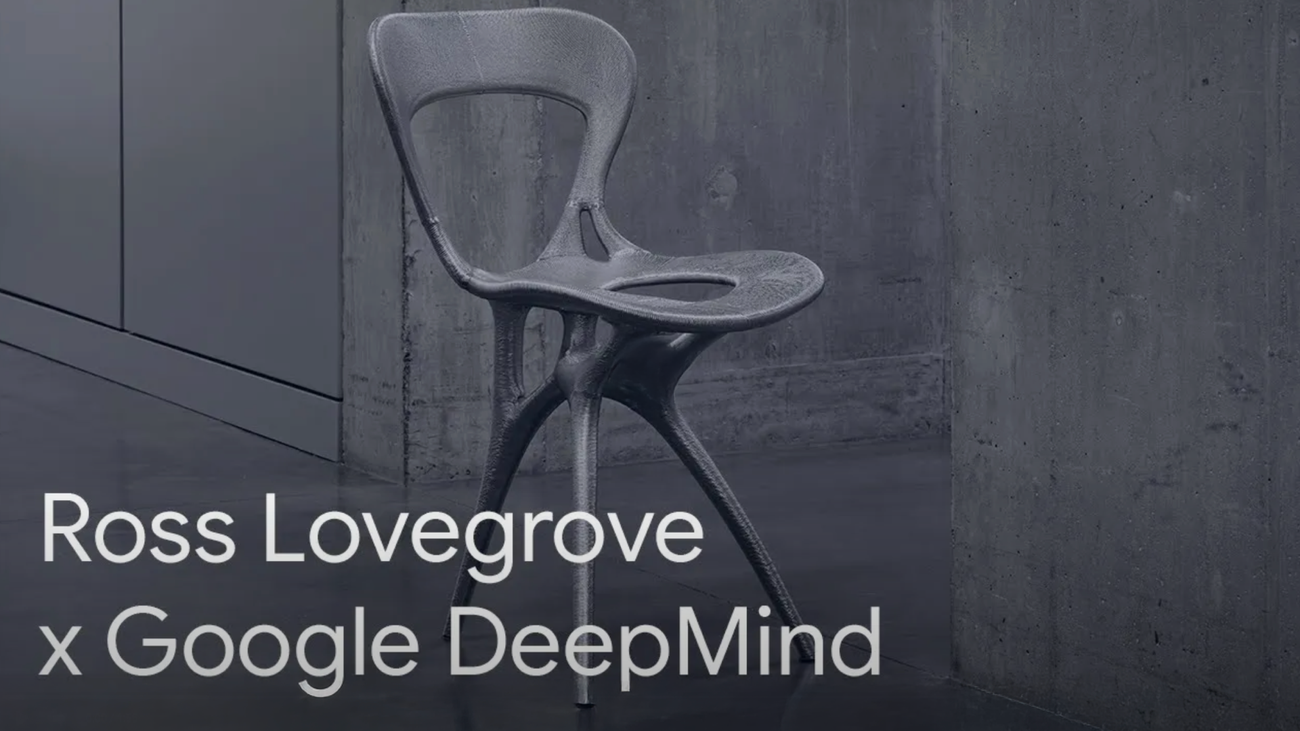
In a recent collaboration, a creative technology team joined forces with a renowned design studio to explore the intersection of art and artificial intelligence. The focus of this partnership was to utilize AI for expanding and transforming the design language of the studio’s founder, Ross Lovegrove. The project revolved around utilizing a text-to-image model named Imagen, which was fine-tuned using a curated dataset of Ross’ personal sketches. This initiative aimed to merge the distinctive elements of Ross’ design ethos, such as his unique curves, structural logic, and organic patterns, enabling the generation of innovative concepts that stay true to his artistic style.
From the inception of this project, the approach was centered on human-led inquiry, ensuring that the AI was not merely generating random designs but was being guided by a deep understanding of Ross’ design philosophy. The studio emphasized the need to integrate language with visual data, striving to decipher and articulate Ross’ design lexicon effectively. This process involved creating a specialized vocabulary that could accurately describe the studio’s work. The rationale was that well-structured prompts would yield more meaningful outputs from the AI model.
Throughout the collaboration, the Lovegrove Studio closely monitored how the AI model responded to specific terminologies, using these observations to guide the output toward desired design outcomes. This ongoing dialogue between the designer and the AI was a vital component of the process. The team paid meticulous attention to how the AI interpreted various words, using this feedback to fine-tune prompts and align the output more closely with the studio’s vision. For instance, they challenged the model to conceptualize a chair without directly using the word "chair," opting for creative synonyms instead. This approach encouraged the generation of diverse outputs and facilitated a richer exploration of form and function.
The Result: A Physical Prototype
The collaboration between the creative technology team and Lovegrove Studio culminated in the development of numerous concepts using the specialized AI model. To further enhance the creative exploration, they leveraged another tool named Gemini. This tool was instrumental in ideating on materials and visualizing the chair from various forms and viewpoints, pushing the boundaries of creativity and innovation.
The result of this synergistic effort was the creation of a physical prototype that not only embodied the unique design language of Ross Lovegrove but also demonstrated the potential of AI to augment human creativity. The prototype served as a testament to the successful integration of cutting-edge technology with artistic expression, showcasing how AI can be harnessed to expand the horizons of design without compromising the original artistic vision.
Understanding AI’s Role in Design
The integration of AI in design is a burgeoning field that holds immense potential. AI models like Imagen and tools such as Gemini represent a new frontier in creative exploration. By analyzing vast datasets, these technologies can identify patterns and generate novel ideas that might not be immediately apparent to human designers. However, it is crucial to understand that AI is a tool that augments human creativity rather than replacing it. The true value of AI in design lies in its ability to offer new perspectives and possibilities, which can be harnessed by skilled designers to push the boundaries of what is possible.
In this project, the emphasis was on maintaining a dialogue between the AI and the human designers. This approach ensured that the AI’s outputs were aligned with the artistic vision of the studio, demonstrating that AI can be a powerful collaborator in the creative process when guided by human insight and expertise.
The Future of AI in Creative Fields
As AI continues to evolve, its applications in creative fields are expected to expand. The successful collaboration between the creative technology team and Lovegrove Studio is an example of how AI can be integrated into the design process to produce innovative and groundbreaking results. This project underscores the importance of human oversight and guidance in leveraging AI’s capabilities, ensuring that the outputs are both meaningful and aligned with the intended artistic vision.
The potential of AI in creative fields extends beyond design, with applications in music, literature, and visual arts also being explored. As these technologies continue to develop, they will likely become indispensable tools for creators, offering new ways to express ideas and inspire innovation.
Conclusion
The collaboration between the creative technology team and Lovegrove Studio serves as a compelling example of how AI can be harnessed to augment human creativity in the design process. By integrating AI models like Imagen and tools such as Gemini, the team was able to explore new design possibilities while staying true to the unique artistic language of Ross Lovegrove. This project demonstrates the potential of AI to serve as a powerful collaborator in the creative process, offering new perspectives and possibilities that can enhance and expand the horizons of design.
As the field of AI continues to evolve, its applications in creative fields are set to grow, offering exciting new opportunities for artists and designers to push the boundaries of their craft. With the right guidance and oversight, AI has the potential to revolutionize the way we approach design, enabling the creation of innovative and groundbreaking works that inspire and captivate audiences around the world.
For more Information, Refer to this article.