




















—
Hello to all our readers,
It’s been an eventful few months since our initial development update, and while we’ve been deeply engrossed in the creation of our upcoming game, we haven’t forgotten to keep you in the loop with our progress. Today, we’re pulling back the curtain to offer you an insightful glimpse into the creative process behind our latest venture, featuring insights from some of the key figures on our development team who have been pivotal in shaping the game.
Crafting the “Judas Simulator”
Many might assume that our games begin with a story, but in truth, the inception of our projects often revolves around a central design element. For instance, in BioShock, it was the bond between the Big Daddy and Little Sister, and in BioShock Infinite, it was the introduction of the companion character, Elizabeth. For our latest project, "Judas," the focal point is a dynamic narrative. We challenged ourselves with the question: "How do we create a story that allows characters to respond in real-time to even the smallest choices made by the player?" The journey to solving this puzzle on a systemic level spanned several years, eventually shaping the narrative around our protagonist, Judas.
Drew Mitchell, our Lead Narrative Designer, shares: "Our ambition was to narrate stories that are less linear and more reactive to the player, unfolding in ways unprecedented in Ken’s previous games. This required characters with strong, conflicting objectives, each having a vested interest in the player’s actions. Starting from this framework, we invested substantial time in conceptualizing these characters, their conflicts, the setting that would force their paths to converge, and the systems underlying it all. For a considerable period, there wasn’t even a defined protagonist—just a blank slate, so to speak."
Over time, the story and the world began to crystallize into something tangible, prompting the need to define the player character. The principle in storytelling is to place your heroes in the last place they’d want to be. So, we pondered, what kind of individual would struggle to navigate these complex relationships and warring interests? This led to a pivotal moment where Ken, our Studio President & Creative Director, devised a monologue that set the entire narrative in motion.
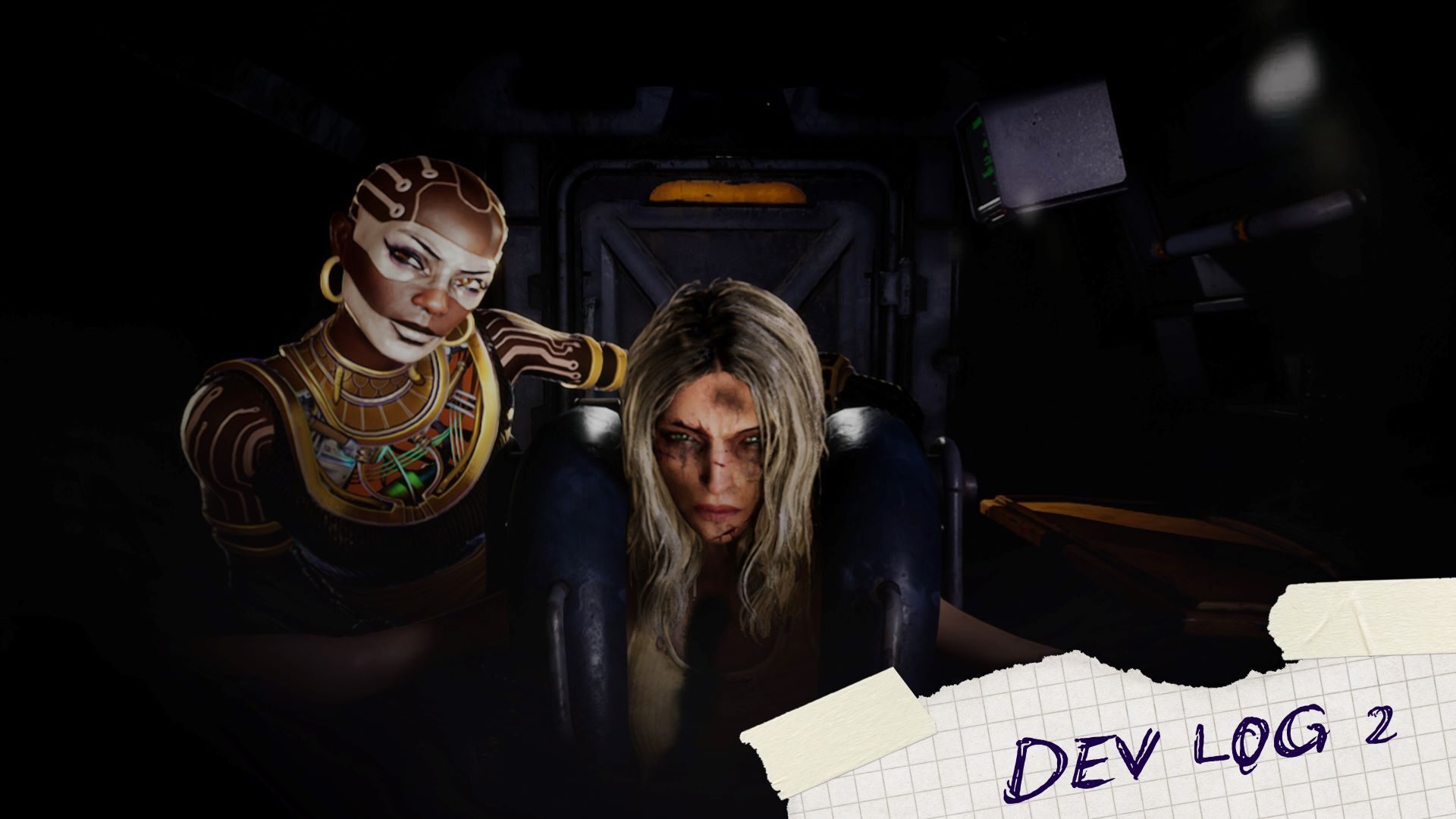
Ken Levine elaborates: "While out on a run, an idea struck me—a speech that would encapsulate the essence of the character we were trying to conceptualize. The monologue came to me as I was pushing through the third mile. I envisioned a character who prefers vending machines over restaurants due to the simplicity of the interaction. Unlike humans, vending machines don’t ask questions or engage in social niceties. This character, Judas, finds security in machines, understanding them in ways she cannot fathom human interactions."
This stream of consciousness became the cornerstone for both the character and the game itself. Judas, as she came to be known, possesses an intrinsic understanding of machines that she lacks with people, which is both her greatest asset and her fatal flaw. We placed her in a futuristic sci-fi setting—a colony ship brimming with robots—where someone with her skills holds immense power. However, this is also a world where individual success depends on adherence to societal rules, making her an outlaw, a pariah—a Judas.
Exploring the Mayflower
In bringing this world to life, our goal is to communicate its essence not only through lore but also visually. Crafting our colony ship setting presents a unique challenge, as it represents an older environment designed for player exploration. Unlike Rapture and Columbia, which were static since their inception, the Mayflower has evolved significantly over its decades-long voyage.
Nathan Phail-Liff, our Studio Art Director, explains: "Initially, the Mayflower was a practical, modular starship. Over time, due to conflicts between factions and differing ideals, it transformed into what it is now. We aim to convey this evolution through the environment. Just like a city with significant history, the Mayflower has layers of past buried beneath its surface. As a generational starship, we want this world to exude a sense of time, history, and credibility. It mirrors a civilization that has undergone eras of conflict and rebirth, with characters and architecture reflecting those layers."
The dynamic nature of the world isn’t limited to the narrative and characters. The environment itself mirrors this dynamism. We’ve developed a sophisticated system utilizing tagging and rulesets to populate the world with believable design elements.
Karen Segars, our Lead Artist, provides more insight: "We identify puzzle pieces and categories of content that form the Mayflower’s setting. For instance, living quarters aren’t uniform; they range from VIP Pilgrim Quarters to Violator Quarters. The design team collaborates with the art team to create materials and layouts for these spaces, ensuring they support the gameplay and narrative. The system understands the hierarchy of content, allowing it to assemble the environment in a way that supports storytelling."
In our previous games, this was a manual process, but to achieve the level of dynamism we desire, we’ve embraced the challenge of teaching the system to be both a storyteller and an interior decorator. This enables it to populate the world in authentic and engaging ways, introducing a level of interactivity not seen in our past projects.
Engaging with Our Audience
We’re eager to hear from you regarding what aspects of "Judas" and our development process you’d like to learn more about in future updates. Please feel free to reach out to us through our social media channels or email with your questions and feedback.
In conclusion, "Judas" represents a bold step forward in interactive storytelling, with a rich, dynamic narrative supported by an equally intricate world. As we continue to develop this project, we’re committed to keeping you informed and engaged with our progress. Stay tuned for more updates as we delve deeper into the creation of this exciting new adventure.
For further details and updates, you can follow our journey on our official website here.
For more Information, Refer to this article.