






















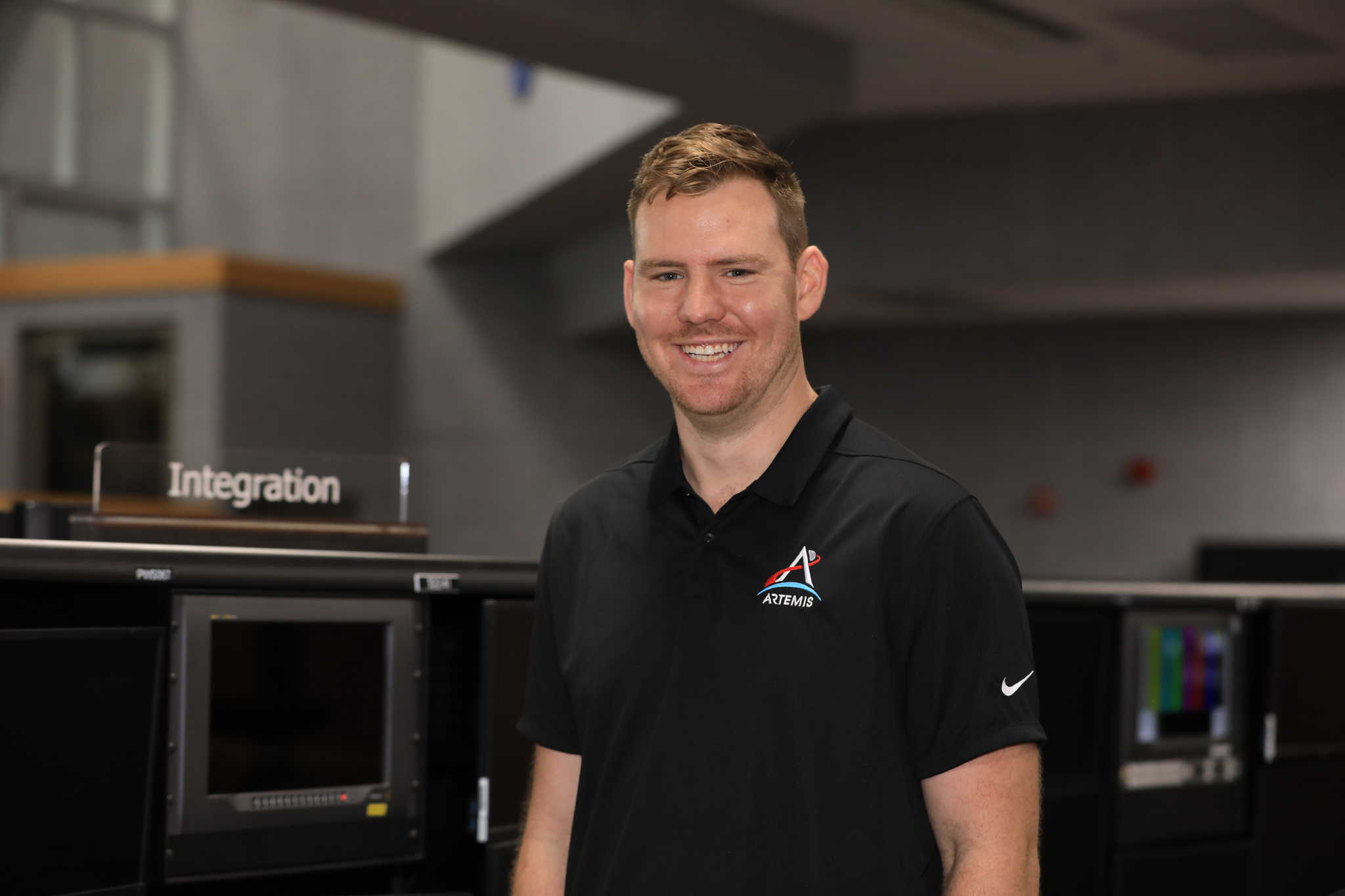
In the world of space exploration, every detail matters. As NASA gears up for a new era with the Artemis missions, the journey has been filled with challenges, learnings, and triumphs. One significant story from this journey involves Joe Pavicic, an operations project engineer who played a crucial role in the preparations for the Artemis I mission. This story not only highlights the technical challenges faced by NASA but also underscores the determination and ingenuity of the team involved.
Before the Artemis I mission successfully launched from NASA’s Kennedy Space Center in Florida in November 2022, there were several launch attempts that didn’t go as planned. Joe Pavicic, who hails from West Palm Beach and is an aerospace engineering graduate from Embry-Riddle Aeronautical University, was deeply involved in these preparations. As an operations project engineer, Pavicic was responsible for monitoring the engines console during the launch attempts.
During one of the earlier attempts to launch Artemis I, the team encountered a significant issue with one of the rocket’s engines, specifically engine three. Pavicic recalls the moment vividly, noting that a sensor was not detecting liquid hydrogen as expected. Instead, the sensor indicated that the engine was at ambient temperature, which was a clear sign that something was amiss. This issue was critical because it directly impacted the chilling process of the engines, a necessary step before the cryogenic liquid propellants could be used to fuel the Space Launch System (SLS) rocket and the Orion spacecraft.
The chilling process is crucial because it prevents damage to the engines when they come into contact with super-cooled liquid hydrogen, which is stored at a frigid -423 degrees Fahrenheit. Without this step, the hardware could become damaged, jeopardizing the entire mission.
Faced with this challenge, Pavicic and his team explored every possible solution. They tried various procedures, hoping to achieve the desired temperature readings that would indicate the engine was ready for launch. Despite their efforts, the team was unable to resolve the issue during that launch attempt. Pavicic describes this time as one filled with intense problem-solving, involving rewriting procedures and learning more about the engines and sensors involved in the launch.
After working through the night and revisiting their approach, the team eventually found a solution that led to a successful launch of Artemis I. This mission marked the beginning of NASA’s ambitious plan to return humans to the Moon and, eventually, to Mars. The success of Artemis I was a testament to the dedication and expertise of Pavicic and his team, who overcame numerous technical challenges to achieve their goal.
Now, with the success of Artemis I behind them, Pavicic continues to work as an operations project engineer. His focus is on preparing for the upcoming Artemis II mission, which will be the first crewed mission in the Artemis program. This mission aims to send four astronauts on a journey around the Moon and back, spanning 10 days. Pavicic and his team are currently developing new launch commit criteria and refining procedures to ensure a smooth countdown and launch for Artemis II.
The Artemis program, named after the twin sister of Apollo in Greek mythology, represents NASA’s commitment to advancing human exploration beyond Earth. By returning astronauts to the Moon and establishing a sustainable presence there, NASA aims to learn more about the lunar surface and use this knowledge as a stepping stone for future missions to Mars.
In addition to its technical achievements, the Artemis program is also focused on inspiring the next generation of scientists, engineers, and explorers. By involving a diverse team of experts and fostering a culture of innovation, NASA hopes to inspire young people around the world to pursue careers in science and technology.
The story of Joe Pavicic and the Artemis I mission is a powerful reminder of the challenges and triumphs that come with space exploration. It showcases the dedication, expertise, and resilience of the NASA team as they work towards their goal of exploring the cosmos. As the world eagerly anticipates the launch of Artemis II, lessons learned from the first mission will undoubtedly play a crucial role in ensuring its success.
For those interested in following the progress of the Artemis program and learning more about the people behind these incredible missions, NASA provides regular updates and insights on their official website. As we look to the future of space exploration, the Artemis missions serve as a beacon of innovation and discovery, paving the way for humanity’s next giant leap into the unknown.
For more Information, Refer to this article.