














![[Video] Samsung Color E-Paper: A Smarter Alternative to Traditional Posters](https://www.hawkdive.com/media/samsung-tvs-and-displays-samsung-color-e-paper-samsung-vxt-digital-signage_thumb932-218x150.jpg "Samsung introduces Color E-Paper as innovative poster alternative.")







NASA’s Lunar Trailblazer Mission: A Journey Cut Short
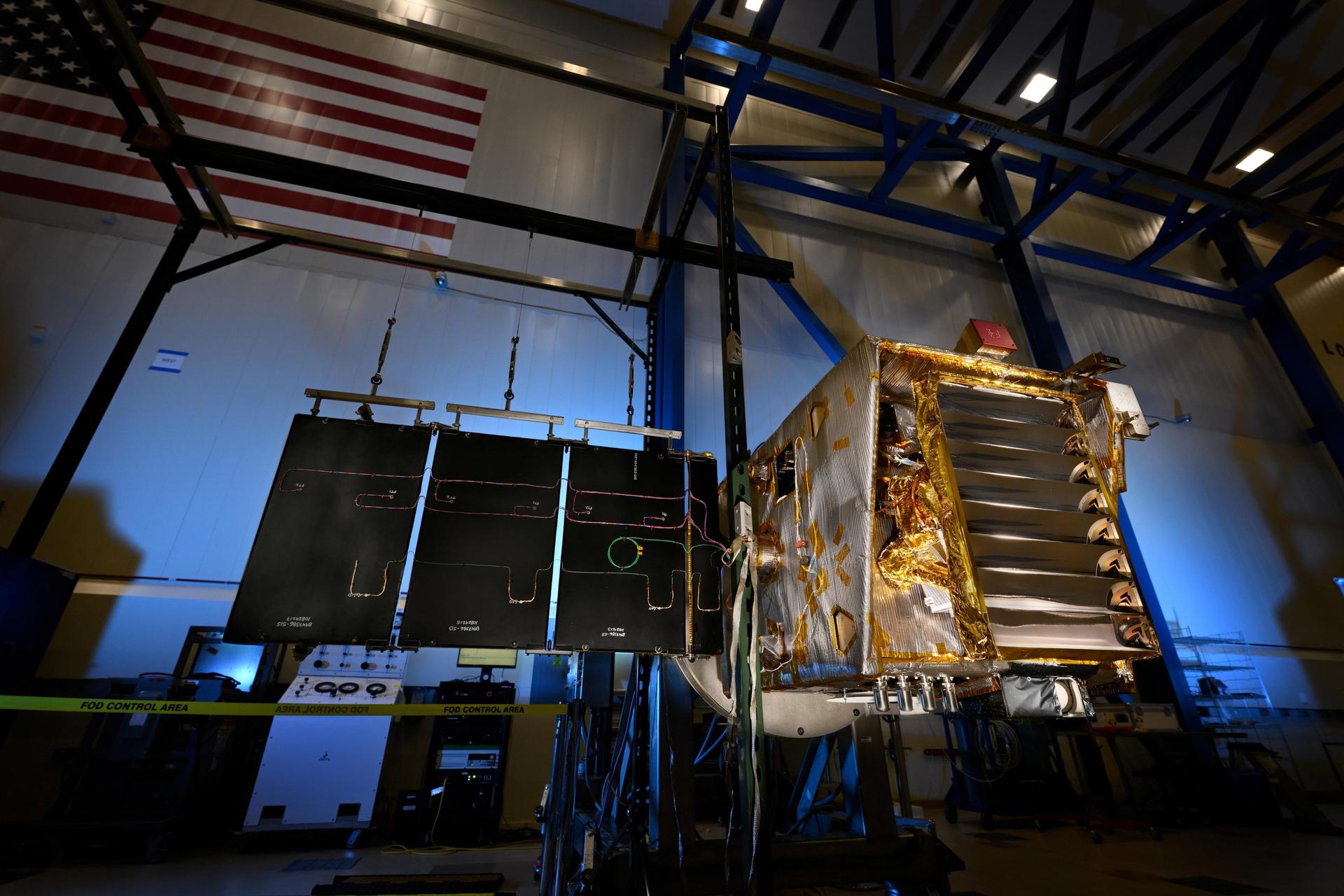
The ambitious Lunar Trailblazer mission, orchestrated by NASA, was designed to unlock the mysteries of lunar water. Unfortunately, this small satellite’s journey was abruptly halted when communication was lost just a day after its launch. Despite tireless efforts by the mission team, contact could not be reestablished, leading to the mission’s conclusion on July 31.
Originally, the Lunar Trailblazer was intended to create high-resolution maps of the Moon’s surface, focusing specifically on the distribution and state of water. These maps were expected to be crucial for future lunar exploration by both humans and robots. Moreover, they were anticipated to enhance our understanding of water cycles on airless celestial bodies across our solar system. This mission was not just a scientific endeavor but also a stepping stone for commercial interests looking to capitalize on lunar resources.
The Mission’s Launch and Initial Setback
The satellite embarked on its journey aboard the SpaceX Falcon 9 rocket, lifting off from NASA’s Kennedy Space Center in Florida on February 26. It shared this ride with the second Intuitive Machines robotic lunar lander mission, IM-2. Approximately 48 minutes post-launch, the Lunar Trailblazer successfully separated from the rocket, marking the beginning of its lunar voyage. Initial communications were established by mission controllers at Caltech’s IPAC in Pasadena. However, the excitement was short-lived as the next day, contact was lost.
This loss of communication posed a significant challenge. Without the ability to communicate, the team couldn’t diagnose the spacecraft’s issues or execute the necessary thruster operations to maintain its predetermined flight path toward the Moon.
The High-Risk Nature of Innovative Space Missions
Nicky Fox, Associate Administrator for the Science Mission Directorate at NASA, highlighted the mission’s high-risk, high-reward nature. The experience, albeit not as successful as hoped, provided valuable insights into reducing risks for future missions involving small satellites. Such missions are pivotal as NASA aims for a sustainable human presence on the Moon.
The limited data received before communication was severed indicated that the spacecraft’s solar panels were misaligned, preventing the batteries from charging and ultimately depleting them. For months, global collaborations attempted to regain contact by listening for the satellite’s signals and tracking its position. Despite these efforts, the satellite drifted farther into space, rendering its signals too weak for recovery.
The Instruments and Their Legacy
The Lunar Trailblazer was equipped with two key instruments. The High-resolution Volatiles and Minerals Moon Mapper (HVM3) was developed by NASA’s Jet Propulsion Laboratory (JPL) to detect and map water and mineral locations on the Moon. Meanwhile, the Lunar Thermal Mapper (LTM), developed by the University of Oxford and funded by the UK Space Agency, aimed to gather temperature data and study the composition of lunar rocks and soils.
Though the mission did not proceed as planned, the technologies and scientific methods developed, including the HVM3, will benefit future projects. The Ultra Compact Imaging Spectrometer for the Moon (UCIS-Moon), using a similar design, has been selected for a future mission, promising to deliver the highest spatial resolution data regarding lunar surface minerals and water.
The Role of SIMPLEx and Collaborations
Lunar Trailblazer was part of NASA’s SIMPLEx (Small Innovative Missions for Planetary Exploration) program. This initiative focuses on low-cost science spacecraft, offering them opportunities to join primary missions as ride-shares. By accepting higher risks, SIMPLEx missions aim to push the boundaries of innovative science and mission approaches.
The mission saw collaboration between various prominent institutions. Caltech, which manages JPL for NASA, led the scientific investigation and mission operations. JPL provided system engineering, mission assurance, and other crucial components, while Lockheed Martin Space contributed to the spacecraft integration and operations. The University of Oxford’s involvement, supported by the UK Space Agency, highlights the international collaboration that underpins many of NASA’s scientific endeavors.
Reflections on the Mission’s Outcome
Bethany Ehlmann, the mission’s principal investigator at Caltech, expressed disappointment over the mission’s premature end. However, she emphasized the world-class status of the scientific instruments and the team that developed them. The knowledge and technology honed during this mission will undoubtedly influence future planetary science projects, continuing the quest to understand the Moon’s water dynamics.
In conclusion, while the Lunar Trailblazer mission did not achieve its intended scientific goals, the lessons learned and technologies developed will continue to influence future lunar exploration. The mission serves as a testament to the challenges and unpredictabilities inherent in space exploration, as well as the resilience and determination of the scientific community to advance our understanding of the cosmos.
For more Information, Refer to this article.