






















Sentinel-6B: Revolutionizing Sea Surface Monitoring and Hurricane Forecasting
In a significant advancement for global oceanic and meteorological research, the Sentinel-6B satellite is poised to play a pivotal role in measuring sea surface height across the globe. This measurement is crucial for a variety of applications, including enhancing weather predictions and refining hurricane forecasts. As these formidable storms have the potential to cause extensive damage, costing billions of dollars annually in the United States alone, improving forecast accuracy is of paramount importance.
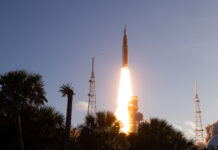
For decades, NASA has been at the forefront of monitoring Earth’s sea surface height. This vital information not only aids in understanding the changes in ocean conditions over time but also significantly contributes to predicting hurricane paths and intensities. Sentinel-6B, a joint venture between the U.S. and European space agencies, is set to be launched later this year, marking the continuation of this critical mission.
The Collaborative Effort Behind Sentinel-6B
The Sentinel-6B satellite is the second in the Sentinel-6/Jason-CS (Continuity of Service) mission, a collaborative project involving NASA, the European Space Agency (ESA), EUMETSAT (the European Organisation for the Exploitation of Meteorological Satellites), and the U.S. National Oceanic and Atmospheric Administration (NOAA). Scheduled to launch no earlier than November 16, 2025, Sentinel-6B will succeed its predecessor, Sentinel-6 Michael Freilich, which was launched in November 2020. This mission is part of a longstanding series of U.S.-European projects that have been monitoring sea levels since 1992.
According to Nadya Vinogradova Shiffer, the Sentinel-6 program scientist at NASA Headquarters in Washington, Sentinel-6 will provide valuable insights into Earth’s oceans by tracking changes in height, heat, and movement. This data is expected to enhance forecasts of local extreme weather events, such as hurricanes and floods, thereby linking global trends to tangible risks faced by communities.
The Importance of Sea Surface Height Data
The extensive dataset generated by the U.S.-European collaboration has been instrumental in advancing the accuracy of hurricane intensity forecasts. Hurricanes are fueled by warm water, and as water warms, it expands, causing the sea surface height to rise. By measuring sea surface height, scientists can determine which ocean regions have accumulated enough warmth to potentially intensify a hurricane.
Josh Willis, the project scientist for Sentinel-6B at NASA’s Jet Propulsion Laboratory in Southern California, explains that a deep layer of warm seawater is physically taller than a shallow layer. Therefore, sea surface height serves as a proxy for the amount of heat present in the ocean.
Enhancing Hurricane Forecast Models
Forecasters utilize sea level measurements in two primary ways, as outlined by Mark DeMaria, a senior research scientist at Colorado State University. Firstly, these measurements help set appropriate ocean conditions in hurricane forecast models used by the National Hurricane Center. Secondly, sea level data is integrated into machine learning models, which are used to predict whether a hurricane will undergo rapid intensification, characterized by a wind speed increase of 35 mph (56 kph) or more within 24 hours.
Meteorologists employ a combination of water temperature data from oceanic sensors and sea surface height information collected by satellites like Sentinel-6 Michael Freilich. This data is crucial for forecasting rapid intensification events, which occur when hurricanes pass over deep, warm pools of seawater. If the warm water is shallow, the hurricane’s winds can mix cooler water from below, inhibiting intensification. However, if the warm water extends deep into the ocean, the hurricane’s winds will churn up more warm water, potentially leading to rapid intensification.
Case Study: Hurricane Milton
Hurricane Milton serves as a compelling example of the importance of accurate sea level data in hurricane forecasting. DeMaria, who previously worked as a branch chief at the National Hurricane Center in Miami, helped develop models that successfully predicted Milton’s rapid intensification. From October 6 to October 7, 2024, Milton transformed from a Category 1 hurricane to a Category 5, with wind speeds reaching 180 mph (289 kph). By the time it made landfall near Sarasota, Florida, on October 9, it had weakened to a Category 3, yet it remained a major hurricane.
The Evolution of Satellite Data in Forecasting
While the U.S.-European series of sea level satellites began collecting data in 1992, it wasn’t until the early 2000s that meteorologists started incorporating satellite data into operational hurricane intensity forecasts used by the National Hurricane Center. Prior to this, forecasts relied on models and ocean surface temperature measurements, which were not always capable of detecting deep, warm seawater pools that could trigger rapid hurricane intensification.
Efforts to improve these forecasts received a significant boost in 2007 when the U.S. federal government launched a program aimed at advancing forecast techniques. This initiative has successfully transitioned research advancements, such as increased forecast reliability and accuracy, extended prediction lead times, and reduced uncertainty, into operational use.
Renato Molina, an economist at the University of Miami who has studied the economic impact of improved hurricane forecasts, emphasizes that accurate and timely predictions allow communities to prepare by securing properties and evacuating if necessary. The financial savings from such preparedness measures can amount to billions of dollars.
The Role of Satellite Data in Forecasting
While atmospheric and oceanic factors contribute to hurricane forecasts, the inclusion of sea level data from satellites like Sentinel-6 Michael Freilich and, soon, Sentinel-6B has been a critical addition. DeMaria notes that data from both oceanic sensors and satellites are essential, stating, "It would be impossible to do what we do without the satellites."
The Development and Contributions of Sentinel-6/Jason-CS
The Sentinel-6/Jason-CS mission was collaboratively developed by ESA, EUMETSAT, NASA, and NOAA, with financial support from the European Commission and technical assistance from France’s space agency CNES (Centre National d’Études Spatiales). NASA’s Jet Propulsion Laboratory (JPL), a division of Caltech in Pasadena, contributed three scientific instruments to each Sentinel-6 satellite: the Advanced Microwave Radiometer, the Global Navigation Satellite System – Radio Occultation, and the Laser Retroreflector Array. Additionally, NASA is responsible for providing launch services, ground systems to support the operation of NASA’s scientific instruments, and science data processors for two of these instruments, as well as supporting the U.S. members of the international Ocean Surface Topography Science Team.
For additional information about the Sentinel-6/Jason-CS mission, please visit: https://sealevel.jpl.nasa.gov/missions/jason-cs-sentinel-6.
The launch of Sentinel-6B represents a significant step forward in our ability to monitor and understand the world’s oceans, ultimately leading to more accurate and reliable hurricane forecasts. As this mission continues to provide valuable data, it promises to enhance our understanding of global oceanic trends and their impact on local weather patterns, thereby better preparing communities worldwide for the challenges posed by extreme weather events.
For more Information, Refer to this article.