





















The Waxing Gibbous Moon Captured from the International Space Station
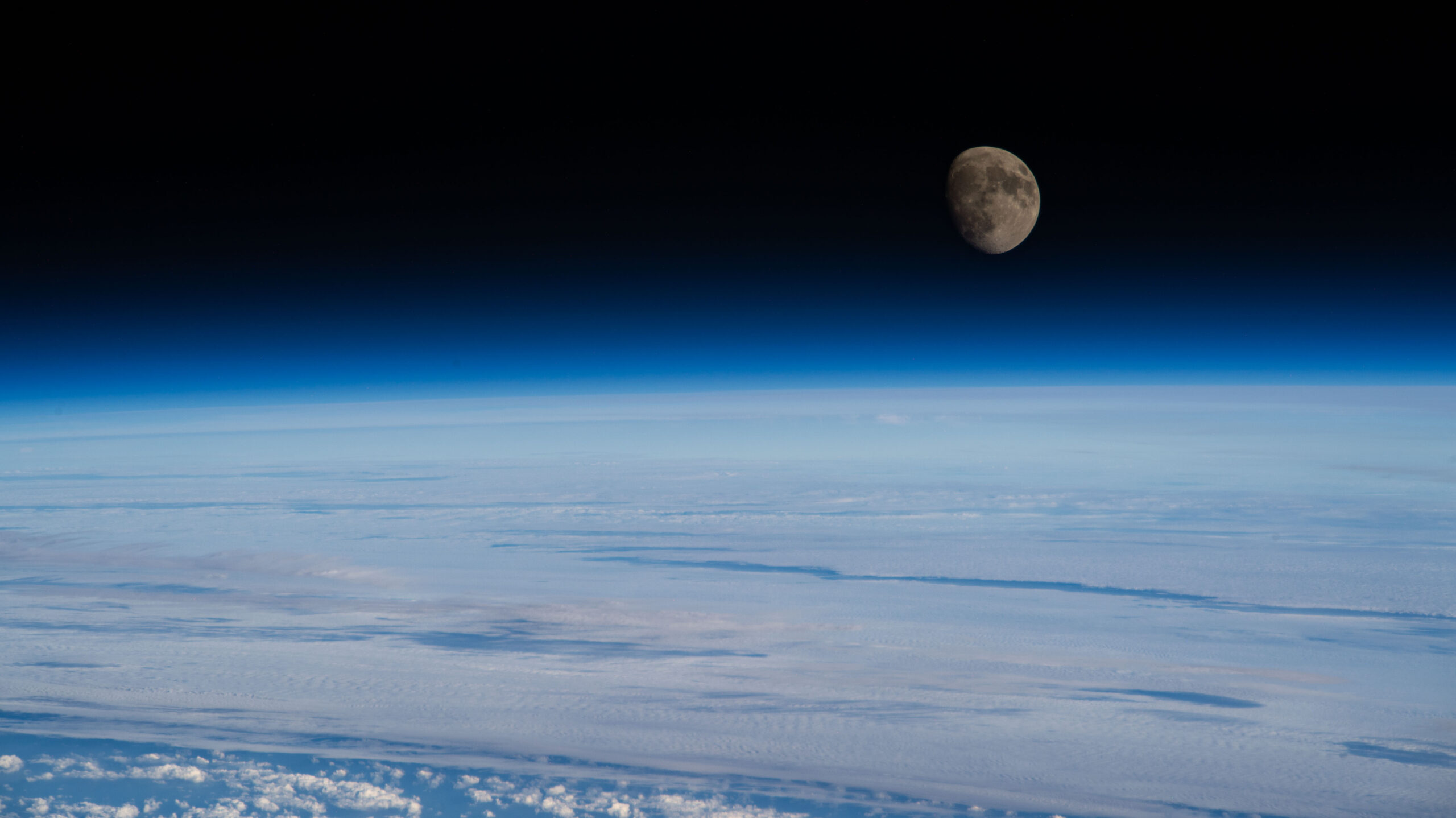
In a remarkable celestial event, the waxing gibbous moon was photographed from the International Space Station (ISS) on October 3, 2025. This stunning image was taken as the station orbited 263 miles above the Earth, specifically over the cloudy Atlantic Ocean near the coast of Quebec, Canada. The photograph beautifully captures the moon’s glowing presence against the backdrop of Earth’s blue atmosphere, offering a unique perspective from outer space.
Understanding Moon Phases and Their Significance
To fully appreciate the beauty and significance of this event, it’s essential to understand the phases of the moon. In our solar system, the Sun is the only celestial body that emits its own light. This solar light is crucial as it illuminates both Earth and the Moon. The light from the Sun always comes from one direction, which means only half of the Moon and Earth are lit at any given time. The portion of the Moon that reflects the Sun’s light is what we see from Earth, known as moonlight.
The moon goes through different phases based on its position relative to Earth and the Sun. These phases include new moon, waxing crescent, first quarter, waxing gibbous, full moon, waning gibbous, last quarter, and waning crescent. The waxing gibbous phase, as captured in the photograph, occurs just before the moon becomes full. During this phase, more than half of the Moon’s face is illuminated, but it is not yet completely full.
The Science Behind Moonlight
Moonlight is not generated by the Moon itself. Instead, it is sunlight reflecting off the Moon’s surface. The amount of moonlight we see changes throughout the month due to the Moon’s orbit around Earth. As the Moon travels, the angle at which sunlight hits it varies, causing different portions of the Moon to be visible from Earth. This variability is what creates the different phases of the Moon.
Observing the Waxing Gibbous Moon
The waxing gibbous phase is a particularly interesting time to observe the Moon. During this phase, the Moon appears more than half bright but is not yet a complete circle. For those interested in astronomy or simply enjoying celestial sights, this phase provides a great opportunity to see the Moon’s surface features more clearly. Craters, mountains, and valleys become more pronounced as shadows highlight the lunar landscape.
The Role of the International Space Station
The International Space Station serves as a unique platform for observing and photographing celestial events such as the waxing gibbous moon. Orbiting the Earth at an average altitude of 263 miles, the ISS provides a vantage point that is free from atmospheric distortions that can affect ground-based observations. This allows for clearer and more detailed images of space phenomena.
The Importance of Lunar Observations
Studying the Moon and its phases is not just about appreciating its beauty. It plays a crucial role in understanding the dynamics of our solar system. Observations of the Moon can provide insights into its surface composition, geological history, and even the conditions of early Earth. The Moon’s gravitational pull also affects Earth’s tides, making it an important factor in oceanic and environmental studies.
How to Observe the Moon from Earth
For those interested in observing the waxing gibbous moon from Earth, no specialized equipment is necessary. The Moon is bright enough to be seen with the naked eye. However, using binoculars or a small telescope can enhance the viewing experience, revealing more details of the lunar surface. Observing the Moon during different phases can provide a deeper understanding of its changing appearance and the science behind these changes.
Conclusion
The photograph of the waxing gibbous moon taken from the International Space Station is a testament to the beauty and complexity of our natural world. It serves as a reminder of the intricate dance between celestial bodies and the light that connects them. As we continue to explore and study the Moon, we gain not only scientific knowledge but also a greater appreciation for the universe we inhabit.
For more detailed information about the Moon and its phases, one can visit NASA’s official website and explore their extensive resources on lunar science.
For more Information, Refer to this article.