





















NASA’s TRACERS Mission: A New Chapter in Understanding Earth’s Magnetic Shield
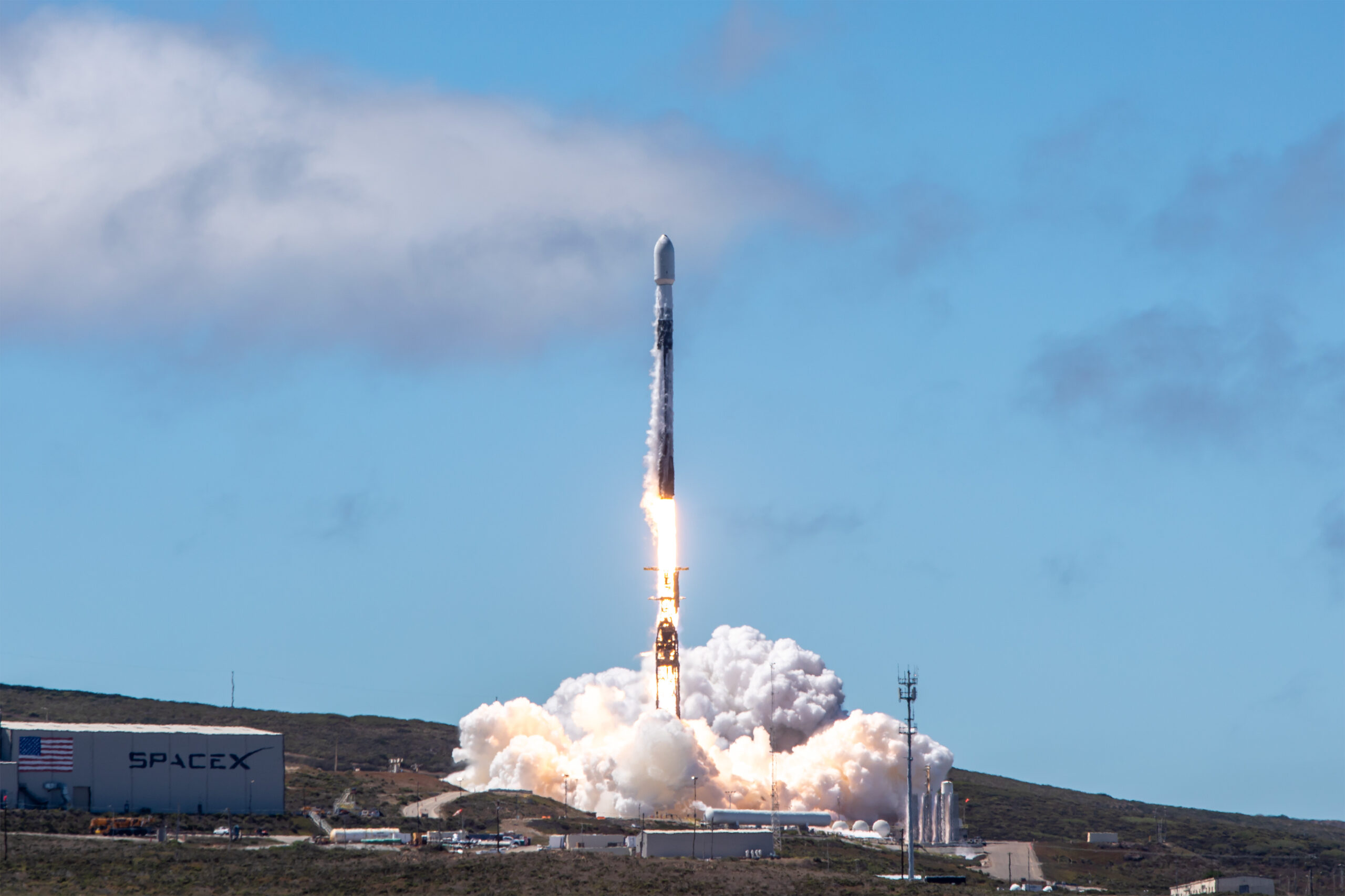
NASA has embarked on an exciting new mission aimed at unraveling the mysteries of Earth’s magnetic shield and its interaction with space weather. This mission, known as TRACERS, which stands for Tandem Reconnection and Cusp Electrodynamics Reconnaissance Satellites, involves two closely linked satellites that were launched aboard a SpaceX Falcon 9 rocket. The launch took place from Space Launch Complex 4 East at Vandenberg Space Force Base in California at 11:13 a.m. PDT (2:13 p.m. EDT).
Sean Duffy, acting NASA Administrator, expressed his enthusiasm for the mission, emphasizing its potential to enhance America’s leadership in space science research and technology. He noted that TRACERS would play a crucial role in decoding space weather phenomena and advancing our understanding of the dynamic relationship between Earth and the Sun. Such insights are anticipated to be invaluable in supporting future endeavors, such as lunar exploration and missions to Mars.
The twin TRACERS satellites are designed to travel in tandem, maintaining a close distance of about 10 seconds apart as they traverse the same locations. Over the course of one year, they are expected to take an unprecedented 3,000 measurements to create a detailed timeline of how magnetic reconnection transforms over time.
Alongside TRACERS, the Falcon 9 rocket carried three additional NASA missions: Athena EPIC (Economical Payload Integration Cost), PExT (Polylingual Experimental Terminal), and REAL (Relativistic Electron Atmospheric Loss). These small satellites aim to test new technologies and gather scientific data, marking a successful deployment. Mission controllers are currently working to establish contact with these satellites, a process expected to take several hours to days.
The TRACERS mission achieved a significant milestone when ground controllers established communication with the second spacecraft at 3:43 p.m. PDT (6:43 p.m. EDT), roughly three hours after its separation from the rocket. In the coming four weeks, the mission will enter a commissioning phase during which the spacecraft’s systems and instruments will undergo rigorous checks. Once this phase is complete, the satellites will embark on a 12-month primary mission to study magnetic reconnection, a process that significantly influences the impact of solar activity and space weather on Earth.
Joe Westlake, the heliophysics division director at NASA Headquarters in Washington, highlighted the importance of the TRACERS mission in providing a deeper understanding of the effects of our Sun on Earth. By adding TRACERS to NASA’s fleet of heliophysics missions, scientists hope to gain valuable insights into the impacts of solar phenomena on our planet.
The TRACERS satellites will orbit through a specific region in Earth’s magnetic field, known as the polar cusp, located near the North Pole. This region is of particular interest because it is where the Sun’s magnetic field, carried by the solar wind, interacts with Earth’s magnetic field. This interaction can lead to explosive magnetic reconnection events where magnetic field lines break and reconfigure, releasing energy and accelerating particles. By flying through the polar cusp, TRACERS aims to study these magnetic explosions and measure the charged particles that descend into Earth’s atmosphere, providing valuable data on how solar wind changes affect energy and particle dynamics in near-Earth space.
David Miles, the TRACERS principal investigator at the University of Iowa, commended the successful launch, attributing it to years of dedicated work by a talented team. The mission is expected to revolutionize our understanding of Earth’s magnetosphere and the dynamic processes driving space weather.
Small Satellites on Board
Apart from the primary mission, the Athena EPIC, PExT, and REAL missions are noteworthy for their innovative approaches and goals:
- Athena EPIC: This mission is a pathfinder for utilizing a flexible commercial SmallSat architecture to enhance payload design flexibility, reduce launch schedules, and cut overall mission costs. Once commissioned, Athena EPIC will spend a year measuring outgoing longwave radiation from Earth, aiding in climate and environmental studies.
- PExT: This mission aims to test interoperability between commercial and government communication networks. By demonstrating a wideband polylingual terminal in low Earth orbit, PExT will explore how software-defined radios can switch between different networks, much like cell phones do on Earth. This ability could be crucial for future missions to utilize commercial services more efficiently.
- REAL: This CubeSat mission focuses on studying energetic electrons in the Van Allen radiation belts, high-energy zones above Earth’s equator. Understanding the behavior of these particles is critical, as they can pose risks to spacecraft and astronauts. REAL’s findings may lead to improved protective measures for future space missions.
The TRACERS mission is led by David Miles at the University of Iowa, with support from the Southwest Research Institute in San Antonio, Texas. Management of the mission falls under NASA’s Heliophysics Explorers Program Office at the Goddard Space Flight Center in Maryland. The University of Iowa, Southwest Research Institute, University of California, Los Angeles, and the University of California, Berkeley, are responsible for leading the instrumentation on TRACERS.
The Athena EPIC mission is spearheaded by NASA’s Langley Research Center in Virginia, in collaboration with the National Oceanic and Atmospheric Administration, U.S. Space Force, and NovaWurks. The launch integrator SEOPS supported Athena EPIC’s launch. Meanwhile, the PExT demonstration is managed by NASA’s SCaN program in partnership with Johns Hopkins Applied Physics Laboratory, with York Space Systems providing launch support. The REAL project is led by Dartmouth College in New Hampshire, in collaboration with Johns Hopkins Applied Physics Laboratory, Montana State University, and Boston University. Sponsored by NASA’s Heliophysics Division and CubeSat Launch Initiative, it was launched with the help of Maverick Space Systems.
NASA’s Launch Services Program, based at Kennedy Space Center in Florida, oversees the VADR (Venture-class Acquisition of Dedicated and Rideshare) contract, facilitating the launch of these missions.
For those interested in more details about the TRACERS mission, further information can be found on NASA’s official website at nasa.gov/tracers.
This mission represents a significant step forward in our understanding of Earth’s magnetic environment and its interaction with solar phenomena, providing crucial data that will inform future space exploration and potentially help safeguard our planet from the adverse effects of space weather.
For more Information, Refer to this article.