



















Artemis II Mission Achieves Milestone with Lunar Flyby
The Artemis II mission, a key step in NASA’s ambitious plan to return humans to the Moon, successfully completed its lunar flyby on April 6, 2026. This historic event showcased a stunning alignment of the Earth and Moon, captured from deep space by the crew aboard the Orion spacecraft. The mission not only highlights NASA’s advancements in space exploration but also sets the stage for future lunar missions.
Visuals from Deep Space
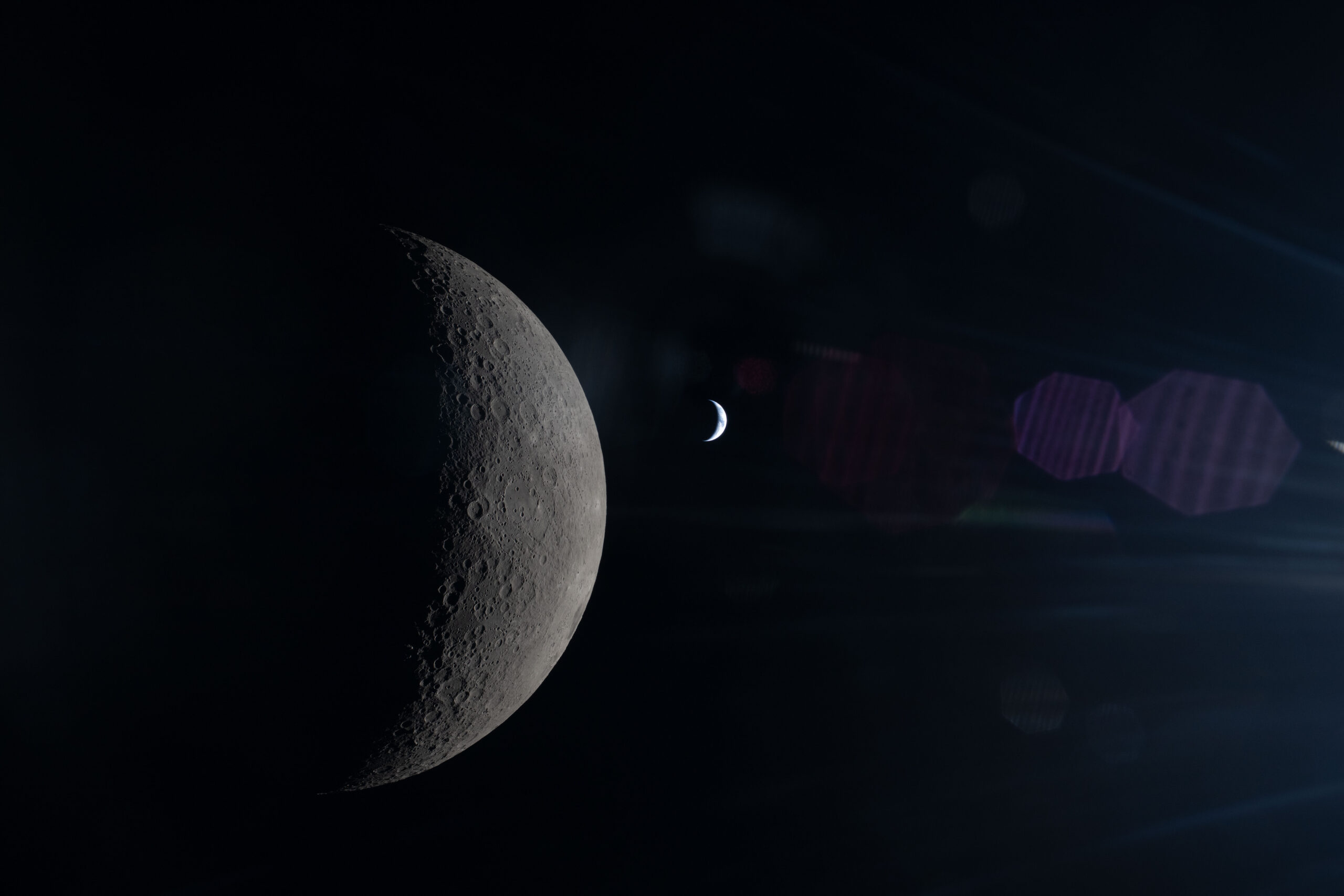
During the lunar flyby, the Orion spacecraft provided breathtaking imagery of both the Moon and Earth. The photographs revealed a partially illuminated Moon in sharp detail, positioned prominently in the foreground, while Earth appeared smaller and softly lit in the background. This visual representation underscores the intricate geometry of the Sun-Earth-Moon system as viewed from deep space.
The images also featured a subtle reflection within the spacecraft window, adding depth to the scene. This unique perspective illustrates not only the beauty of celestial bodies but also emphasizes humanity’s ongoing exploration of outer space.
Meet the Crew
The Artemis II mission is manned by a diverse crew of four astronauts: Reid Wiseman, Christina Koch, Victor Glover, and Jeremy Hansen from the Canadian Space Agency (CSA). Each astronaut brings a wealth of experience and expertise to this groundbreaking mission. Their journey marks an important milestone in NASA’s Artemis program, which aims to establish a sustainable human presence on the Moon and eventually facilitate missions to Mars.
The crew is expected to return to Earth following their successful flyby, with a splashdown planned for approximately 8:07 p.m. EDT in the Pacific Ocean. This return marks not only a significant achievement for NASA but also serves as an opportunity for scientists and engineers to analyze data collected during their journey.
Significance of Artemis II
The Artemis II mission serves multiple purposes beyond its immediate objectives. It acts as a precursor for future lunar landings and provides critical data necessary for developing technologies that will support sustained human exploration on other celestial bodies. The mission also aims to test life-support systems and validate operational procedures that will be essential for upcoming missions.
As part of NASA’s broader goals, Artemis II lays foundational work for establishing a lunar base camp and developing capabilities that will enable human exploration of Mars. By testing these systems in real-world conditions, NASA can refine its approach and ensure safety for future astronauts venturing beyond low Earth orbit.
What This Means
The successful lunar flyby of Artemis II represents a pivotal moment in space exploration history. It not only demonstrates technological advancements but also rekindles public interest in human spaceflight. As NASA prepares for its next steps toward establishing a sustainable presence on the Moon, this mission reinforces humanity’s commitment to exploring new frontiers and expanding our understanding of space.
The implications extend beyond national pride; they encompass international collaboration in space exploration efforts. With contributions from various countries like Canada through CSA, Artemis II exemplifies how global partnerships can enhance scientific research and foster innovation in aerospace technology.
For more information, read the original report here.





![[Interview] Scenes of Memory and Modern Life: Sun Yitian x Samsung Art Store](https://www.hawkdive.com/media/samsung-tvs-and-displays-samsung-art-tv-samsung-art-store-art-basel-hong-king-sun-yitian-interview_t-218x150.jpeg "Sun Yitian Collaborates with Samsung Art Store on Memory and Modern Life")