











![[Interview] Inside Spatial Signage: How Samsung Brought Glasses-Free 3D Displays to Life](https://www.hawkdive.com/media/samsung-tvs-and-displays-spatial-signage-interview_thumb932-218x150.jpg "Samsung’s Glasses-Free 3D Displays: The Inside Story [Interview]")






NASA and NOAA Join Forces to Launch New Space Weather Observation Missions
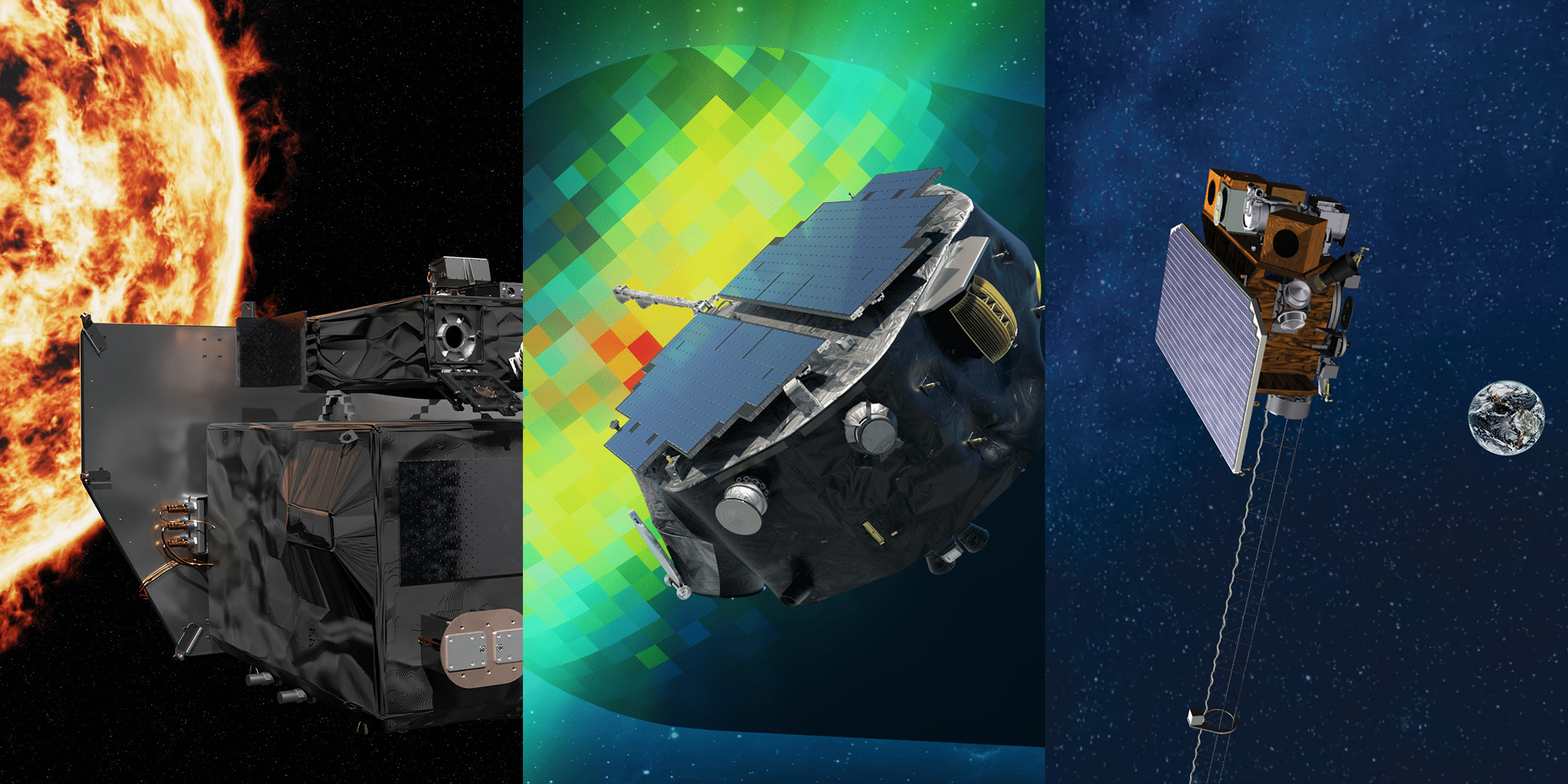
NASA is gearing up to launch an innovative observatory designed to study space weather and map the boundaries of our solar system. This mission, known as the Interstellar Mapping and Acceleration Probe (IMAP), will be accompanied by two additional missions riding along: NASA’s Carruthers Geocorona Observatory and the National Oceanic and Atmospheric Administration’s (NOAA) Space Weather Follow On-Lagrange 1 (SWFO-L1). These missions aim to enhance our understanding of space weather and its impacts on Earth and throughout the solar system.
Scheduled for launch aboard a SpaceX Falcon 9 rocket, the liftoff is set for 7:32 a.m. EDT on Tuesday, September 23, from Launch Complex 39A at NASA’s Kennedy Space Center in Florida. Coverage of this historic event will begin at 6:40 a.m. and will be available on NASA+, Amazon Prime, and other platforms. Interested viewers can learn how to access NASA’s content through various media channels and social media platforms.
Understanding the IMAP Mission
The IMAP spacecraft is designed to study the interaction between the Sun’s energy and particles and the heliosphere, which is a vast protective bubble surrounding our solar system. This mission will provide valuable insights into space weather, cosmic radiation, and the effects these phenomena have on Earth as well as human and robotic explorers in space. Positioned approximately one million miles from Earth, the spacecraft and its rideshares will be located at Lagrange Point 1, a spot in space that offers a stable orbit between the Earth and the Sun.
Carruthers Geocorona Observatory: Continuing a Legacy
The Carruthers Geocorona Observatory, one of the rideshare missions, will focus on observing Earth’s exosphere, the outermost layer of its atmosphere. This small satellite will capture images of the faint ultraviolet light emitted by the geocorona, providing insights into how space weather affects our planet. This mission builds upon the legacy of measurements first taken during the Apollo 16 mission, thereby continuing the exploration and understanding of our planet’s atmospheric boundaries.
SWFO-L1: A Beacon for Space Weather Alerts
NOAA’s SWFO-L1 spacecraft is set to monitor space weather and detect solar storms, serving as an early warning system for potentially disruptive space weather events. This observatory is the first of its kind, specifically designed and dedicated to continuous, operational space weather observations. By providing advance warnings of solar storms, the SWFO-L1 aims to safeguard Earth’s critical infrastructure and industries that rely heavily on technology.
Media Coverage and Expert Commentary
Although media accreditation for in-person coverage of this launch has passed, NASA has made provisions for comprehensive media coverage through its online platforms. NASA’s media credentialing policy is available for those interested in future events, and inquiries can be directed to the specified email addresses.
NASA’s mission coverage will include several key events leading up to the launch:
- Sunday, September 21: A NASA Prelaunch News Conference will be held at 2:30 p.m. to discuss the new space weather missions. Key figures such as Nicky Fox, Brad Williams, and other experts will provide insights into the mission objectives and expected outcomes.
- Monday, September 22: Media will have the opportunity for one-on-one interviews with key mission personnel, allowing for deeper exploration into the mission details and scientific goals.
- Tuesday, September 23: Launch coverage will commence at 6:40 a.m., with the launch scheduled for 7:32 a.m. Additionally, audio-only coverage will be available for those interested in following the event without commentary.
Public Engagement and Virtual Participation
NASA encourages public engagement through various social media platforms. Members of the public can attend the launch virtually by registering online, providing them with access to curated launch resources, notifications about related events, and a virtual guest passport stamp after the launch.
Social media users are invited to engage with the mission by following and tagging NASA’s accounts on platforms such as X, Facebook, and Instagram. This virtual engagement allows people worldwide to participate in this significant scientific endeavor.
Conclusion
The launch of the IMAP mission and its accompanying rideshare missions marks a significant step forward in our understanding of space weather and its effects on Earth and beyond. With the combined efforts of NASA and NOAA, these missions are set to provide crucial data that will enhance our ability to predict and mitigate the impacts of space weather on our planet. As we continue to explore the boundaries of our solar system, these missions underscore the importance of international collaboration and technological innovation in advancing human knowledge and protecting our technological infrastructure. For more information and updates, visit NASA’s official website at NASA.gov.
For more Information, Refer to this article.