




















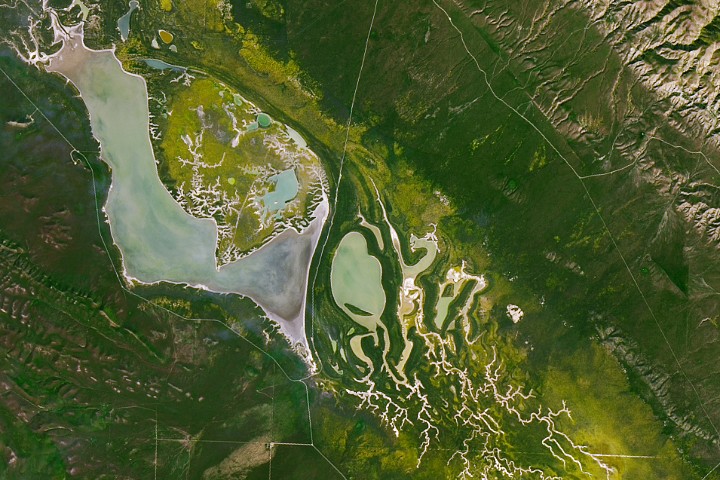
In spring 2026, California’s Carrizo Plain and the surrounding mountain ranges were adorned with vibrant colors as wildflowers came into full bloom. While some may debate whether this qualifies as a “superbloom,” there’s no denying the spectacular display of nature’s beauty in the region.
The signs of this colorful spectacle began to emerge in February, as Landsat satellites captured images of the landscape transforming. By early March, areas around Soda Lake were already painted in bright shades of yellow, with the blooms spreading further by mid-month. The Carrizo Plain National Monument was particularly vibrant, with meadows along the San Andreas Fault adorned with splashes of purple from the blooms of Phacelia ciliata.
The winter of 2025-2026 brought beneficial rain and variable conditions that created ideal growing conditions for wildflowers. Soaking rains in November and December saturated the soil, with rainfall totals nearly double the usual levels. NASA data showed that soil moisture remained well above average in February, setting the stage for a spectacular wildflower display in the spring.
The early rains were crucial for kick-starting the wildflowers, as many seeds require a minimum amount of rain to germinate. The warm, dry periods that followed also played a role in supporting the growth of the blooms. Once established, wildflowers thrive with intermittent rainfall rather than constant soaking, allowing for a diverse and colorful display across the landscape.
Reports from the Wild Flower Hotline highlighted the emergence of hillside daisies, California goldfields, and forked fiddlenecks in the Temblor Range in March. The burn-off of grass thatch in the Caliente Range from the Madre fire in July 2025 further enhanced the wildflower display in that area.
Experts on the ground noted that the common goldfield, also known as the needle goldfield, was responsible for the expansive yellow blooms near Soda Lake. These plants, though small individually, grow close together in disturbed areas and bloom simultaneously, creating vast carpets of yellow across the landscape.
Bryce King, a lead field botanist for the California Native Plant Society, described the Lasthenia blooms as part of the “seemingly unending stretches of color” that covered the valley bottom. The synchronicity of blooms on the valley floor and surrounding hills during his visit in March exceeded his expectations, showcasing the beauty and diversity of the region’s wildflowers.
NASA scientists are actively studying wildflower blooms using remote sensing technology to develop tools for tracking blooms over large areas. These tools have the potential to support farmers, beekeepers, and resource managers by providing valuable insights into the blooming dynamics of flowering plants and crops.
Yoseline Angel, a scientist at NASA’s Goddard Space Flight Center, described the wildflower display in Carrizo Plain as a superbloom, emphasizing the stunning beauty of the flowers from the ground. She and her colleague, Andres Baresch, were in the field taking spectral measurements of the blooming wildflowers while Landsat captured images from space, demonstrating the integration of ground observations with satellite data to monitor blooms on a global scale.
Overall, the 2026 wildflower bloom in California’s Carrizo Plain was a sight to behold, showcasing the beauty and resilience of nature in full bloom. As scientists continue to study and monitor these blooms, we gain a deeper understanding of the intricate ecological processes that drive these spectacular displays of color in the natural world.
For more Information, Refer to this article.