

















Celebrating the Successful Launch of NISAR
On a recent Earth planning date, July 30, 2025, the scientific community celebrated a major milestone—the successful launch of the NISAR Earth observation satellite. This satellite, a collaborative endeavor between NASA, the Jet Propulsion Laboratory (JPL), and the Indian Space Research Organization (ISRO), has now entered its intended orbit, marking a significant achievement in Earth observation technology. The NISAR mission promises to enhance our understanding of Earth’s surface dynamics, providing critical data on phenomena such as earthquakes, landslides, and ice-sheet movements. For those interested in the mission’s objectives and progress, the NISAR mission hub offers comprehensive information.
While our research primarily focuses on Mars, we recognize the importance of Earth observation initiatives like NISAR. These missions not only foster international collaboration but also provide valuable insights into our home planet, which, like Mars, is a subject of scientific curiosity and study. We extend our congratulations to our colleagues at NASA, JPL, and ISRO for this remarkable achievement.
Curiosity Rover’s Winter Challenges on Mars
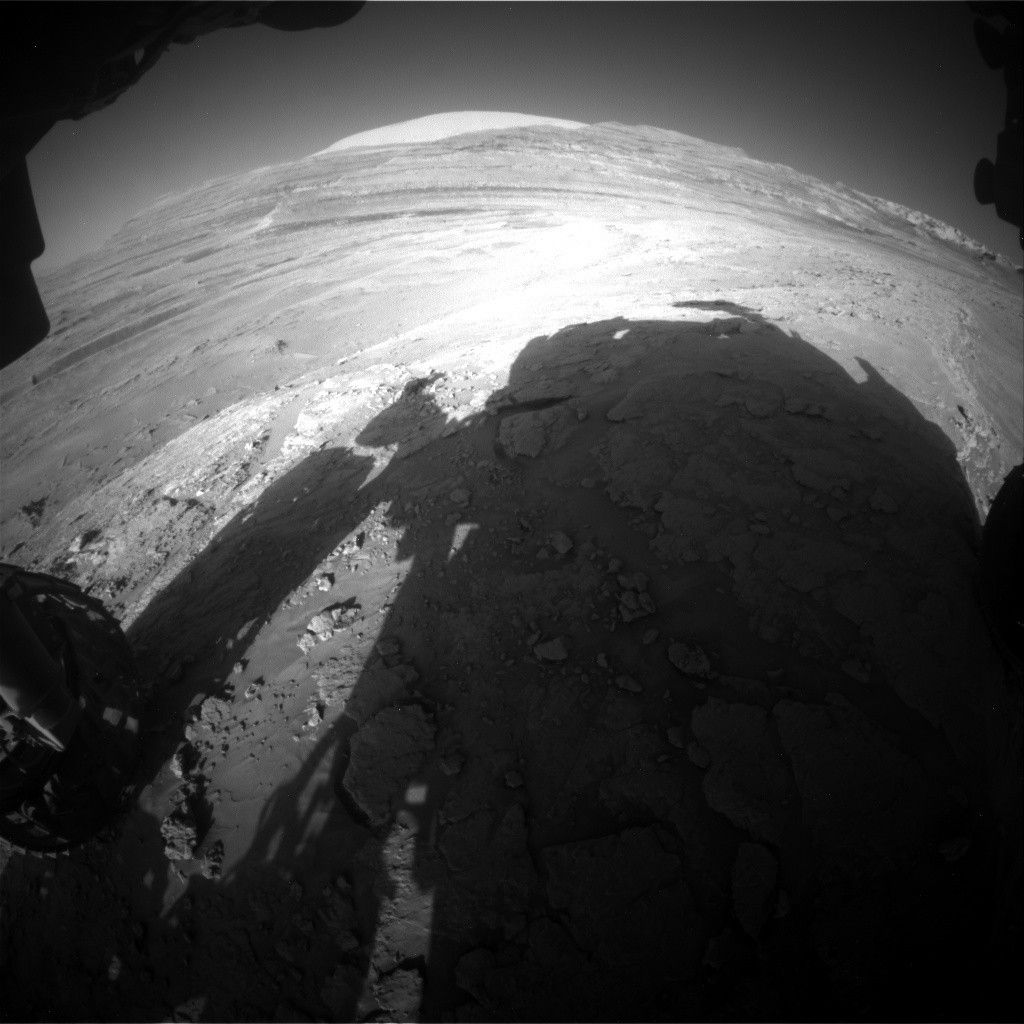
Meanwhile, on Mars, the Curiosity Rover team is navigating the challenges of the Martian winter. This season necessitates increased power consumption to heat the rover, impacting the planning and execution of scientific activities. Currently, Curiosity is stationed atop a prominent ridge, affectionately dubbed the “autobahn.” Contrary to its smooth terrestrial counterpart, this Martian ridge presents a rugged landscape, requiring our rover drivers to chart a careful path. This involved a strategic detour into a flatter area before reascending the ridge to secure a safe vantage point.
From this elevated position, Curiosity enjoys panoramic views, offering an ideal opportunity to survey the surrounding terrain, characterized by hollows and ridges. The rover’s location also provides a vantage point for observing the majestic Mount Sharp in the distance, inspiring the next phase of scientific exploration.
Investigating Martian Ridge-Forming Materials
Our current scientific plan involves a series of investigations aimed at unraveling the mysteries of the ridge-forming materials. The team has deployed several instruments, including the Alpha Particle X-ray Spectrometer (APXS), the Mars Hand Lens Imager (MAHLI), and the Chemistry and Camera complex (ChemCam), to study a target known as “El Salto.” This target may hold clues to the geological processes that shaped the ridge’s central line. By examining subtle variations in color and texture, we hope to uncover corresponding chemical differences.
Beyond chemistry, the Mast Camera (Mastcam) is busy capturing detailed images of a small mound and its surrounding context, particularly the veins and hollows at the target “Llullaillaco.” Another target, “Cementerio De Tortugas,” will focus on documenting sand ripples within a trough area. This imaging work aims to provide a broader context for today’s observations, including the intriguing ridge intersection at “Villa Abecia.”
Mastcam is also tasked with documenting the ChemCam target “El Salto” and an Autonomous Exploration for Gathering Increased Science (AEGIS) target from the previous plan. Meanwhile, ChemCam employs its imaging capabilities to provide finer details of the sedimentary structures at “Llullaillaco,” enriching our understanding of the Martian geology.
Atmospheric and Environmental Monitoring
Atmospheric observations remain a top priority during this period. Curiosity continues its diligent monitoring of the Martian atmosphere, scanning for dust devils and studying cloud formations in conjunction with the Colour and Stereo Surface Imaging System (CASSIS) aboard the European Space Agency’s Trace Gas Orbiter. This collaborative effort enhances our understanding of Martian weather patterns and atmospheric dynamics.
Additionally, the rover maintains its vigilance by recording wind and temperature data throughout the mission plan. The Dynamic Albedo of Neutrons (DAN) instrument plays a crucial role, assessing the water content in rocks beneath the rover. This data is vital for understanding the planet’s hydrological history and potential for past life.
Exploring Martian Hollows
Once the current round of observations is complete, Curiosity will descend from the ridge to explore the hollows below. These features present an intriguing geological puzzle—why do some materials remain elevated while others erode away? By analyzing the chemical composition of these differing materials, we hope to gain insights into the processes shaping the Martian landscape.
For those interested in visualizing these features, a recent navigation camera mosaic offers a detailed view of the ridges and troughs Curiosity is exploring. This resource provides a valuable reference for understanding the terrain and planning future explorations.
In conclusion, both the NISAR satellite launch and the ongoing Martian exploration underscore the collaborative spirit and scientific rigor driving our quest to understand both Earth and Mars. As we celebrate these achievements, we remain committed to advancing our knowledge of the cosmos, one mission at a time.
For more Information, Refer to this article.