


















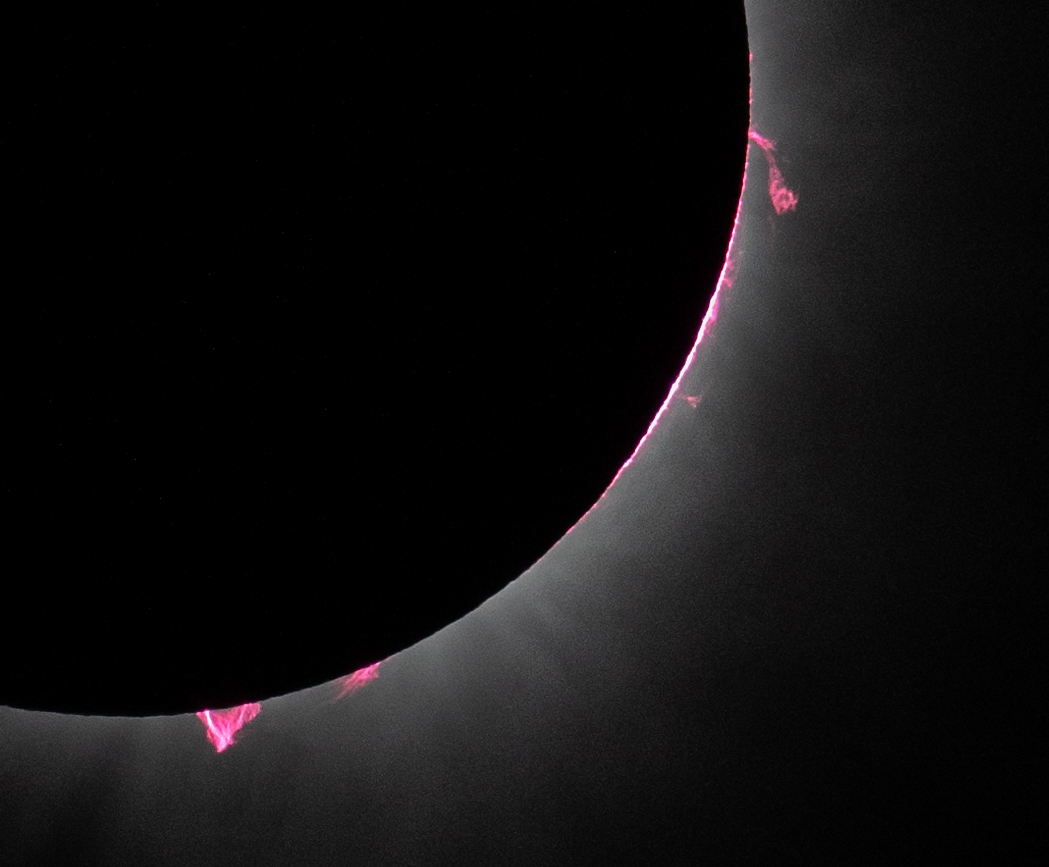
NASA’s Remarkable Achievement: Emmy Award for Solar Eclipse Broadcast
In an impressive feat, NASA has been honored with an Emmy Award for its exceptional live broadcast of the total solar eclipse on April 8, 2024. This prestigious award, recognizing Excellence in Production Technology, was announced during the 76th Technology & Engineering Emmy Awards held on December 4 in New York City. The accolade was accepted by Walt Lindblom and Sami Aziz, who played pivotal roles in the broadcast, with Lindblom serving as the coordinating producer and Aziz as the executive producer.
The total solar eclipse of 2024 was a monumental event, capturing the imagination and wonder of viewers across the globe. Will Boyington, associate administrator for the Office of Communications at NASA Headquarters in Washington, expressed his congratulations to the dedicated production team. He emphasized the significance of sharing this celestial marvel, underscoring the relentless efforts and dedication required to bring such an awe-inspiring spectacle to a global audience.
NASA’s live coverage of this celestial phenomenon was no ordinary undertaking. It was hailed as the most intricate live project the agency had ever embarked upon. The broadcast garnered nearly 40 million views, both live and in replay formats, across NASA’s diverse distribution channels, including its free streaming service, NASA+. This overwhelming success extended beyond national borders, with the main broadcast being featured on 568 channels in 25 countries, amounting to 2,208 media hits.
Nicky Fox, associate administrator for science at NASA Headquarters, lauded the production team’s efforts in capturing every moment of this natural wonder. She highlighted the unique opportunity Earthlings have to witness such a breathtaking science show, thanks to our planet’s position in the solar system. The broadcast provided audiences with an extraordinary view of the Sun’s corona, a rare sight that left viewers in awe.
The coverage of the eclipse spanned three hours, showcasing the celestial event across seven American states and two countries. With 11 hosts and correspondents offering live commentary, interviews, and on-the-ground coverage, the broadcast ensured an engaging experience for viewers. The event was celebrated with watch parties in nine different locations, from the Austin Public Library to the bustling Times Square in New York City.
To enhance the viewing experience, NASA incorporated live feeds from astronauts aboard the International Space Station and the high-altitude research aircraft WB-57. These vantage points provided a unique perspective on the solar event, enriching the broadcast with unparalleled views. To achieve this remarkable feat, NASA deployed an impressive array of technology, including 67 cameras, six NASA Wide Area Network control rooms, 38 encoders, and 35 decoders. The team also coordinated 20 live telescope feeds from 12 locations along the path of totality.
The Emmy Award for Excellence in Production Technology was not the only accolade NASA received for its eclipse broadcast. Earlier that year, the agency had already secured another Emmy at the 46th Annual News & Documentary Emmy Awards for Outstanding Live News Special. Moreover, the broadcast earned a nomination for Outstanding Show Open or Title Sequence – News. These recognitions were further complemented by two Webby Awards and two Webby People’s Voice Awards, acknowledging NASA’s stellar communication and broadcast efforts.
The success of NASA’s eclipse broadcast is a testament to the agency’s commitment to advancing our understanding of the solar system and sharing its marvels with the world. This achievement not only highlights the technical prowess and dedication of the NASA team but also underscores the agency’s mission to bring the wonders of space to audiences everywhere.
As we reflect on this remarkable achievement, it’s worth considering the broader implications of such broadcasts. They serve as a reminder of the importance of science communication in fostering public interest and understanding of astronomical phenomena. By making complex scientific events accessible to the general public, NASA inspires curiosity and encourages the pursuit of knowledge in the fields of science, technology, engineering, and mathematics (STEM).
For those interested in experiencing the 2024 total solar eclipse through NASA’s lens, the agency has made the broadcast available on its website and streaming platforms. This provides an opportunity for viewers to relive the awe-inspiring moments and appreciate the meticulous planning and execution that went into capturing this celestial event.
In conclusion, NASA’s Emmy Award-winning broadcast of the 2024 total solar eclipse stands as a shining example of excellence in production technology and science communication. It serves as a testament to the agency’s unwavering dedication to sharing the wonders of the universe with the world, inspiring generations to explore, discover, and understand the cosmos. For more detailed information, you can visit NASA’s official website.
(For further insights, visit NASA)
For more Information, Refer to this article.





![[Video] Samsung Color E-Paper: A Smarter Alternative to Traditional Posters](https://www.hawkdive.com/media/samsung-tvs-and-displays-samsung-color-e-paper-samsung-vxt-digital-signage_thumb932-218x150.jpg "Samsung introduces Color E-Paper as innovative poster alternative.")