









NASA’s Artemis II Crew Returns After Historic Lunar Mission
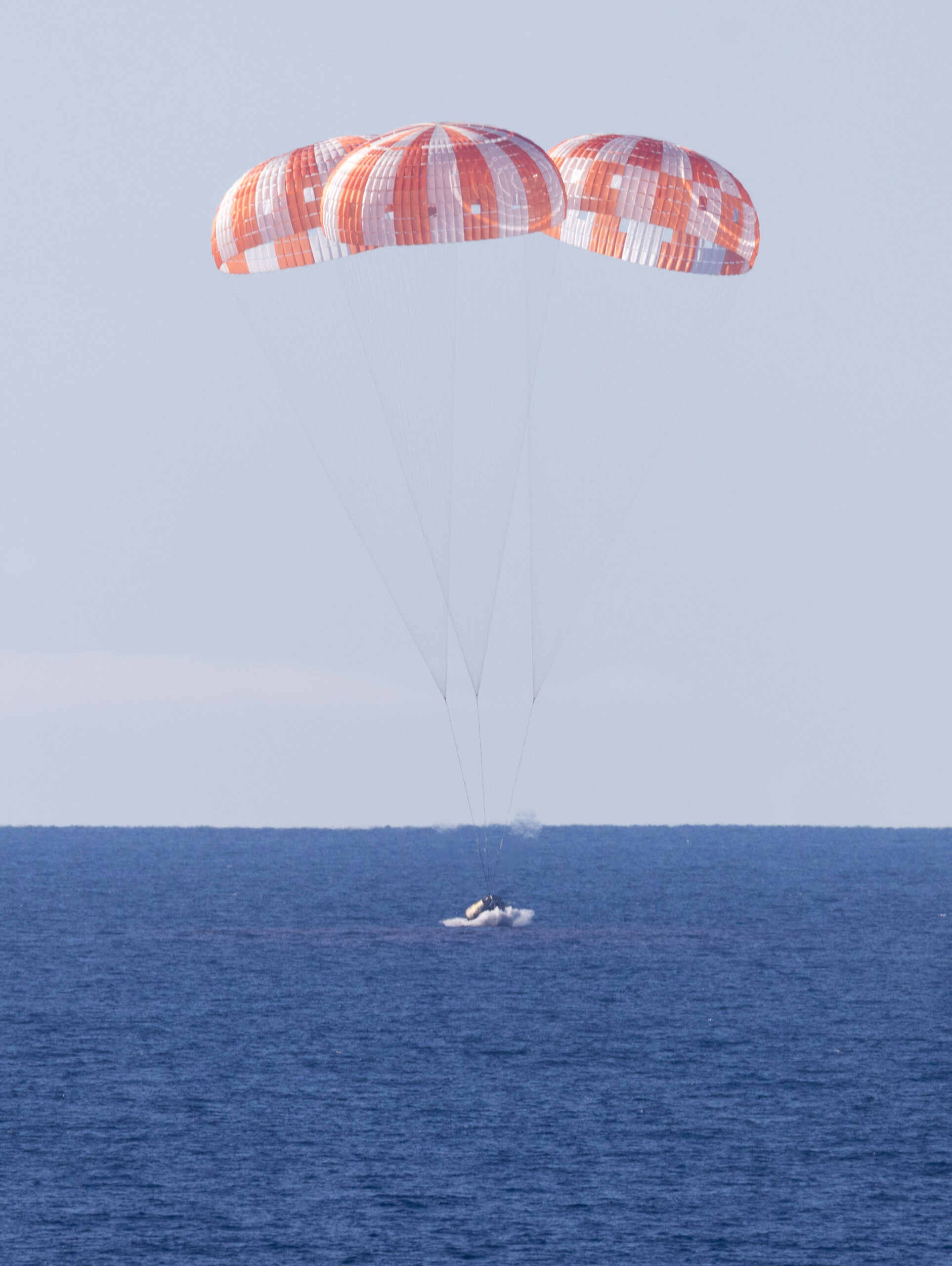
The Artemis II mission has concluded with the successful return of its crew, marking the first time astronauts have traveled to the Moon in over 50 years. The NASA team, consisting of Reid Wiseman, Victor Glover, Christina Koch, and Canadian Space Agency astronaut Jeremy Hansen, splashed down off the coast of San Diego at 5:07 PM PDT on Friday after a nearly ten-day journey that took them to a record distance of 406,771 kilometers (252,756 miles) from Earth.
A Historic Journey
The Artemis II mission was a significant milestone in space exploration, demonstrating advanced capabilities and testing critical systems aboard the Orion spacecraft. NASA Administrator Jared Isaacman praised the crew’s bravery and dedication during a post-mission statement. He acknowledged the contributions of various stakeholders, including former President Donald Trump and Congress, who supported the mission’s funding and goals. “Artemis II has validated the vehicle and international collaboration necessary to return humanity to the lunar surface,” he stated.
After their splashdown in the Pacific Ocean, the astronauts were greeted by a combined team from NASA and the U.S. military. They were safely extracted from Orion and flown by helicopter to the USS John P. Murtha for initial medical evaluations. The crew is expected to return to NASA’s Johnson Space Center in Houston on Saturday.
Record-Breaking Distances
During their mission, Wiseman, Glover, Koch, and Hansen traveled a total of 1,117,659 kilometers (694,481 miles), surpassing previous records set by Apollo 13 astronauts in 1970. The Artemis II crew launched aboard NASA’s Space Launch System (SLS) rocket at 6:35 PM on April 1 from Launch Complex 39B at Kennedy Space Center in Florida. With nearly four million kilograms (8.8 million pounds) of thrust at liftoff, SLS propelled Orion into orbit with remarkable precision.
On their first day in space, the crew inspected Orion—nicknamed “Integrity”—to ensure all systems were functioning correctly before making their trajectory toward the Moon. Additionally, four CubeSats were deployed into Earth orbit as part of international collaboration efforts.
Testing Systems for Future Missions
On day two of their flight test, with all systems operational (“Go” in astronaut jargon), Orion’s service module ignited its main engine to place the spacecraft on a trajectory that brought it within 6,545 kilometers (4,067 miles) of the lunar surface during its closest approach.
Amit Kshatriya, NASA’s associate administrator for Artemis missions, emphasized that all reentry and landing systems performed as designed during this historic flight. “This moment belongs to thousands of people from fourteen different countries who built this vehicle,” he remarked. The mission not only tested Orion’s life support systems but also provided data for future rendezvous operations with crewed lunar landers planned for Artemis III and beyond.
Scientific Contributions and Future Exploration
The Artemis II crew also engaged in scientific research aimed at preparing astronauts for long-term habitation on the Moon as part of NASA’s broader goals of establishing a lunar base and eventually sending humans to Mars. Their experiments included AVATAR—studying how human tissue responds to microgravity—and other health-related studies crucial for long-duration missions.
Throughout their lunar flyby on April 6, they captured over 7,000 images showcasing stunning views of the Moon’s surface and even an eclipse where the Moon obscured the Sun from Orion’s vantage point. These images included breathtaking shots of Earthrise and various lunar features such as impact craters and ancient lava flows.
Looking Ahead: Artemis III and Beyond
The successful completion of Artemis II sets a solid foundation for future lunar exploration missions. With plans already underway for Artemis III next year—where a new crew will test integrated operations with commercial lunar landers—the focus shifts toward more ambitious exploration goals. NASA aims not only to establish a sustainable human presence on the Moon but also to prepare for eventual manned missions to Mars.
What This Means
The successful return of the Artemis II crew signifies a pivotal moment in space exploration history. It reaffirms humanity’s commitment to returning to the Moon while laying essential groundwork for future missions beyond our planet. As NASA prepares for subsequent Artemis missions, advancements made during this flight will guide efforts toward establishing human habitation on celestial bodies—a crucial step toward exploring Mars and beyond.
For more information, read the original report here.