






















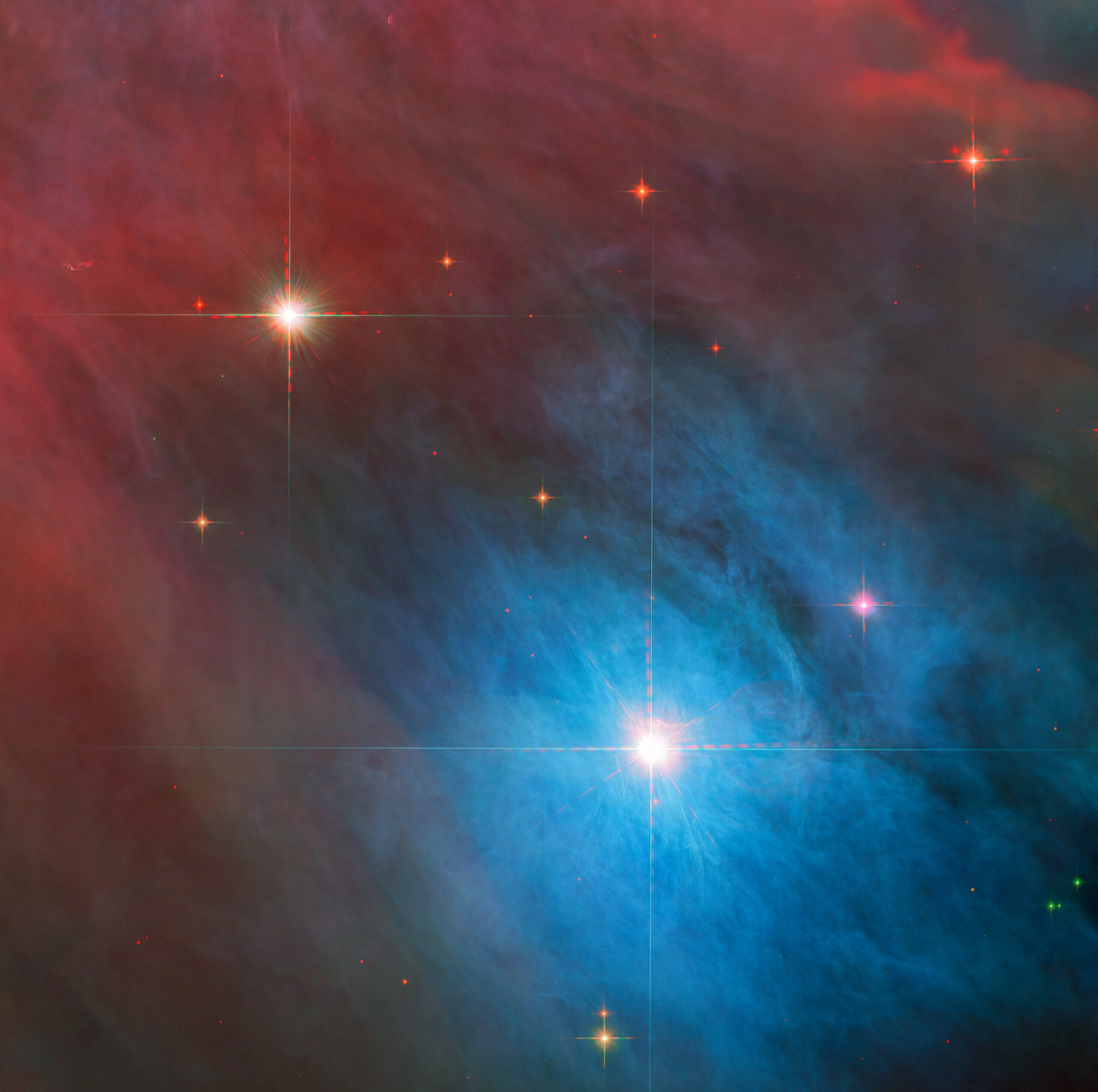
Unveiling the Cosmos: Hubble Space Telescope Captures V 372 Orionis in Orion Nebula
In a remarkable celestial event, the Hubble Space Telescope, a joint venture by NASA and the European Space Agency (ESA), has captured an awe-inspiring image of a bright variable star, V 372 Orionis, along with its companion. This mesmerizing snapshot was released on January 27, 2023, and showcases the stellar duo nestled within the Orion Nebula, a vast region known for star formation located approximately 1,450 light-years away from Earth.
The Fascinating World of V 372 Orionis
V 372 Orionis is a distinctive kind of variable star, classified as an Orion Variable. These stars are known for their youthful and tumultuous behavior, which manifests as erratic changes in brightness. This variability in luminosity is of significant interest to astronomers, as it offers insight into the dynamic processes occurring within young stars. Orion Variables are typically found amidst diffuse nebulae, and V 372 Orionis is no exception. The intricate mix of gas and dust that constitutes the Orion Nebula creates a stunning backdrop for this celestial drama.
Understanding Orion Variables
Orion Variables are a subset of young stars that exhibit significant fluctuations in brightness. This variability is often linked to the stars’ developmental stages, as they undergo changes in size, temperature, and luminosity. These stars are usually embedded within nebulae, where the surrounding gas and dust can further influence their appearance. The Orion Nebula, home to V 372 Orionis, is a prime example of such an environment. This region is rich in the raw materials necessary for star formation, making it a hotbed of stellar birth and evolution.
The Orion Nebula: A Stellar Nursery
The Orion Nebula is one of the most studied and photographed regions in the night sky. It serves as a stellar nursery, where new stars are born from the dense clouds of gas and dust. This nebula is part of the larger Orion Molecular Cloud Complex, a vast star-forming region that extends across hundreds of light-years. The nebula’s proximity to Earth and its relative brightness make it an ideal target for telescopic observations. Within this nebula, stars of various sizes and stages of development can be found, offering astronomers a unique opportunity to study the life cycle of stars.
Hubble’s Legacy and Its Ongoing Contributions
The Hubble Space Telescope has been a cornerstone of astronomical research since its launch in 1990. Over the years, it has provided stunning images and invaluable data that have revolutionized our understanding of the universe. Hubble’s ability to capture high-resolution images across various wavelengths allows scientists to observe celestial objects in unprecedented detail. This latest capture of V 372 Orionis and its companion continues Hubble’s legacy of contributing to our knowledge of star formation and the dynamic processes at play in the cosmos.
The Importance of Observing Variable Stars
Studying variable stars like V 372 Orionis is crucial for understanding the complex processes that govern stellar evolution. These stars offer a unique glimpse into the early stages of a star’s life, providing clues about the mechanisms driving their growth and development. By observing the changes in brightness and other characteristics of these stars, astronomers can piece together the intricate dance of forces that shape their evolution.
Reflections on the Image
The image captured by Hubble is not just a scientific milestone but also a work of art. The vibrant colors and intricate patterns created by the interplay of light and shadow within the Orion Nebula evoke a sense of wonder and curiosity about the universe. It serves as a reminder of the beauty and complexity of the cosmos and the endless possibilities that lie beyond our planet.
Conclusion: A Celestial Masterpiece
The Hubble Space Telescope’s latest image of V 372 Orionis and its companion within the Orion Nebula is a testament to the power of modern astronomy. It highlights the ongoing quest to explore and understand the universe, shedding light on the processes that shape the stars and galaxies around us. As we continue to gaze into the night sky, images like these inspire us to dream, explore, and seek answers to the mysteries of the cosmos.
For more information and to view the dazzling image, you can visit the official ESA website.
For more Information, Refer to this article.