





























Unveiling the Mysteries of the “Lost Galaxy” with the Hubble Space Telescope
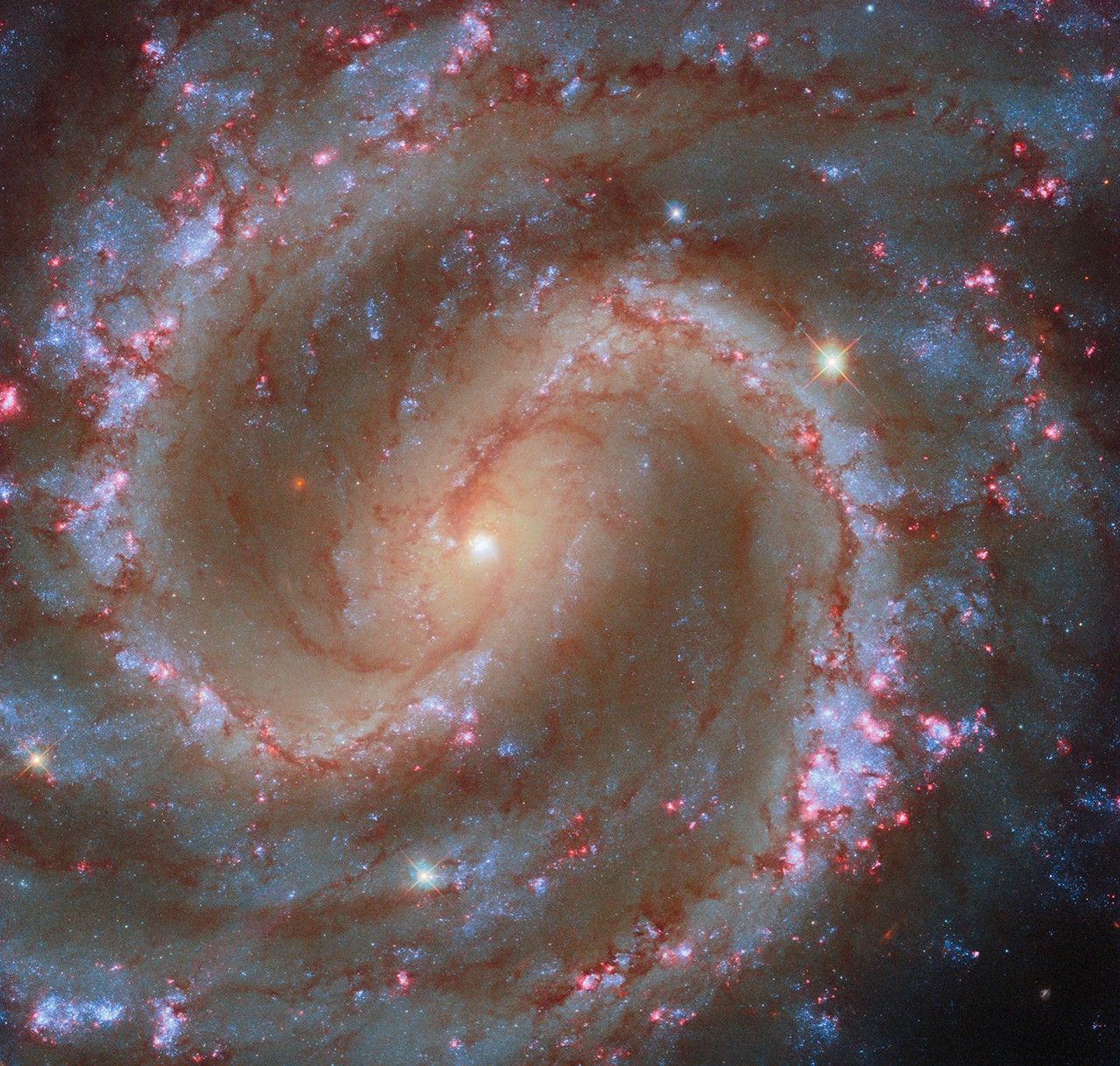
The Hubble Space Telescope, a joint project by NASA and the European Space Agency (ESA), has turned its gaze towards the enigmatic spiral galaxy known as NGC 4535. Nestled approximately 50 million light-years away in the Virgo constellation, this galaxy captivates astronomers with its faint appearance through smaller telescopes, earning it the intriguing nickname, the “Lost Galaxy.” However, Hubble, with its nearly eight-foot-wide mirror and its vantage point above Earth’s light-polluted atmosphere, provides a clearer view of distant celestial bodies like NGC 4535. This enables astronomers to discern intricate details such as its sprawling spiral arms and the prominent bar of stars at its center.
The latest image captured by Hubble brings NGC 4535 into vivid detail, showcasing its youthful star clusters that embellish the galaxy’s spiral arms. These clusters are surrounded by glowing pink clouds known as H II (pronounced ‘H-two’) regions. These regions are indicative of the presence of young, hot, and massive stars emitting high-energy radiation. The significance of these massive stars lies in their ability to influence their cosmic surroundings. Their intense stellar winds heat the clouds they were born from, and eventually, these stars end their life cycles in spectacular supernova explosions.
This captivating image of NGC 4535 is not merely a visual treat. It incorporates data from an observational program aimed at cataloging approximately 50,000 H II regions in nearby star-forming galaxies, including NGC 4535. In 2021, Hubble had already released an image of NGC 4535, but the current picture adds new insights into the galaxy’s features. These observations are part of the PHANGS (Physics at High Angular resolution in Nearby Galaxies) program, which strives to explore the connections between nascent stars and cold gas in the universe. The latest Hubble image enhances our understanding of NGC 4535 by capturing the vibrant red glow of the nebulae that envelop massive stars during their formative years.
Understanding Spiral Galaxies and Their Significance
Spiral galaxies like NGC 4535 are characterized by their distinct spiral structures, which consist of stars, gas, and dust. These galaxies are among the most common in the universe and hold a wealth of information about star formation and galactic evolution. The spiral arms within these galaxies are regions where new stars are born, making them particularly interesting for astronomers studying the life cycles of stars.
NGC 4535’s spiral structure and the presence of H II regions provide valuable insights into the processes of star formation. The H II regions are areas where hydrogen gas is ionized by the ultraviolet light emitted by young stars. This ionization causes the gas to glow with a pinkish hue, marking areas of active star formation. Observing these regions allows scientists to better understand how stars are formed and how they impact their galactic environment.
Insights from the PHANGS Program
The PHANGS observing program, which contributes data to the study of NGC 4535, is dedicated to unraveling the mysteries of star formation and the interplay between stars and gas in galaxies. By examining nearby star-forming galaxies, PHANGS aims to create a comprehensive catalog of H II regions, thereby enhancing our knowledge of stellar nurseries.
One of the key objectives of PHANGS is to explore how stars and gas interact within galaxies. This involves studying the cold molecular gas that serves as the raw material for star formation. By observing galaxies like NGC 4535, the program seeks to establish connections between the properties of young stars and the cold gas from which they originate. These insights are crucial for understanding the broader processes of galaxy formation and evolution.
The Role of the Hubble Space Telescope
The Hubble Space Telescope has played an integral role in advancing our understanding of the universe since its launch in 1990. Its ability to observe celestial objects in different wavelengths of light, including visible, ultraviolet, and infrared, allows astronomers to study a wide range of phenomena. Hubble’s contributions to the study of galaxies, star formation, and cosmic evolution have been invaluable.
With its advanced imaging capabilities, Hubble can capture breathtaking images of galaxies like NGC 4535, revealing intricate details that are otherwise obscured by Earth’s atmosphere. The telescope’s unique position in space provides a clear and unobstructed view of the cosmos, enabling scientists to explore the universe with unprecedented clarity.
The Fascination with NGC 4535
NGC 4535, with its captivating spiral structure and faint appearance, continues to intrigue astronomers and space enthusiasts alike. Its nickname, the “Lost Galaxy,” adds an air of mystery to its celestial presence. Despite its faintness when viewed through smaller telescopes, Hubble’s powerful optics bring this galaxy into sharp focus, revealing its hidden beauty.
The study of NGC 4535 and similar galaxies contributes to our understanding of the universe’s past, present, and future. By examining the processes of star formation and the dynamics of spiral galaxies, scientists can piece together the story of our cosmic origins.
Conclusion
The Hubble Space Telescope’s recent image of NGC 4535 offers a glimpse into the intricate beauty and complexity of the “Lost Galaxy.” Through its detailed observations, Hubble continues to expand our understanding of the universe, shedding light on the processes that shape galaxies and the stars within them. As astronomers delve deeper into the mysteries of NGC 4535, they uncover valuable insights into the fundamental mechanisms of star formation and galactic evolution.
For those interested in exploring the wonders of NGC 4535 and other celestial phenomena, further information can be found through NASA’s official website, where the latest images and findings from the Hubble Space Telescope are regularly shared. The journey to unravel the secrets of the universe is ongoing, and each new discovery brings us closer to understanding the vastness and complexity of the cosmos.
For more Information, Refer to this article.






![[Interview] Inside Spatial Signage: How Samsung Brought Glasses-Free 3D Displays to Life](https://www.hawkdive.com/media/samsung-tvs-and-displays-spatial-signage-interview_thumb932-218x150.jpg "Samsung’s Glasses-Free 3D Displays: The Inside Story [Interview]")
