












![[Interview] Inside Spatial Signage: How Samsung Brought Glasses-Free 3D Displays to Life](https://www.hawkdive.com/media/samsung-tvs-and-displays-spatial-signage-interview_thumb932-218x150.jpg "Samsung’s Glasses-Free 3D Displays: The Inside Story [Interview]")







OpenAI Unveils GPT-5.2: A New Era in Professional Knowledge Work
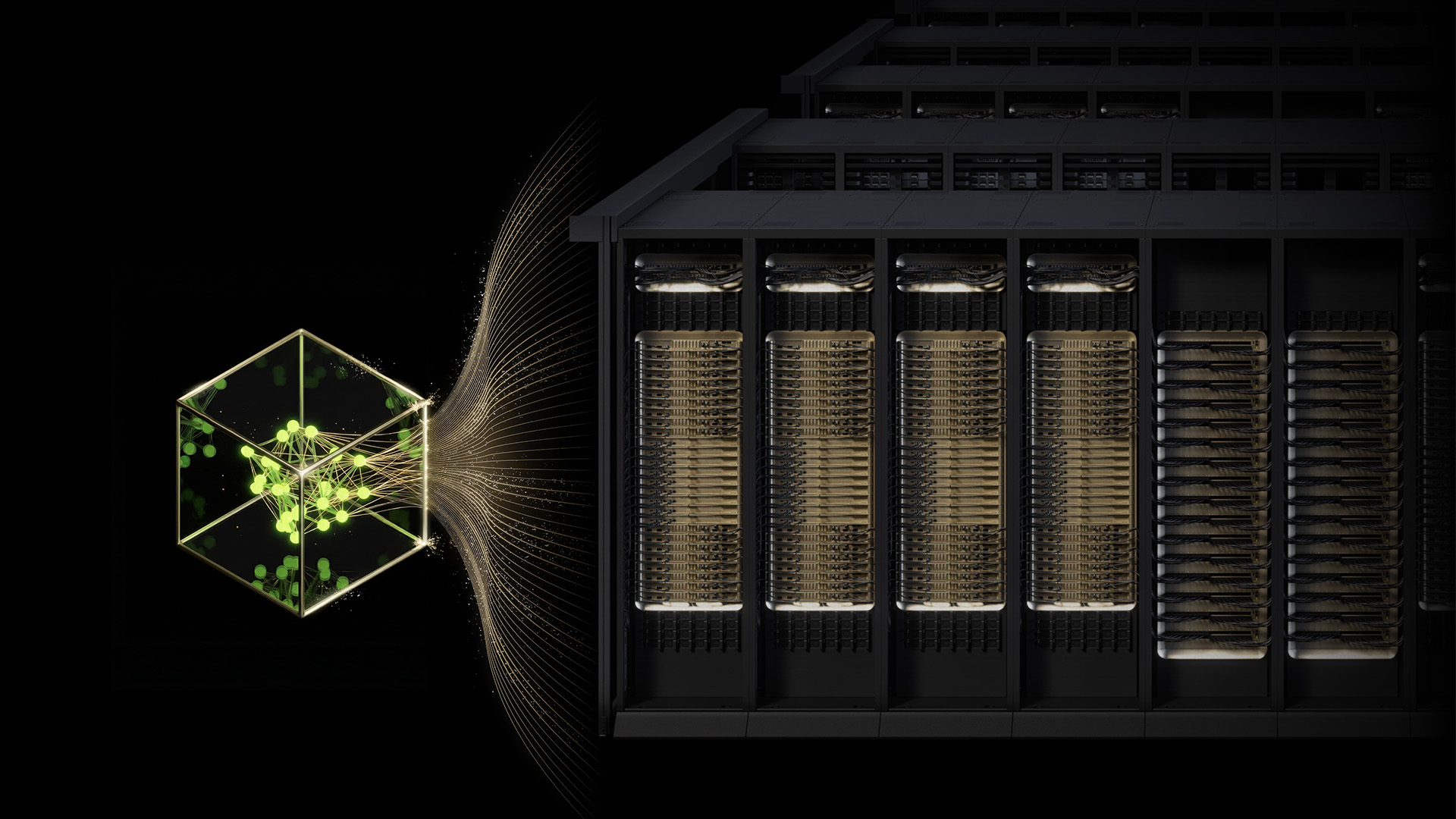
OpenAI has recently introduced its latest advancement in artificial intelligence, the GPT-5.2 model. Launched on advanced NVIDIA infrastructure, this model marks a significant step forward in the realm of professional knowledge work. By leveraging cutting-edge technology from NVIDIA, including the NVIDIA Hopper architecture and the GB200 NVL72 systems, GPT-5.2 is set to redefine the capabilities of AI models.
The launch of GPT-5.2 underscores the ongoing evolution of AI technology and its deployment on a large scale, utilizing NVIDIA’s comprehensive AI infrastructure. This development reflects a broader trend among leading AI developers who are increasingly relying on NVIDIA platforms to enhance their AI models’ performance and efficiency.
Pretraining: The Foundation of AI Intelligence
The enhanced capabilities of AI models like GPT-5.2 are largely attributed to three key scaling laws: pretraining, post-training, and test-time scaling. These principles are fundamental to the development of reasoning models, which are designed to handle complex queries by applying computational power during inference through the collaboration of multiple networks.
Among these, pretraining and post-training are considered the cornerstone of AI intelligence. They play a critical role in refining reasoning models, making them smarter and more effective. Achieving this level of sophistication requires significant scale, often involving tens of thousands, if not hundreds of thousands, of GPUs working in unison.
Such a scale demands excellence across various facets, including state-of-the-art accelerators, advanced networking that caters to scale-up, scale-out, and increasingly scale-across architectures, alongside a fully optimized software stack. In essence, this requires an infrastructure platform meticulously designed to deliver exceptional performance at scale.
When comparing the capabilities of NVIDIA’s GB200 NVL72 systems to the NVIDIA Hopper architecture, the former demonstrated a threefold increase in training performance for the largest models tested in the latest MLPerf Training benchmarks. Moreover, it offered nearly twice the performance per dollar spent. Furthermore, NVIDIA’s GB300 NVL72 provides more than a fourfold increase in speed compared to NVIDIA Hopper, enabling AI developers to accelerate development cycles and expedite the deployment of new models.
Versatility Across Modalities: A Testament to Model Excellence
A significant majority of today’s leading large language models have been developed using NVIDIA platforms. However, AI is not limited to text alone. NVIDIA supports AI development across a range of modalities, including speech, image, and video generation, as well as emerging fields like biology and robotics.
For instance, models such as Evo 2, OpenFold3, and Boltz-2 are revolutionizing fields like genetics, protein structure prediction, and drug interaction simulation. These models aid researchers in identifying promising candidates more rapidly. In the medical field, NVIDIA Clara synthesis models generate realistic medical images, advancing screening and diagnosis without compromising patient data.
Companies like Runway and Inworld are leveraging NVIDIA’s infrastructure for their AI models. Runway recently announced Gen-4.5, a pioneering video generation model that currently holds the top spot on the Artificial Analysis leaderboard. Optimized for NVIDIA Blackwell, Gen-4.5 was developed entirely on NVIDIA GPUs through all stages of research, development, pre-training, post-training, and inference.
Runway also introduced GWM-1, a cutting-edge general world model built on NVIDIA Blackwell. This model is designed to simulate reality in real time and is applicable across various domains, including video games, education, science, entertainment, and robotics. Benchmarks highlight the model’s capabilities, with MLPerf serving as the industry-standard benchmark for training performance. In the latest evaluations, NVIDIA showcased strong performance and versatility, being the only platform to submit results in every category.
NVIDIA’s ability to support diverse AI workloads enables data centers to utilize resources more efficiently. Consequently, AI labs such as Black Forest Labs, Cohere, Mistral, OpenAI, Reflection, and Thinking Machines Lab are all training on the NVIDIA Blackwell platform.
NVIDIA Blackwell: A Game Changer Across Clouds and Data Centers
The NVIDIA Blackwell platform is widely accessible through leading cloud service providers, neo-clouds, and server manufacturers. With the introduction of NVIDIA Blackwell Ultra, which offers additional improvements in compute, memory, and architecture, server manufacturers and cloud service providers are rapidly adopting this platform.
Major cloud service providers and NVIDIA Cloud Partners, including Amazon Web Services, CoreWeave, Google Cloud, Lambda, Microsoft Azure, Nebius, Oracle Cloud Infrastructure, and Together AI, among others, are offering instances powered by NVIDIA Blackwell. This ensures scalable performance as pretraining scaling progresses.
From cutting-edge models to everyday AI applications, the future of AI development is being constructed on the foundation of NVIDIA technology. For more information, readers can explore the NVIDIA Blackwell platform on NVIDIA’s official website.
In conclusion, the launch of OpenAI’s GPT-5.2 model represents a significant milestone in the field of AI, showcasing the power and potential of NVIDIA’s infrastructure in advancing AI capabilities across various domains. As AI technology continues to evolve, the combined efforts of industry leaders like OpenAI and NVIDIA are paving the way for more sophisticated and efficient AI models that have the potential to revolutionize multiple sectors.
For more Information, Refer to this article.