





















Exploring New Frontiers with Accelerated Computing
In today’s rapidly advancing technological landscape, researchers worldwide are leveraging the power of accelerated computing to push the boundaries of what is scientifically possible. This technological innovation is playing a crucial role in diverse fields such as quantum physics, digital biology, and climate research. At the forefront of this movement is NVIDIA, a leading company in the computing sector, which recently announced significant advancements in the field of accelerated computing at the SC25 conference held in St. Louis, Missouri.
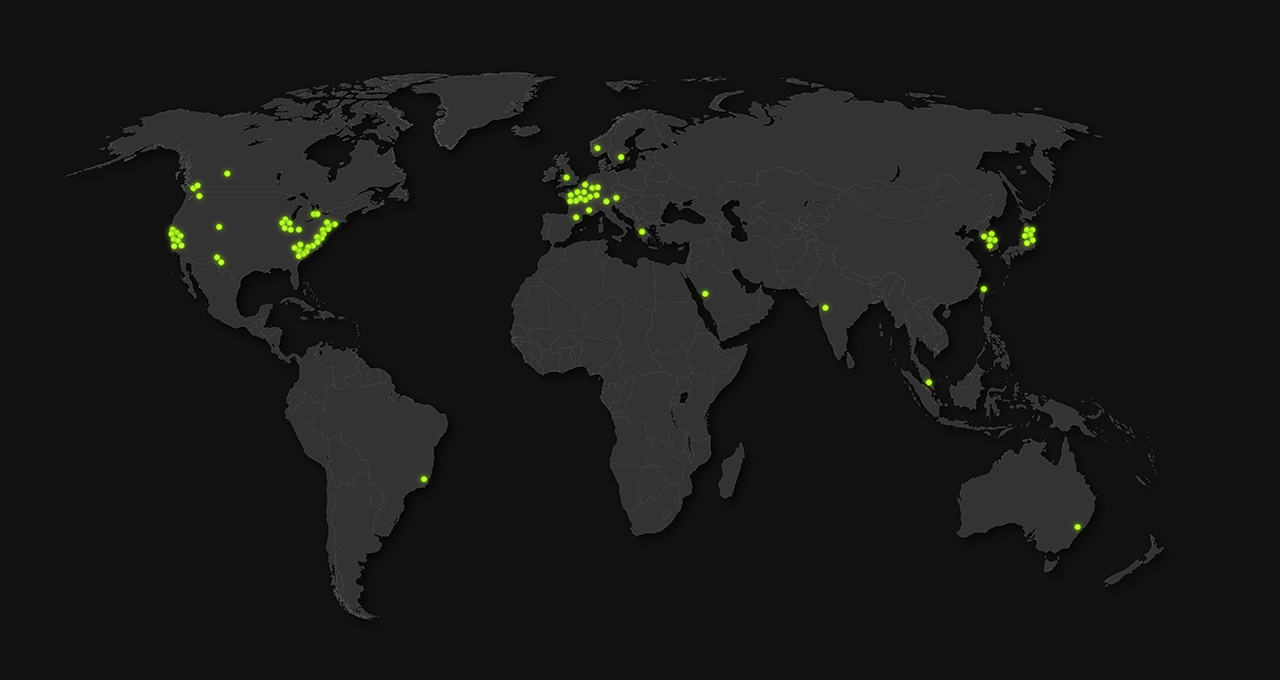
Over the past year, NVIDIA has introduced more than 80 new scientific systems globally, all powered by its advanced computing platform. These systems contribute to a combined total of 4,500 exaflops of AI performance, an impressive feat that highlights the sheer computational power being harnessed for scientific discovery today.
The Horizon Supercomputer: A Leap for American Academia
Among these new advancements is the Horizon supercomputer, set to become the largest academic supercomputer in the United States. Located at the Texas Advanced Computing Center (TACC), Horizon is expected to deliver 300 petaflops of computing power. Slated to be operational by 2026, this supercomputer will be equipped with NVIDIA GB200 NVL4 and NVIDIA Vera CPU servers, interconnected through NVIDIA Quantum-X800 InfiniBand networking. This configuration will enable Horizon to greatly enhance scientific and engineering research, offering unprecedented computational capabilities to the nation’s research community.
The Horizon supercomputer represents a new wave of NVIDIA-accelerated systems that are fueling global research endeavors. These systems are being utilized by both countries and private enterprises across various fields, including healthcare, climate modeling, robotics, manufacturing, quantum computing research, and materials science.
The Power of NVIDIA’s Full-Stack Accelerated Computing Platform
NVIDIA’s full-stack accelerated computing platform is a comprehensive suite of technologies that includes graphics processing units (GPUs), central processing units (CPUs), data processing units (DPUs), network interface cards (NICs), scale-out switches, CUDA-X libraries, and NVIDIA AI Enterprise software. This platform provides a unified architecture that ensures scale and efficiency, essential for advancing scientific research sustainably and at unprecedented speeds.
Scientific Innovation on the Horizon for TACC
The Horizon supercomputer, with its 4,000 NVIDIA Blackwell GPUs, is poised to deliver up to 80 exaflops of AI computation at FP4 precision. This capability is tailored to support a range of scientific modeling and simulation applications, including:
- Simulating Disease Mechanics: Researchers plan to utilize molecular dynamics software and AI-enhanced simulations to study viruses, potentially leading to breakthroughs in understanding viral behavior and developing treatments.
- Modeling Cosmic Phenomena: Astrophysicists aim to explore the formation of stars and galaxies, simulating distant galaxies uncovered by recent discoveries from the James Webb Space Telescope.
- Investigating Novel Materials: Scientists will study turbulence in fluids, complex crystal structures in solids, and the conductivity of quantum materials, which could lead to advances in material science.
- Mapping Seismic Activity: By improving seismic hazard maps, researchers hope to simulate how faults rupture during earthquakes, aiding in better preparedness for such natural disasters.
John Cazes, director of high-performance computing at TACC, emphasized the transformative potential of Horizon, stating that this new system will enable scientists to pursue ambitious research projects at scales never before possible. The Horizon supercomputer will act as a catalyst for AI-driven initiatives, allowing researchers to decode the molecular dynamics of viral infections, explore astronomical data, and simulate seismic activity years into the future.
AI Supercomputers at Argonne and Los Alamos National Laboratories
The U.S. Department of Energy (DOE) has partnered with NVIDIA to establish seven new AI supercomputers at Argonne National Laboratory (ANL) in Illinois and Los Alamos National Laboratory (LANL) in New Mexico. These systems, featuring NVIDIA Blackwell GPUs and networking, will connect with the DOE’s extensive network of scientific instruments and data assets. This integration will enable the development of powerful AI models for scientific and energy applications.
The largest system, Solstice, will house 100,000 NVIDIA Blackwell GPUs, capable of reaching 1,000 exaflops of AI training compute. This is over 50% higher than the total AI training compute on the entire TOP500 list as of June 2025. Another system, Equinox, will employ 10,000 NVIDIA Blackwell GPUs, while three additional systems at ANL — Minerva, Janus, and Tara — will support AI inference and workforce development initiatives.
At LANL, the Mission and Vision systems, to be constructed and delivered by HPE, will be powered by the NVIDIA Vera Rubin platform and NVIDIA Quantum-X800 InfiniBand networking. The Mission system will handle classified applications for the National Nuclear Security Administration, while Vision will support open science research, including foundational models and agentic AI. Both systems are expected to be operational by 2027.
These advancements at the DOE are in line with the recently announced Doudna supercomputer at Lawrence Berkeley National Laboratory. Set to launch in 2026, Doudna will be powered by the NVIDIA Vera Rubin architecture and NVIDIA Quantum-X800 InfiniBand. It will support over 11,000 researchers in areas such as fusion energy, materials science, drug discovery, and astronomy.
Breaking the Exaflop Barrier in Europe
Across Europe, NVIDIA-accelerated supercomputers are driving scientific research, with notable achievements such as the Jülich Supercomputing Centre’s JUPITER system in Germany. JUPITER has reached exaflop performance, capable of performing 1 quintillion floating-point operations per second, on the HPL benchmark. This benchmark measures computing performance in double precision (FP64) math.
JUPITER, inaugurated in September 2025, is Europe’s first exascale computer, featuring 24,000 NVIDIA GH200 Grace Hopper Superchips interconnected with NVIDIA Quantum-2 InfiniBand. It is already being utilized for high-resolution global climate simulations.
Thomas Lippert, director of the Jülich Supercomputing Centre, highlighted the impact of JUPITER, stating that its computing power allows researchers to run global simulations at kilometer-scale resolution. This leap in computational capacity enables European researchers to execute AI models and simulations across various scientific disciplines at unprecedented levels of complexity, size, and scale.
Other significant European supercomputers unveiled in the past year include:
- Blue Lion: Scheduled to go online in early 2027 at Germany’s Leibniz Supercomputing Centre (LRZ), this system will use the NVIDIA Vera Rubin platform to support research in climate, turbulence, physics, and machine learning.
- Gefion: Denmark’s first AI supercomputer, operated by DCAI, is an NVIDIA DGX SuperPOD that provides sovereign AI capacity for the country’s innovators, advancing research in quantum computing, clean energy, and biotechnology.
- Isambard-AI: The U.K.’s most powerful AI supercomputer, located at the University of Bristol, is being used for projects such as Nightingale AI, a multimodal foundation model trained on National Health Service data, and UK-LLM, an initiative to enhance AI reasoning for Welsh and other U.K. languages.
Advancements in Asia: Japan, South Korea, and Taiwan
In Asia, countries like Japan, South Korea, and Taiwan are also making significant strides in accelerated computing, supported by sovereign AI investments and private-sector initiatives.
RIKEN, Japan’s leading research institute, announced the integration of NVIDIA GB200 NVL4 systems into two new supercomputers. These systems will support AI for scientific research and quantum computing. RIKEN is also collaborating with Fujitsu and NVIDIA to design FugakuNEXT, a supercomputer aimed at earth systems modeling, drug discovery research, and advanced manufacturing applications. The system will feature FUJITSU-MONAKA-X CPUs paired with NVIDIA technologies using NVLink Fusion.
Furthermore, the Tokyo University of Technology has developed an AI supercomputer with NVIDIA DGX B200 systems capable of achieving 2 exaflops of FP4 theoretical computing performance with fewer than 100 GPUs. This system will facilitate the development of large language models and digital twins, serving as core infrastructure for nurturing the next generation of AI talent.
Japan’s National Institute of Advanced Industrial Science and Technology recently launched ABCI-Q, the world’s largest research supercomputer dedicated to quantum computing, featuring over 2,000 NVIDIA H100 GPUs.
In South Korea, the government plans to deploy over 50,000 NVIDIA GPUs across sovereign clouds and AI factories. Industry giants like Samsung, SK Group, and Hyundai Motor Group are also constructing AI factories with NVIDIA Blackwell GPUs to accelerate research and manufacturing.
In Taiwan, NVIDIA is collaborating with Foxconn Hon Hai Technology Group to build an AI factory supercomputer with 10,000 NVIDIA Blackwell GPUs. This initiative aims to fuel innovation across researchers, startups, and industries.
Closing Thoughts
The advancements in accelerated computing, spearheaded by NVIDIA, are transforming the landscape of scientific research across the globe. From the United States to Europe and Asia, these powerful computing systems are enabling researchers to tackle complex problems, explore new frontiers, and push the boundaries of what is possible in science and technology. As we look to the future, the continued development and deployment of such systems will undoubtedly lead to groundbreaking discoveries and innovations that will shape our world for generations to come.
For more Information, Refer to this article.