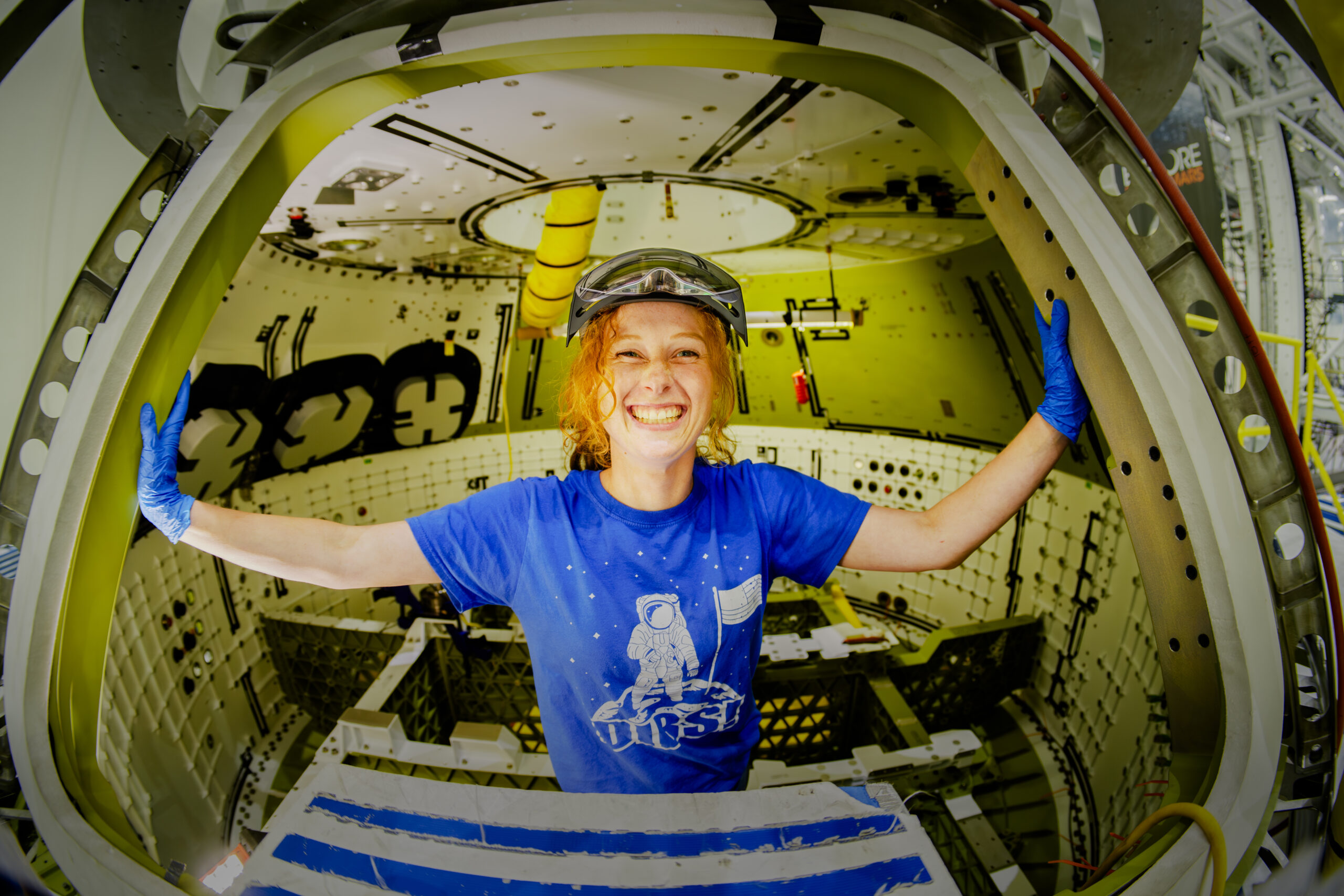
Rebekah Tolatovicz: A Key Player in NASA’s Artemis Program
At NASA’s Kennedy Space Center in Florida, Rebekah Tolatovicz plays a pivotal role in the development of the Orion spacecraft, which is central to NASA’s Artemis program aimed at returning humans to the Moon. As a mechanical technician lead for ASRC Federal, Tolatovicz has been instrumental in preparing the Orion spacecraft for its upcoming missions, including the recent Artemis II test flight that successfully carried four astronauts around the Moon.
The Role of a Mechanical Technician Lead
Tolatovicz’s responsibilities encompass a wide range of tasks within the Operations and Checkout Building at Kennedy Space Center. Her daily activities include overseeing technicians, performing hands-on installations of critical components such as hatches and engines, and collaborating closely with engineering teams. This multifaceted role requires both technical expertise and strong leadership skills.
“What I really like about the area that I’m in is we do so much,” she explained. “From starting with the bare structure and installing giant parts and titanium pieces, to final integration where you’re installing the tiniest little components. I think that’s the coolest part. We don’t do just one technical thing — it’s all the technical things.”
Contributions to Artemis Missions
Tolatovicz has been deeply involved in projects related to both uncrewed and crewed missions under NASA’s Artemis initiative. Her work on the Orion crew modules is vital for ensuring that astronauts can safely travel and live in space during future missions. She played a significant role in preparing the Artemis II spacecraft, which splashed down on April 10 after its historic mission.
This mission marked a crucial milestone as it was the first crewed flight under NASA’s Artemis program. Tolatovicz’s contributions included extensive testing, integration processes, and final installations before the spacecraft was readied for fueling and stacking on the Space Launch System (SLS) rocket.
A Journey from Intern to Lead Technician
Rebekah Tolatovicz’s journey began as an intern with Lockheed Martin through an aerospace technician program at Eastern Florida State College. Initially uncertain about her ability to succeed in such a demanding field, she credits her mentors—many of whom worked during the space shuttle era—for providing invaluable guidance and support.
“At first I didn’t think I was going to make it,” she recalled. “But if you come in with a good attitude and want to learn — there’s so much you can learn from these guys; they have decades of knowledge to share.” Her hands-on experience quickly built her confidence as she engaged directly with seasoned technicians.
A Passion for Space Exploration
With nine years of experience on the Orion program, Tolatovicz has witnessed firsthand how her efforts contribute to significant milestones in space exploration. From participating in Orion’s uncrewed Artemis I test flight to now being involved with Artemis II, she expresses pride in being part of NASA’s evolving history.
“It’s really amazing for me to be a part of NASA’s history and the next step,” she stated. “I just really love my job, the team, and working through challenges.” Her enthusiasm shines through when she reflects on her achievements: “You don’t think about it when you’re putting things on, but then you get to tell somebody else that you installed the thrusters for the spacecraft, and you realize — man, that’s pretty cool.”
What This Means
The contributions of professionals like Rebekah Tolatovicz are essential as NASA embarks on its ambitious plans for lunar exploration through the Artemis program. With each mission, not only does technology advance but also human understanding of space travel deepens. As more individuals engage with these complex projects, they help pave the way for future generations aiming for Mars and beyond. Tolatovicz’s journey exemplifies how passion combined with technical skill can lead to significant advancements in aerospace engineering.
For more information, read the original report here.