




















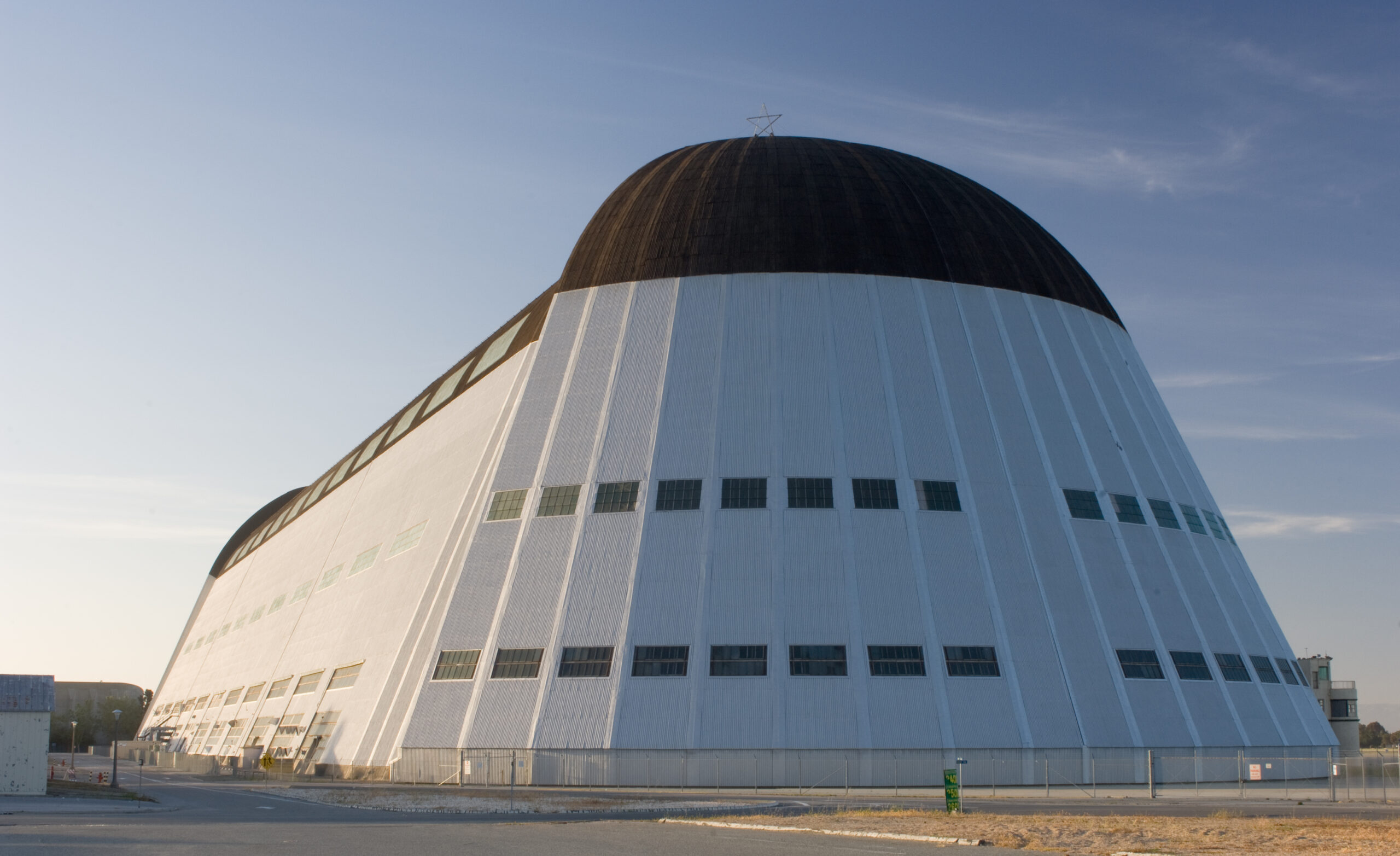
Hangar One, an iconic landmark in the San Francisco Bay Area, has undergone a complete restoration. The project, led by Planetary Ventures, was completed in December 2025 at Moffett Federal Airfield, part of NASA’s Ames Research Center in Silicon Valley.
The restoration of Hangar One aimed to modernize the structure while preserving its original visual appeal. This involved remediation, clean-up, recladding of the siding and roof, and various structural upgrades. The restoration work adhered to the U.S. Secretary of the Interior’s Standards for Rehabilitation of historical buildings.
The journey to restore Hangar One began years ago when the U.S. Navy removed contaminated materials such as the roof, siding, windows, and doors due to toxic chemicals. The hangar’s structural frame was sealed with epoxy to prevent health risks until further restoration work could be undertaken.
In 2014, NASA entered into a lease agreement with Planetary Ventures to manage Moffett Federal Airfield and restore Hangar One. The restoration process involved removing toxic chemicals, section by section, and carefully disposing of them off-site. Once the contaminated materials were cleared, the steel frame was primed, repainted, and fitted with new siding, windows, and doors.
Structural upgrades were also made to ensure the long-term operational integrity of Hangar One for future generations. These upgrades included mechanical, plumbing, electrical, landscape, and hardscape improvements.
History of Hangar One dates back to 1933 when the U.S. Navy built it at Naval Air Station Sunnyvale for the USS Macon airship and the U.S. lighter-than-air aviation program. Over the years, the hangar changed hands between the Navy and the U.S. Army before being transferred to NASA in 1994.
In the late 1990s and early 2000s, NASA discovered toxins like polychlorinated biphenyls (PCBs) and asbestos in the hangar, leading to its closure for human use. The subsequent restoration efforts, spanning several years, aimed to address contamination and restore Hangar One to its former glory.
Hangar One’s significance goes beyond its historical value. Measuring approximately 1,133 feet long, 308 feet wide, and 198 feet high, it is a massive structure in the Shenandoah Plaza Historic District. The hangar is listed in the National Register of Historic Places and designated as a Naval Historical Monument and a California Historic Civil Engineering Landmark.
Planetary Ventures, LLC played a crucial role in the successful restoration of Hangar One. The completion of this project marks a significant milestone in preserving the region’s aviation history and architectural heritage.
For researchers and news media interested in learning more about Hangar One’s restoration, additional information can be found on NASA’s website. This restoration project serves as a testament to the importance of preserving historical landmarks for future generations to appreciate and enjoy.
For more Information, Refer to this article.