A Glimpse into the Cosmic Dance: The Transformation of a Star Captured by Hubble
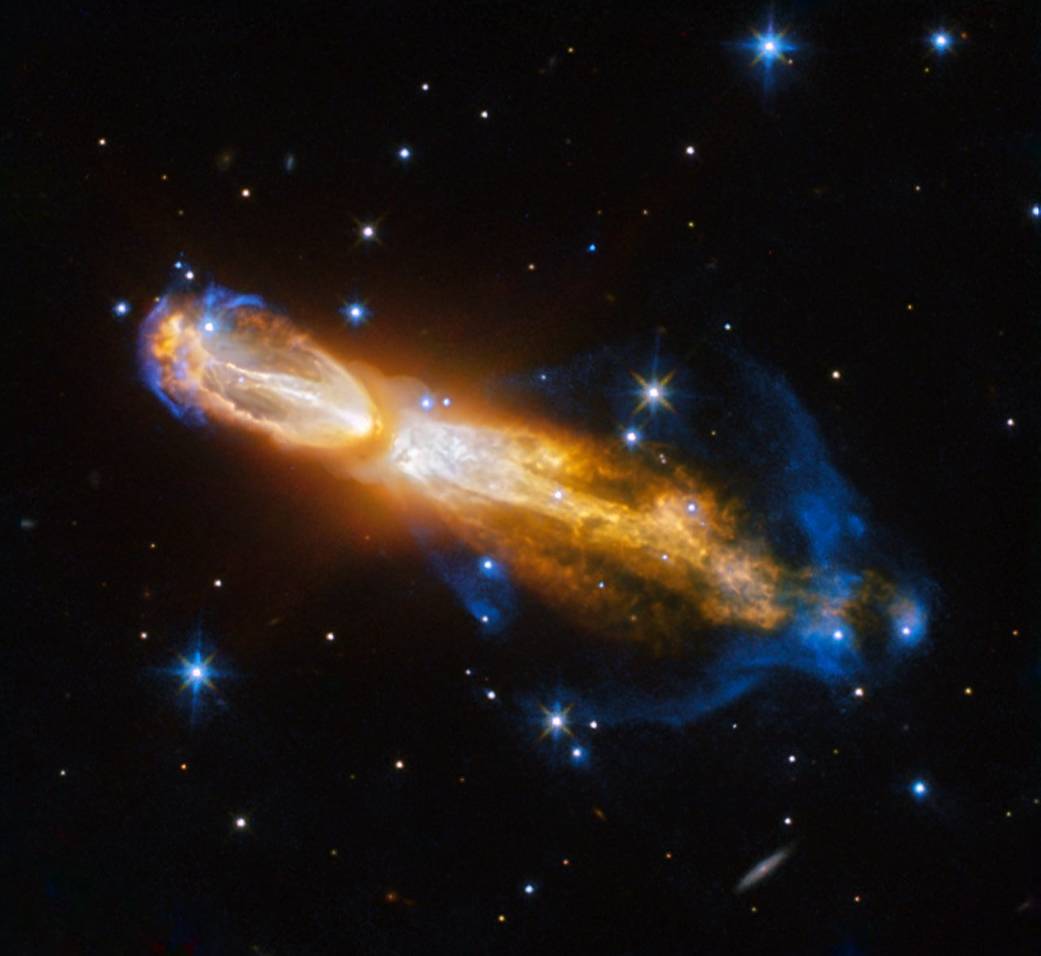
In an extraordinary achievement, NASA’s Hubble Space Telescope has provided us with a rare glimpse into the cosmic life cycle by capturing the transformation of a low-mass star in the Calabash Nebula. This event, showcased in an image released on February 3, 2017, reveals the star’s dramatic transition from a red giant to a planetary nebula—a fascinating process that sheds light on the lifecycle of stars and the complex workings of the universe.
From Red Giant to Planetary Nebula: A Stellar Evolution
The captured image presents an awe-inspiring view of a star undergoing a swift and radical change. In this evolutionary phase, the star expels its outer layers of gas and dust into the surrounding space. This ejection marks the transition from a red giant to what will eventually become a planetary nebula. The process is akin to a cosmic shedding, where the star discards its outer shell in a spectacular fashion.
The expelled material, depicted in the image as yellow, is hurled into space at astonishing velocities—reaching speeds approaching a million kilometers per hour. Such speeds are a testament to the immense forces at play during this transformation. The material is ejected in opposing directions, creating a striking visual display that highlights the dynamic forces within the nebula.
The Rarity of the Phenomenon
This phase of a star’s life is incredibly fleeting, making it a rare spectacle for astronomers. In the vast timeline of the universe, this transformation occurs in what can be described as the blink of an eye. Capturing such a moment is akin to photographing a lightning strike—as brief as it is brilliant. This rarity adds significant value to the image captured by the Hubble Space Telescope, providing scientists with a unique opportunity to study the intricate details of stellar evolution.
Over the course of the next thousand years, the nebula is expected to evolve further, eventually becoming a fully-formed planetary nebula. This future transformation will continue to intrigue astronomers and provide valuable insights into the life cycles of stars similar to our own Sun.
Understanding Stellar Evolution
To comprehend the significance of this transformation, it’s important to delve into the basics of stellar evolution. Stars like our Sun spend the majority of their lives in a stable phase known as the main sequence. During this time, they fuse hydrogen into helium in their cores, producing the light and heat we observe.
As stars exhaust their hydrogen fuel, they enter the red giant phase. In this stage, the core contracts, and the outer layers expand and cool, giving the star a reddish appearance. For low-mass stars, this phase is followed by the shedding of outer layers, leading to the creation of a planetary nebula.
The term "planetary nebula" is a bit of a misnomer, as these nebulae have nothing to do with planets. The name originates from their round appearance, which early astronomers mistook for planets. In reality, a planetary nebula is an expanding shell of ionized gas, illuminated by the remaining hot core of the star, known as a white dwarf.
The Role of Hubble Space Telescope
The Hubble Space Telescope, launched in 1990, has been instrumental in advancing our understanding of the universe. By capturing detailed images of distant astronomical phenomena, Hubble has revolutionized our knowledge of space. Its ability to observe in various wavelengths, from ultraviolet to near-infrared, enables it to capture complex details that are otherwise invisible to the naked eye.
In the case of the Calabash Nebula, Hubble’s powerful instruments allowed astronomers to observe the rapid changes occurring in the star’s life cycle. The data collected from such observations not only enrich our understanding of stellar evolution but also provide insights into the future of our own solar system. By studying these distant cosmic events, scientists can make predictions about the eventual fate of the Sun and the planetary system it supports.
Broader Implications and Future Research
The observations of the Calabash Nebula contribute to a broader understanding of the universe and our place within it. By studying the life cycles of stars, astronomers can gain insights into the formation and evolution of galaxies. These processes are fundamental to the cosmic tapestry, influencing the distribution of elements, the formation of new stars, and the evolution of planetary systems.
In the future, continued advancements in telescope technology and observational techniques will allow scientists to capture even more detailed images of these rare cosmic events. The upcoming James Webb Space Telescope, set to launch in the near future, promises to enhance our capabilities further, providing deeper insights into the universe’s origins and its ongoing evolution.
Conclusion
The Hubble Space Telescope’s capture of the Calabash Nebula’s transformation is a testament to the marvels of modern astronomy. This rare glimpse into the life cycle of a star not only deepens our understanding of stellar evolution but also highlights the dynamic and ever-changing nature of the universe. As we continue to explore the cosmos, each discovery adds a new layer to our understanding, bringing us closer to unraveling the mysteries of the universe.
For those interested in delving deeper into the world of astronomy and the fascinating phenomena it uncovers, the Hubble Space Telescope’s findings offer a wealth of knowledge and inspiration. As we look to the skies, we are reminded of the vastness of the universe and the endless possibilities it holds for discovery and exploration.
For more information on the Hubble Space Telescope and its discoveries, you can visit NASA’s official website.
For more Information, Refer to this article.