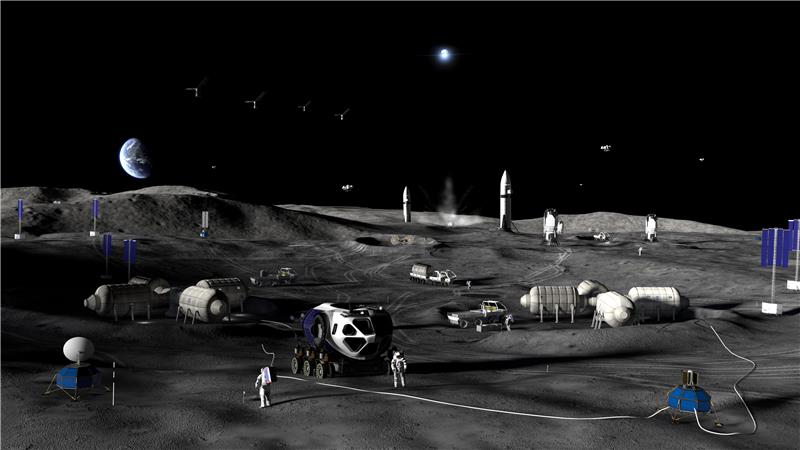
La NASA ha anunciado una serie de iniciativas transformadoras durante su evento “Encendido”, diseñadas para cumplir con la Política Espacial Nacional de los Estados Unidos y promover el liderazgo en el espacio. Estas acciones reflejan la urgencia y la oportunidad para la ciencia y los descubrimientos que pueden cambiar el mundo.
El administrador de la NASA, Jared Isaacman, expresó el compromiso de la agencia de regresar a la Luna antes de que finalice el mandato del presidente Trump, construir una base lunar y establecer una presencia permanente en la superficie lunar. Estas metas son fundamentales para garantizar el liderazgo de Estados Unidos en el espacio y competir con otras potencias.
Amit Kshatriya, Administrador Asociado de la NASA, destacó la importancia de alinear a la agencia en torno a esta misión. En la Luna, la NASA está desarrollando una arquitectura en fases para desarrollar capacidades de aterrizaje sucesivos de manera incremental, en colaboración con socios internacionales e industriales. En la órbita terrestre baja, la agencia está identificando oportunidades comerciales y valorando la Estación Espacial Internacional como un activo clave.
En cuanto a las misiones científicas, se están creando oportunidades en la superficie lunar para investigadores y estudiantes, y se está avanzando en la propulsión nuclear con el Reactor Espacial 1 Freedom. Estas acciones requieren invertir en la fuerza laboral de la NASA y en el desarrollo de la próxima generación de líderes.
En relación con el programa Artemis, la NASA está estandarizando la configuración del Sistema de Lanzamiento Espacial y planea realizar al menos un alunizaje cada año a partir de 2027. Se espera incorporar hardware comercial y reutilizable para misiones tripuladas a la Luna con el objetivo de efectuar alunizajes cada seis meses.
Para establecer una presencia humana duradera en la Luna, la NASA está adoptando un enfoque en fases para la construcción de una base lunar. Este enfoque implica pausar el proyecto Gateway y reorientar los esfuerzos hacia una infraestructura que permita operaciones continuas en la superficie lunar.
En los próximos días, la NASA publicará Solicitudes de Información y borradores de Solicitudes de Propuestas para avanzar en el cumplimiento de los objetivos nacionales. El plan para establecer una presencia lunar sostenida se desarrollará en tres fases preconcebidas.
La primera fase se centrará en construir, ensayar y aprender mediante misiones modulares y repetibles. La agencia enviará rovers, instrumentos y demostraciones tecnológicas para impulsar la movilidad, la generación de energía, las comunicaciones y las investigaciones científicas en la Luna.
La segunda fase se enfocará en establecer una infraestructura semi-habitable y una logística permanente en la Luna, basándose en las lecciones aprendidas de las misiones anteriores. NASA has announced its Artemis program, which aims to return humans to the Moon and establish a sustainable presence on the lunar surface. This ambitious program consists of three phases, each building upon the previous one to enable long-term human exploration of the Moon.
Phase one focuses on landing astronauts on the Moon by 2024, utilizing commercial partnerships to deliver payloads to the lunar surface. This phase will also involve testing new technologies and systems to ensure the safety and success of future missions.
Phase two will support sustained operations on the lunar surface, incorporating contributions from international partners such as the JAXA pressurized rover from the Japan Aerospace Exploration Agency. This phase will pave the way for a continuous human presence on the Moon, transitioning from periodic expeditions to a permanent lunar base.
Phase three will enable a long-term human presence on the Moon by deploying heavier infrastructure needed to establish a permanent base. This will include Multi-Use Habitats from the Italian Space Agency, the Lunar Utility Vehicle from the Canadian Space Agency, and opportunities for additional contributions in areas such as habitat, surface mobility, and logistics.
In addition to its lunar exploration efforts, NASA is also reaffirming its commitment to the International Space Station (ISS) and ensuring a continued American presence in low Earth orbit. As the ISS approaches the end of its operational lifespan, NASA is exploring new strategies for transitioning to commercial space stations while maintaining a robust human presence in orbit. This includes acquiring a government-owned Central Module that would be attached to the ISS, followed by commercial modules that would operate independently in free flight.
NASA is also making significant advancements in transformative discoveries through its current and upcoming scientific missions. The agency continues to push the boundaries of space exploration with missions such as the James Webb Space Telescope, the Parker Solar Probe, and the upcoming Dragonfly mission to explore Saturn’s moon Titan. These missions will further enhance our understanding of the universe and pave the way for future exploration of Mars and beyond.
The agency is also accelerating its lunar science program through the Commercial Lunar Payload Services (CLPS) initiative, which aims to conduct up to 30 robotic landings on the Moon starting in 2027. This will provide opportunities for transporting payloads such as rovers, rocket-powered explorers, and drones to the lunar surface, with contributions welcomed from industry, academia, and international partners.
Overall, NASA’s Artemis program and ongoing scientific missions are driving innovation and pushing the boundaries of space exploration. With a focus on sustainable lunar exploration and continued human presence in low Earth orbit, NASA is paving the way for future discoveries and advancements in space science. The National Aeronautics and Space Administration (NASA) has announced a series of Request for Information (RFI) to seek payloads for future missions to Mars, including the establishment of the Mars Telecommunications Network and a nuclear technology demonstration mission. These RFIs aim to strengthen partnerships with philanthropic research organizations and private funding sources that share goals in the field of space sciences.
In addition to these scientific missions, NASA is taking a significant step forward in the use of nuclear energy in space. The agency plans to launch the SR-1 Freedom, the first interplanetary spacecraft with nuclear propulsion, to Mars by the end of 2028. This mission will demonstrate NASA’s advancements in nuclear electric propulsion in deep space, offering efficient mass transport capabilities beyond Jupiter where solar panels are not effective.
The SR-1 Freedom will deploy the Skyfall payload, consisting of Ingenuity-class helicopters, upon reaching Mars to continue exploring the red planet. This mission will set a precedent for regulatory and launch standards, as well as activate the industrial base for future nuclear fission power systems for propulsion, surface, and long-duration missions. NASA, along with its partner, the United States Department of Energy, aims to unlock the necessary capabilities for sustained exploration beyond the Moon and for future journeys to Mars and the outer solar system.
Furthermore, NASA is restructuring its workforce to support these ambitious missions. The agency is transforming contractor positions into civil service roles, rebuilding essential engineering, technical, and operational capabilities needed for leadership in space exploration. NASA is also expanding opportunities for interns and early-career professionals, creating pathways for experienced industry talent to serve through fixed-term appointments.
These changes, announced on March 24, will be implemented over the coming months with the support of agency-wide personnel teams to ensure a smooth transition while driving key programs and partnerships forward. NASA will integrate subject matter experts throughout the supply chain to challenge assumptions, solve problems, accelerate production, and ensure the desired outcomes are achieved.
Through these reforms, NASA is enhancing its ability to meet the National Space Policy and uphold American superiority in space. For more information on NASA’s Ignition Plan, visit https://www.nasa.gov/ignition.
Overall, these initiatives represent NASA’s commitment to advancing space exploration through innovative technologies and strategic partnerships. As the agency continues to push the boundaries of human knowledge and expand the frontiers of space exploration, it relies on the dedication and expertise of its workforce to achieve its goals.
The future of space exploration is bright, with NASA leading the way towards new discoveries and groundbreaking missions to unlock the mysteries of the universe. By leveraging nuclear energy and fostering collaboration with a diverse range of partners, NASA is paving the way for a future where humanity can reach new heights in space exploration.
For more Information, Refer to this article.