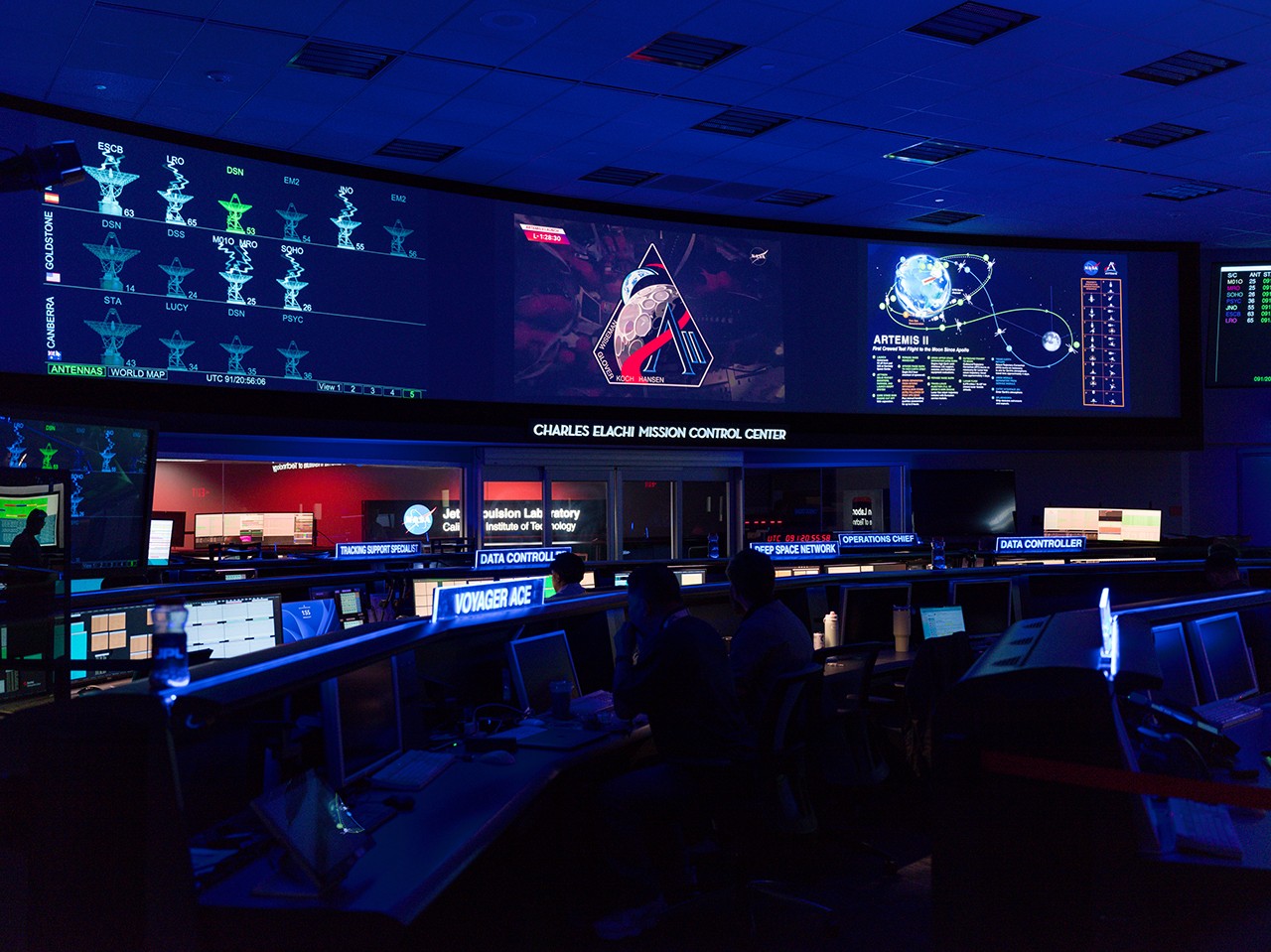
Artemis II Mission Marks Historic Communication Milestone
The Artemis II mission successfully launched on April 1, 2026, from NASA’s Kennedy Space Center in Florida, marking a significant milestone in space exploration. This mission is notable for being the first crewed spacecraft to communicate with NASA’s Deep Space Network (DSN) in over half a century, showcasing advancements in deep space communication technology.
Launch and Initial Communications
The Artemis II mission lifted off at 6:35 p.m. EDT, with initial communications managed by NASA’s Near Space Network. Shortly after launch, the DSN acquired the signal from the spacecraft, a pivotal moment that underscores the mission’s historic nature. This event not only signifies a return to crewed missions beyond low Earth orbit but also highlights the technological capabilities of NASA’s communication systems.
Understanding the Deep Space Network
The DSN is an essential component of NASA’s ability to communicate with spacecraft exploring our solar system. It consists of three primary complexes located in Goldstone, California; Madrid, Spain; and Canberra, Australia. Each complex features multiple radio frequency antennas designed to maintain contact with various missions simultaneously. The network plays a crucial role in tracking spacecraft, sending commands, and receiving scientific data from distant missions.
Managed by the Jet Propulsion Laboratory (JPL) under NASA’s Space Communications and Navigation program, the DSN has been instrumental in supporting numerous missions since its inception. The recent successful communication with Artemis II demonstrates its continued relevance and capability in handling complex operations involving crewed space travel.
The Role of JPL and Caltech
JPL oversees the operations of the DSN while being managed by Caltech (California Institute of Technology) based in Pasadena, California. This collaboration ensures that NASA can effectively manage its communications infrastructure while advancing scientific exploration through innovative technologies. The integration of JPL’s expertise with Caltech’s research capabilities enhances mission success rates and fosters new developments in space communication.
The Future of Crewed Space Exploration
The successful communication established during Artemis II sets a precedent for future crewed missions beyond Earth’s orbit. As humanity prepares for long-duration missions to destinations like Mars and beyond, reliable communication becomes paramount. The advancements demonstrated by Artemis II will likely inform future projects within NASA and other space agencies worldwide.
What This Means for Future Missions
The successful launch and communication achievements of Artemis II represent more than just a return to crewed lunar exploration; they signify a new era in deep space communication technology. As NASA continues to develop its capabilities through projects like Artemis II, the implications extend far beyond lunar missions. Enhanced communication systems are critical for upcoming interplanetary explorations, ensuring that astronauts can maintain contact with mission control even at vast distances.
This milestone serves as a reminder of the importance of continued investment in space technology and infrastructure. As missions become increasingly ambitious, robust communication networks will be vital for ensuring safety and success in human spaceflight endeavors.
For more information, read the original report here.