
























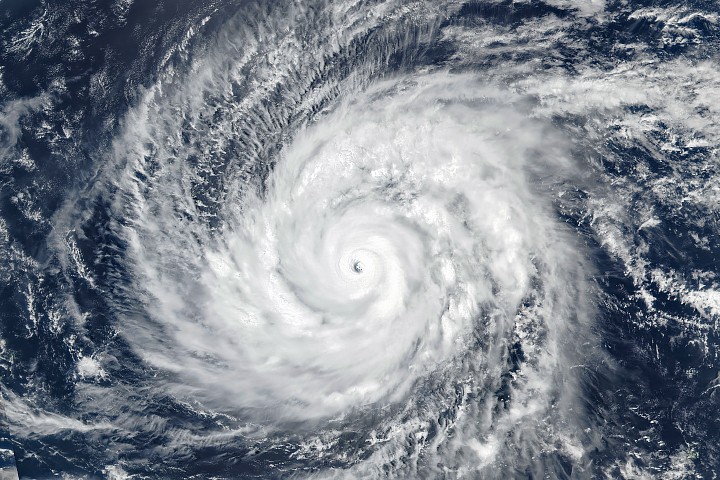
Super Typhoon Sinlaku Strikes the Mariana Islands
In mid-April 2026, Super Typhoon Sinlaku made headlines as it approached the Mariana Islands in the North Pacific Ocean. The storm, which reached an extraordinary intensity for this time of year, was recorded with sustained winds of approximately 280 kilometers per hour (175 miles per hour), classifying it as a Category 5 storm on the Saffir-Simpson wind scale.
Typhoon Formation and Early Impact
Sinlaku’s formation is notable not only for its strength but also for its timing. The typhoon developed in the troposphere, the lowest layer of Earth’s atmosphere, yet its effects were felt much higher up. On April 13, 2026, at around 03:30 Universal Time (1:30 p.m. local time), the Visible Infrared Imaging Radiometer Suite (VIIRS) aboard the Suomi National Polar-orbiting Partnership (NPP) satellite captured stunning images of the storm as it approached the islands.
The Japan Meteorological Agency classified Sinlaku as a violent typhoon, marking it as one of only a few Category 5 tropical cyclones to form so early in the year. This classification indicates that Sinlaku is among the most powerful storms recorded in this region during April.
Forecasts and Impending Conditions
As Sinlaku continued its northwest trajectory toward the Marianas on April 14, forecasts indicated that heavy rain and severe weather conditions would impact Saipan and Tinian from April 14 into April 15. The National Weather Service issued warnings predicting that these areas would experience typhoon conditions before transitioning to tropical storm levels.
The storm’s bands began to affect local weather patterns significantly, leading to concerns about flooding and wind damage across the islands. Residents were urged to prepare for potential evacuations and disruptions as Sinlaku advanced toward landfall.
Gravity Waves and Atmospheric Phenomena
Interestingly, while Super Typhoon Sinlaku was primarily confined to the troposphere, it generated gravity waves detectable in higher atmospheric layers. The VIIRS on NOAA-20 captured nighttime images showing these concentric waves illuminated by airglow—a phenomenon resulting from interactions between atmospheric particles and solar radiation. This adds a fascinating dimension to understanding how such powerful storms can influence conditions well above their immediate environment.
A Broader Context of Tropical Cyclones
Sinlaku is not an isolated incident in 2026; it is the second Category 5 tropical cyclone this year following Tropical Cyclone Horacio, which formed over the South Indian Ocean in late February. Meteorologists are closely monitoring these developments as they highlight an alarming trend in tropical cyclone activity. The early occurrence of such intense storms raises questions about climate patterns and their implications for future weather events.
Additionally, other storms were active around this time. On April 10, Tropical Cyclone Maila was observed rotating across the equator in an opposite direction to typical cyclonic patterns. Meanwhile, on April 12, Tropical Cyclone Vaianu impacted New Zealand’s North Island with destructive winds and heavy rainfall.
What This Means
The emergence of Super Typhoon Sinlaku at this point in the year underscores growing concerns regarding climate change and its influence on weather patterns globally. As meteorologists analyze these early-season storms, they may provide critical insights into future trends in tropical cyclone formation and intensity. For residents of affected areas like the Mariana Islands, preparedness remains essential as such extreme weather events become increasingly common.
For more information, read the original report here.