Curiosity Rover Explores Antofagasta Crater on Mars
The Curiosity rover has successfully reached the rim of the Antofagasta crater on Mars, marking a significant milestone in its ongoing mission. This event took place on April 17, 2026, and while the crater’s well-defined rim was promising, the rover team faced challenges due to unexpected conditions at the crater’s bottom. The decision was made to focus on alternative scientific objectives instead of drilling in this location.
Initial Observations at Antofagasta Crater
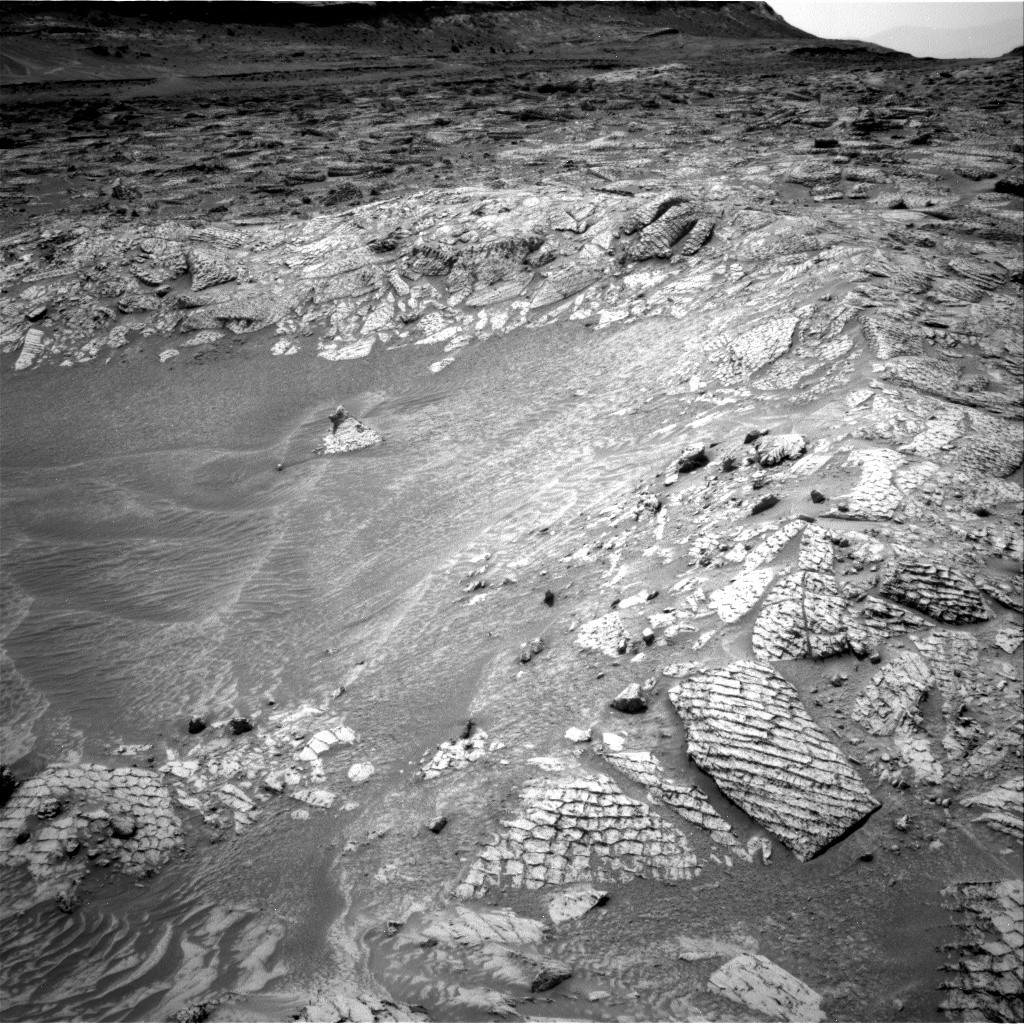
Upon arrival, Curiosity found the Antofagasta crater to be fresh and deep, aligning with expectations. The crater’s rim appeared well-preserved, indicating minimal erosion over time. However, the rover’s team discovered that the bottom was filled with dark, rippled sandy material that obscured potentially interesting rock layers beneath. While there were some rock exposures above this sandy cover that could have provided valuable insights into Martian geology, accessing them would have posed significant risks.
The angle required for Curiosity to reach these layers from the rim would have compromised its ability to deliver samples effectively to onboard instruments. The risk of getting stuck in the loose sand at the bottom was deemed too high, leading to a strategic decision against drilling in or around the crater.
Focus on Rich Bedrock Targets
Despite the setback at Antofagasta, Curiosity’s workspace remained rich with geological features worth studying. The rover team shifted their focus toward detailed imaging and analysis of polygonal features present on the crater rim. Plans included utilizing various instruments such as APXS (Alpha Particle X-ray Spectrometer) for geochemistry, MAHLI (Mars Hand Lens Imager) for close-up imaging, and ChemCam (Chemistry and Camera) for laser-induced breakdown spectroscopy (LIBS) analysis of rocks bearing polygonal structures.
The team also continued their observations of Martian environmental conditions, monitoring dust-devil activity and measuring atmospheric opacity and cloud formations. These ongoing studies contribute valuable data about current Martian weather patterns and surface conditions.
Planning Future Drill Campaigns
With drilling at Antofagasta off the table, Curiosity’s team began strategizing their next drilling campaign. Insights gained from observing exposed layering in nearby buttes during their ascent through Valle Grande have been instrumental in shaping this plan. Team members mapped out various depositional styles and levels of diagenetic activity as they prepared for future drilling operations.
The last successful drill campaign targeting layered sulfate rocks occurred over 150 meters lower in elevation during February/March 2024 at a site known as Mineral King. The upcoming drill campaign aims to collect a representative bedrock sample from layers situated just above those previously explored boxwork formations.
Targeting New Geological Samples
Curiosity’s current workspace has revealed a promising drill target named “Atacama,” which is located conveniently within reach of the rover. Preliminary analyses using APXS, MAHLI, and ChemCam are planned for this potential drill site along with surrounding blocks to provide contextual data. If initial results are favorable, preparations will proceed for a preload test in subsequent plans.
This upcoming drill campaign is anticipated to yield new geological data that could enhance understanding of Mars’ history and surface processes.
What This Means
The exploration of Antofagasta crater exemplifies both the challenges and opportunities faced by NASA’s Curiosity rover as it continues its mission on Mars. While immediate drilling efforts were curtailed due to unforeseen conditions, the rover’s adaptability allows it to pivot towards other scientifically rich targets. By focusing on detailed imaging and preparing for future drilling campaigns, Curiosity remains poised to contribute valuable insights into Martian geology and environmental conditions.
For more information, read the original report here.