























Astronaut Captures Stunning Image of Greenbelt, Maryland from Space
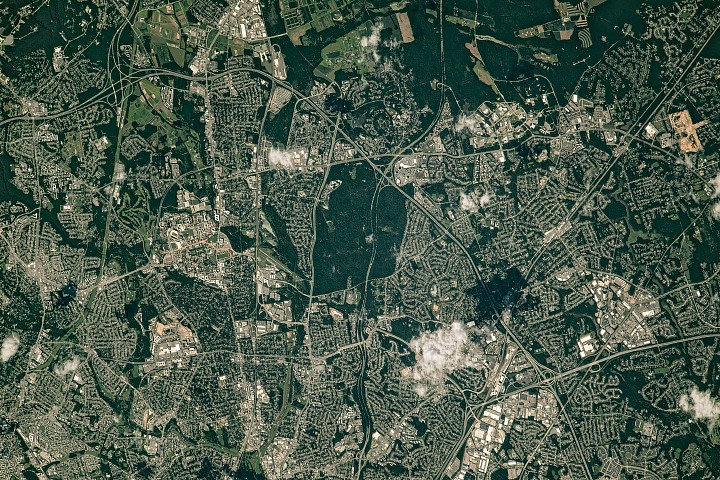
On July 30, 2023, an astronaut aboard the International Space Station (ISS) captured a breathtaking photograph showcasing the lush greenery surrounding Greenbelt, Maryland. The image highlights the Capital Beltway (I-495) as it weaves through this historic suburb of Washington, D.C., revealing not only the area’s natural beauty but also its rich historical significance and urban planning legacy.
Greenbelt Park: A Natural Oasis
Greenbelt Park, a prominent feature in the astronaut’s photograph, spans nearly 5 square kilometers (approximately 2 square miles) and serves as a vital green space for both residents and visitors. Established in 1950 when the land was acquired by the National Park Service, this park offers forested hiking trails, picnic areas, and camping facilities. Originally intended as an extension of the city of Greenbelt, it now stands as a testament to the region’s commitment to preserving natural landscapes amidst urban development.
The park is not just a recreational area; it plays a crucial role in maintaining biodiversity and providing habitats for various wildlife species. Its trails are frequented by nature enthusiasts seeking to escape the hustle and bustle of city life while enjoying scenic views and peaceful surroundings.
The Historic District: A Glimpse into New Deal Architecture
Just north of Greenbelt Park lies the Greenbelt Historic District, which is laid out in a distinctive crescent shape. This area is one of three planned communities developed during the 1930s as part of President Franklin D. Roosevelt’s New Deal program. The initiative aimed to provide employment opportunities during the Great Depression while creating affordable cooperative housing that emphasized accessible green spaces.
Homes within this historic district are interconnected by walking paths that promote community interaction and accessibility. This design philosophy reflects early 20th-century urban planning principles that prioritize pedestrian access over automobile dependency. Additionally, one of the country’s oldest planned shopping centers is situated nearby, further enhancing the community’s charm and functionality.
Navigating Through History: NASA’s Goddard Space Flight Center
Visible in the photograph is NASA’s Goddard Space Flight Center, established on May 1, 1959, as NASA’s first spaceflight complex. Located just east of the Beltway, this facility has played a pivotal role in numerous space missions and research initiatives over its decades-long history. The center is surrounded by patches of forested land that contribute to its serene environment while also serving practical purposes for scientific research.
To the north of Goddard lies a mix of agricultural fields and forested areas in Beltsville, which hosts significant research sites such as those operated by the University of Maryland and the USDA Agricultural Research Service. These institutions contribute to advancements in agricultural science and technology while promoting sustainable practices that benefit both local communities and broader environmental goals.
The Urban Canopy: Tree Cities and Green Corridors
The astronaut’s image also captures other tree-lined areas surrounding Greenbelt. For over three decades, Hyattsville—located just south of College Park—has been recognized as a “Tree City,” reflecting its commitment to urban forestry and environmental stewardship. Such initiatives are essential for enhancing air quality, providing shade, and improving overall community well-being.
The Baltimore-Washington Parkway (MD-295), which bisects Greenbelt Park, showcases additional segments lined with trees that contribute to both aesthetics and ecological health in this densely populated region. These green corridors are vital for wildlife movement and help mitigate urban heat effects while providing recreational opportunities for residents.
Technical Details Behind the Photograph
The stunning image captured from space was taken using a Nikon D5 digital camera with an impressive focal length of 1150 millimeters. It was processed to enhance contrast while removing lens artifacts for clarity. This photograph is part of NASA’s ongoing efforts to document Earth from space through its ISS National Laboratory program, which aims to provide valuable imagery for scientists and the public alike.
Astronauts aboard the ISS regularly capture images that reveal insights into Earth’s geography, climate patterns, and human impacts on landscapes. These photographs serve not only scientific purposes but also foster public interest in planetary health and environmental conservation efforts.
What This Means
This recent photograph serves as more than just an aesthetic representation; it encapsulates significant historical narratives tied to urban planning, environmental conservation, and scientific exploration. As cities continue to expand around natural landscapes like those seen in Greenbelt, understanding these connections becomes increasingly important for future development strategies that prioritize sustainability alongside growth.
The image also highlights how technology can bridge gaps between scientific research and public awareness, fostering appreciation for both natural beauty and historical context within urban environments.
For more information, read the original report here.