























Curiosity Rover Reaches Antofagasta Crater, Plans Next Steps
NASA’s Curiosity rover has successfully arrived at the rim of the Antofagasta crater on April 17, 2026. This 10-meter (33 feet) crater presented a promising geological opportunity for exploration, but initial assessments revealed challenges in accessing potentially valuable rock layers due to a covering of sandy material.
Initial Observations of Antofagasta Crater
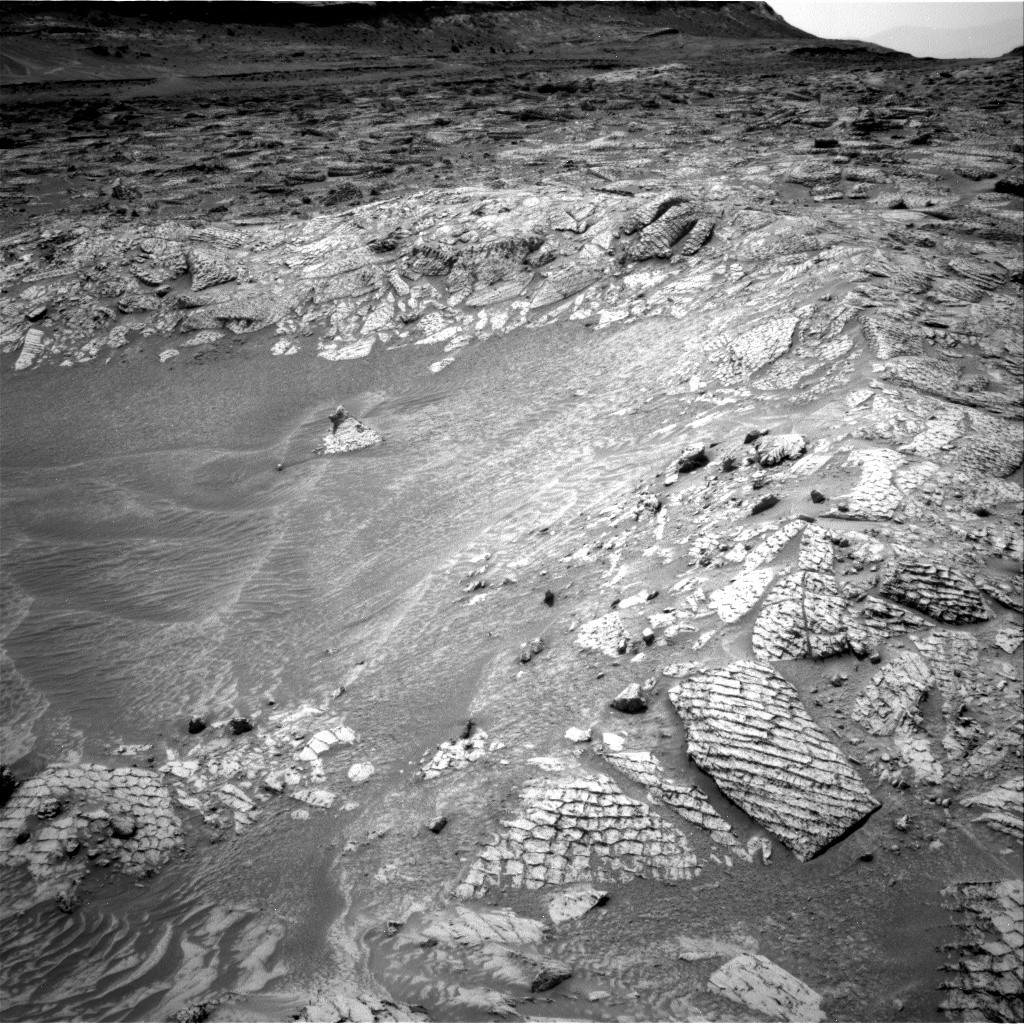
Upon reaching the crater, Curiosity’s team noted that the site appeared well-preserved with a distinct rim. However, the interior was filled with dark, rippled sand that obscured interesting geological features beneath it. The rover’s operators observed a few rock exposures above the sand that might have been shielded from space radiation since their deposition. Unfortunately, attempting to reach these layers would have required positioning the rover at an awkward angle, risking its stability and ability to collect samples.
The team also examined nearby rock blocks to determine if they were ejecta from the crater. However, the uniformity of the visible rocks made it difficult to ascertain their origins, leading to the decision against drilling in or around Antofagasta.
Rich Geological Features Nearby
Despite the setback at Antofagasta, Curiosity’s workspace is rich with intriguing bedrock targets. The mission team has planned detailed imaging of both the crater and adjacent buttes, employing various instruments such as APXS (Alpha Particle X-ray Spectrometer) for geochemical analysis and MAHLI (Mars Hand Lens Imager) for close-up imaging. Additionally, ChemCam (Chemistry and Camera) will conduct Laser-Induced Breakdown Spectroscopy (LIBS) on polygon-bearing rocks located on the crater rim.
The ongoing observations also include monitoring Martian environmental conditions, such as tracking dust devils and measuring atmospheric opacity and cloud cover. These activities are crucial for understanding both current conditions on Mars and how they may affect future exploration efforts.
Planning for Future Drilling Campaigns
With drilling at Antofagasta off the table, Curiosity’s team has shifted focus to planning a new drilling campaign. The rover is currently navigating through “Valle Grande,” where it has been documenting exposed layering in buttes above its current location. This data will inform their strategy for drilling into layered sulfate strata that lie ahead.
The last significant drilling into layered sulfate rocks occurred during the “Mineral King” campaign in February/March 2024 when Curiosity was over 150 meters (492 feet) lower in elevation than its current position. The goal for this upcoming drill campaign is to obtain a representative bedrock sample from layers situated just above the boxwork formations.
The Next Drill Target: Atacama
The workspace identified for Sol 4870 includes a promising drillable block named “Atacama.” Preliminary analyses using APXS, MAHLI, and ChemCam are planned to assess this target further. If initial results are favorable, a preload test will be conducted in subsequent plans, paving the way for new drilling data from Mars.
What This Means
The successful arrival at Antofagasta crater marks another milestone in Curiosity’s ongoing mission to explore Mars’ geology and climate history. While immediate drilling opportunities were limited due to environmental factors, the rover’s adaptability allows it to pivot quickly toward new targets. The insights gained from upcoming drilling campaigns could enhance understanding of Mars’ past environments and contribute valuable data for future missions aimed at human exploration of the Red Planet.
For more information, read the original report here.