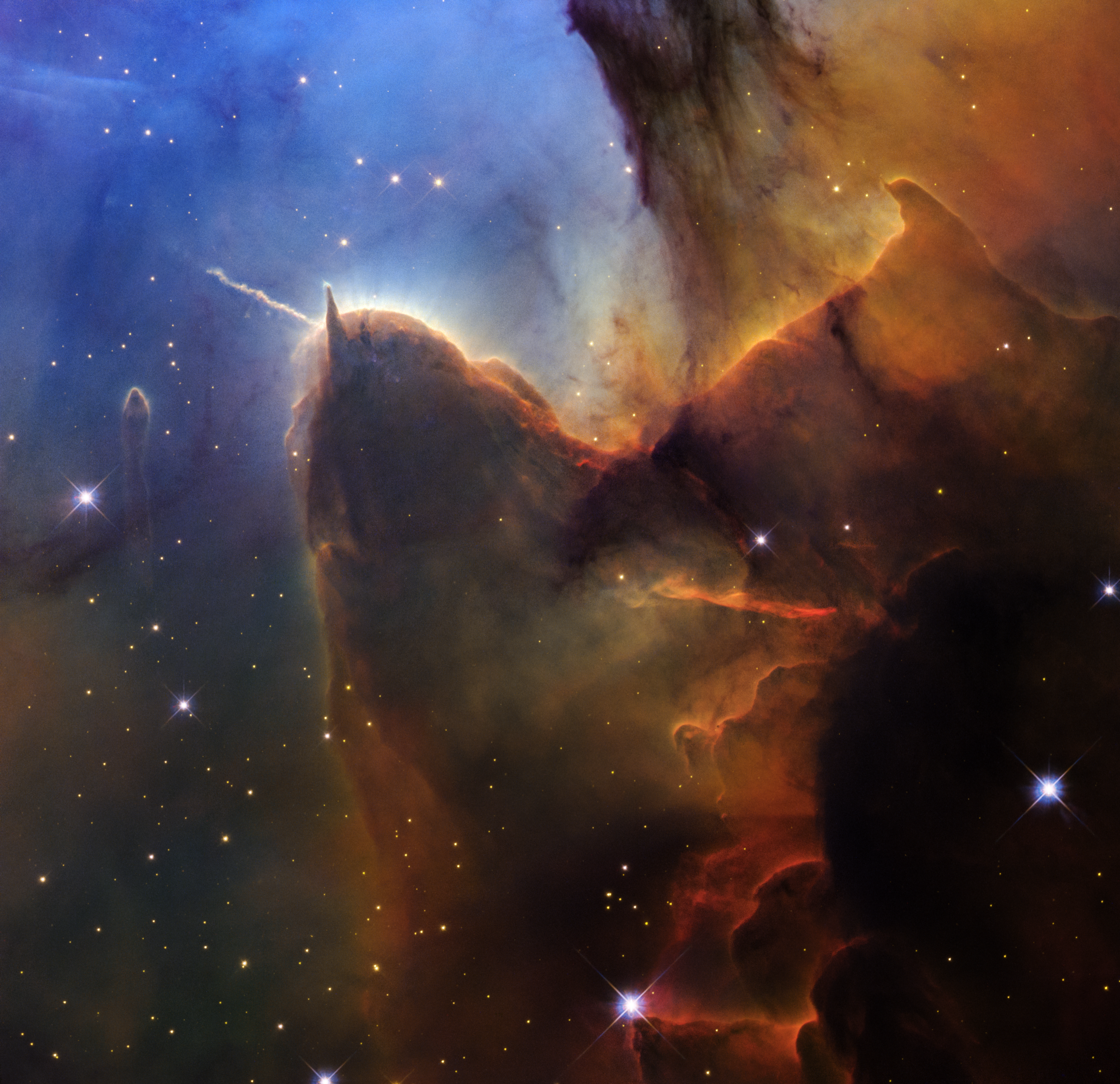
NASA’s Hubble Space Telescope Captures Stunning Image of the Trifid Nebula
On April 20, 2026, NASA unveiled a breathtaking new image of the Trifid Nebula, a vibrant region of star formation located approximately 5,000 light-years from Earth. This release coincides with the 36th anniversary of the Hubble Space Telescope’s launch on April 24, showcasing the telescope’s enduring capability to capture intricate details of cosmic phenomena.
A Closer Look at the Trifid Nebula
The Trifid Nebula, known for its distinct three-lobed structure, presents a mesmerizing palette of colors reminiscent of an underwater landscape. The latest image highlights the nebula’s complex environment filled with gas and dust, which plays a crucial role in star formation. The vibrant hues captured by Hubble’s visible light imaging reveal fine-grained particles suspended in this celestial cloud, creating a scene that evokes the depths of an ocean teeming with life.
This nebula is not just visually striking; it is also scientifically significant. The massive stars located outside this particular field of view have been influencing this region for over 300,000 years. Their intense stellar winds create an expansive bubble that compresses surrounding gas and dust. This process is pivotal in triggering new waves of star formation within the nebula.
The Role of Massive Stars in Star Formation
Massive stars are known to have profound effects on their environments. In the case of the Trifid Nebula, these stars generate powerful winds that shape the surrounding materials. As these winds push against the gas and dust clouds, they create shock waves that can lead to increased density in certain areas. This increase in density can initiate gravitational collapse, ultimately resulting in new stars being born.
The interplay between stellar winds and interstellar material not only influences star formation but also contributes to the overall evolution of galaxies. Understanding how massive stars interact with their surroundings helps astronomers piece together the lifecycle of stars and their contributions to galactic ecosystems.
Hubble’s Legacy and Continued Importance
The release of this new image serves as a reminder of Hubble’s significant contributions to astronomy over its three-and-a-half decades in operation. Launched in 1990, Hubble has provided invaluable data and stunning visuals that have transformed our understanding of the universe. Its ability to observe deep space phenomena has made it an essential tool for astronomers worldwide.
As technology advances, so does Hubble’s imaging capability. The telescope has undergone multiple servicing missions that have upgraded its instruments and enhanced its observational power. This latest image is a testament to Hubble’s resilience and its ongoing role in uncovering cosmic mysteries.
Future Prospects for Space Observation
The advancements made by Hubble pave the way for future space telescopes like the James Webb Space Telescope (JWST), which aims to delve even deeper into cosmic history. While JWST focuses on infrared observations to study distant galaxies and exoplanets, Hubble continues to excel in visible light imaging, complementing JWST’s capabilities.
As both telescopes operate simultaneously, they provide a more comprehensive view of celestial phenomena such as nebulae and star clusters. This collaborative approach enhances scientific understanding and offers richer insights into how stars form and evolve over time.
What This Means
The stunning imagery captured by NASA’s Hubble Space Telescope not only showcases the beauty of cosmic structures like the Trifid Nebula but also emphasizes the importance of continued astronomical research. Understanding regions like this nebula helps scientists unravel fundamental questions about star formation and galactic evolution. As technology progresses with new telescopes entering service, humanity stands on the brink of discovering even more about our universe’s origins and dynamics.
For more information, read the original report here.