






























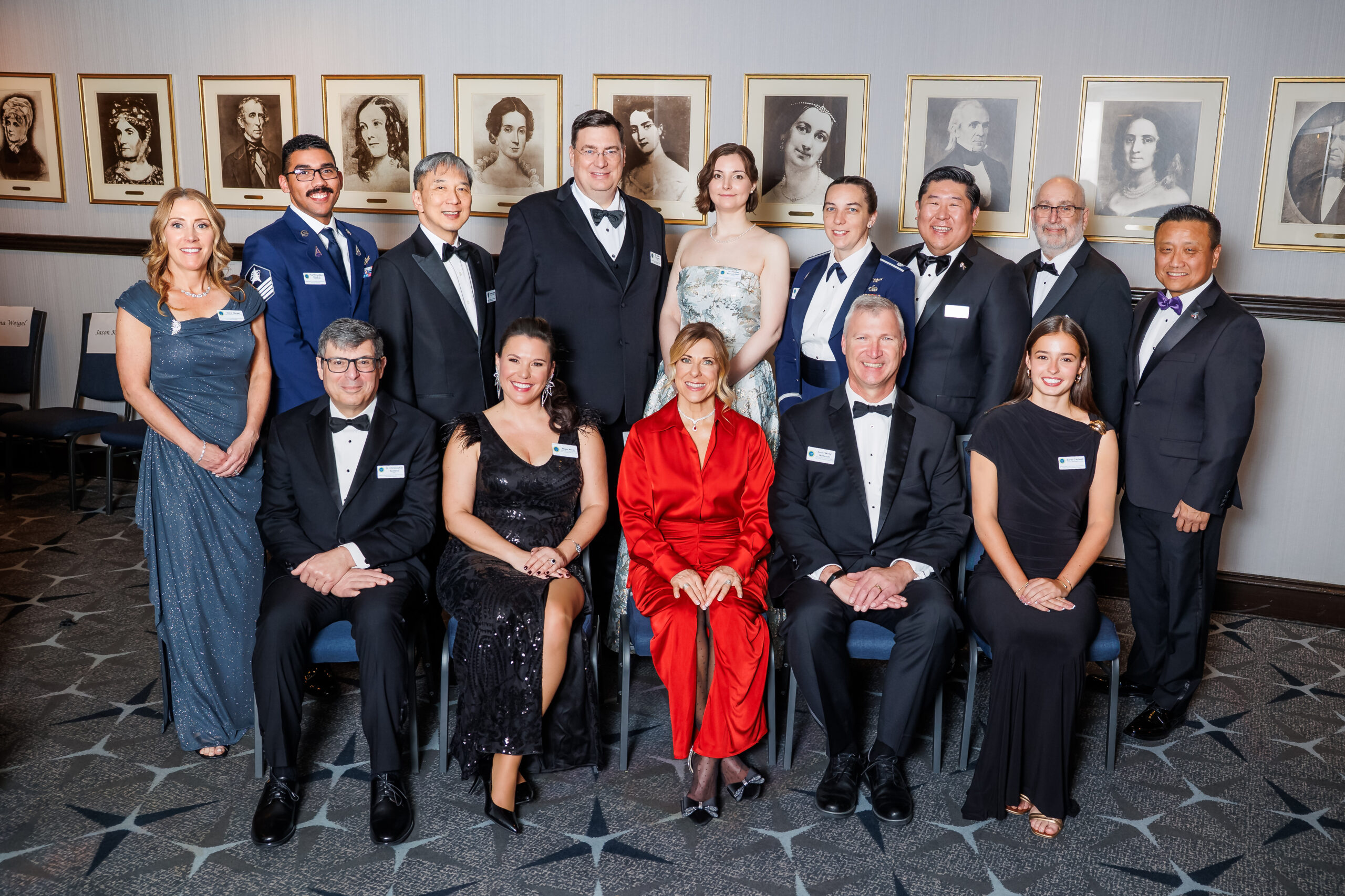
NASA Leaders Honored for Contributions to Human Spaceflight
The National Space Club & Foundation recognized significant achievements in aerospace on March 13, 2026, during its annual awards ceremony held in Washington, D.C. Among the honorees were Howard Hu and Dana Weigel, two prominent figures at NASA’s Johnson Space Center, celebrated for their exceptional contributions to human spaceflight initiatives.
Howard Hu: A Pillar of the Orion Program
Howard Hu, the Orion Program Manager, received the prestigious Norman L. Baker Astronautics Engineer Award for his sustained technical contributions across various human spaceflight missions. As the leader of NASA’s Orion spacecraft development for Artemis missions aimed at returning humans to the Moon, Hu’s role has been pivotal. His career with the Orion program spans several key positions, including deputy program manager and manager of avionics, power, and software systems.
Hu’s journey with Orion began as the Vehicle System Performance and Analysis lead, where he played a crucial role in shaping the spacecraft’s capabilities from its inception. The recent Artemis II mission, which launched on April 1, 2026, marked a significant milestone as it was the first crewed flight of the Orion spacecraft. During this mission, astronauts Reid Wiseman, Victor Glover, Christina Koch, and Canadian Space Agency astronaut Jeremy Hansen successfully orbited the Moon before splashing down safely on April 10 in the Pacific Ocean off San Diego.
This historic mission set a new record for human space travel by reaching a distance of 252,756 miles from Earth. The data collected during Artemis II will be instrumental in refining operations and evaluating Orion’s performance for future deep-space missions.
Dana Weigel: Leadership in International Space Station Operations
Dana Weigel was honored with the Eagle Manned Mission Award for her leadership as the International Space Station (ISS) Program Manager. Under her guidance, the ISS celebrated a remarkable milestone on November 2, 2025—25 years of continuous human habitation. This orbiting laboratory serves as a critical platform for research and development that supports both commercial endeavors in low Earth orbit and future deep-space exploration missions.
Weigel’s extensive experience includes various leadership roles within NASA’s ISS program. She previously served as deputy chief of the Flight Director Office and led recovery efforts following an in-flight anomaly during an extravehicular activity (EVA). Additionally, she has acted as a NASA flight director for significant missions such as STS-123 and contributed to studies aimed at servicing geosynchronous Earth orbit satellites.
Acknowledgment of Excellence
The awards presented to Hu and Weigel were selected by panels comprising experts from industry, government, and academia. These honors reflect not only individual achievements but also advancements that align with national interests in aerospace exploration. The recognition took place during the 69th Annual Robert H. Goddard Memorial Dinner at the Washington Hilton.
Vanessa Wyche, Director of Johnson Space Center, emphasized the importance of Hu and Weigel’s contributions to human space exploration. “It was a privilege to be there in person to celebrate them,” she stated. “Their work has had a lasting impact on our agency and beyond.”
The Future of Human Space Exploration
As NASA continues its ambitious plans for lunar exploration through Artemis III and beyond, Hu and Weigel’s leadership remains vital. The upcoming Artemis III mission aims to test integrated operations between Orion and lunar landing systems while preparing for future crewed missions to Mars.
Both leaders exemplify how technical excellence combined with visionary leadership can propel human spaceflight forward. Their work not only enhances current missions but also lays a foundation for future explorations that could redefine humanity’s presence beyond Earth.
What This Means
The recognition of Howard Hu and Dana Weigel underscores the critical role that leadership plays in advancing aerospace technology and exploration efforts. As NASA prepares for future missions that aim to return humans to the Moon and eventually reach Mars, their contributions highlight how dedicated professionals are essential for overcoming challenges in human spaceflight. This acknowledgment serves as an inspiration for aspiring engineers and scientists who wish to contribute to humanity’s journey into space.
For more information, read the original report here.







