
























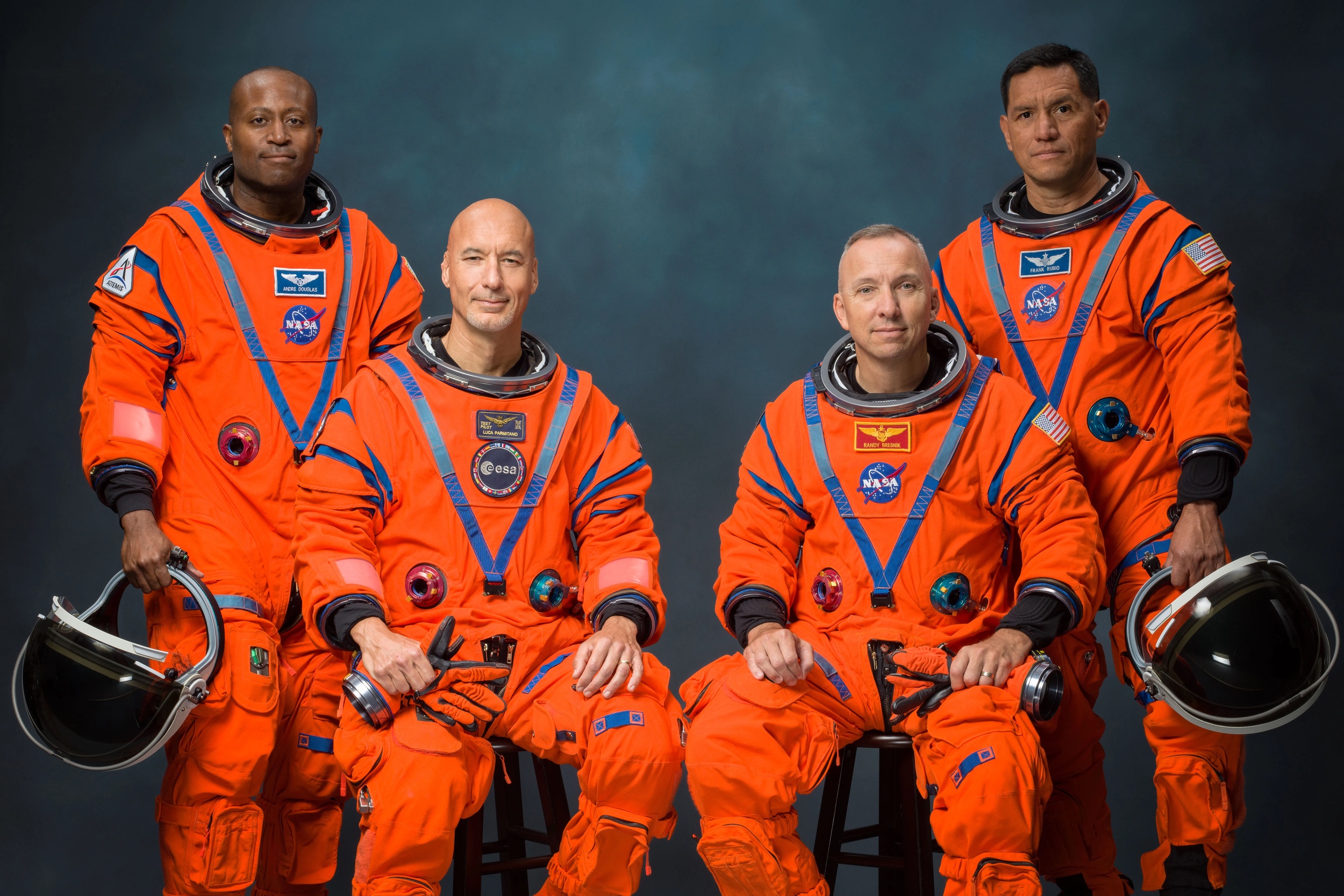
NASA Unveils Crew for Artemis 3 Mission Set for 2027
NASA has officially announced the crew for the upcoming Artemis 3 mission, scheduled for mid-2027. This mission will serve as a crucial test flight in low Earth orbit, where the Orion spacecraft will attempt to dock with prototypes of two lunar landers. The announcement was made during an event at the Johnson Space Center on June 9, highlighting the agency’s commitment to advancing its lunar exploration goals.
Meet the Artemis 3 Crew
The Artemis 3 mission will be commanded by Randy Bresnik, a seasoned NASA astronaut with experience from one of the final space shuttle missions and nearly five months spent aboard the International Space Station (ISS). Serving as pilot is Luca Parmitano from the European Space Agency, who has completed two long-duration missions on the ISS in 2013 and again from 2019 to 2020.
The mission specialists include Frank Rubio, who holds the record for the longest American spaceflight at 371 days during his recent mission in 2022-23, and Andre Douglas, a rookie astronaut who previously served as a backup for Artemis 2. Bob Hines will act as the backup astronaut, training alongside the primary crew to ensure readiness for any potential changes.
This mission is described by NASA officials as one of the most complex crewed missions ever undertaken. It involves a series of coordinated launches and intricate docking operations that are critical to future lunar missions.
Mission Objectives and Operations
Originally intended to be NASA’s first crewed lunar landing attempt, Artemis 3 has been restructured into a test flight involving both Orion and lunar landers in low Earth orbit. This change mirrors aspects of the historic Apollo 9 mission. Jeremy Parsons, recently appointed as Artemis program manager, outlined how this two-week mission will unfold.
The mission begins with Blue Origin launching its prototype Blue Moon Mark 2 lander into low Earth orbit, where it can remain for up to 90 days. The Orion spacecraft will then launch atop NASA’s powerful Space Launch System (SLS) rocket. Once in orbit, Orion will rendezvous and dock with Blue Moon for two days. During this time, astronauts will enter the lander to test an iteration of Axiom Space’s lunar spacesuit.
Parsons emphasized that this phase allows teams to gather vital data on systems necessary for future lunar lander crews while remaining within a manageable distance from Earth.
After undocking from Blue Moon, Orion will await another launch—this time of a SpaceX Starship lunar lander prototype. The two vehicles will dock and spend one day together before Orion prepares to return home, concluding its mission with a splashdown in the Pacific Ocean.
The prototypes used in this mission are designed to simulate conditions for future lunar missions; however, neither is equipped for actual landing operations. For instance, SpaceX’s Starship variant involved in this test will lack a crew cabin or landing systems but will feature modifications like a docking port.
Challenges Ahead: Schedule Risks
While both Blue Origin and SpaceX are expected to have their lander prototypes ready by Artemis 3’s projected launch date in 2027, challenges remain. Concerns have been raised regarding Blue Origin’s ability to launch its Blue Moon lander following an explosion during a static-fire test of its New Glenn rocket on May 28. Although progress is being made on investigations and repairs, skepticism exists about whether New Glenn can resume flights before mid-2027.
Nasa Administrator Jared Isaacman mentioned that NASA is considering “decoupling” Blue Moon from New Glenn to allow it to launch on alternative vehicles if necessary. However, logistical challenges persist due to size constraints; Blue Moon Mark 2 requires a large payload fairing that may not be compatible with other rockets currently available.
Nasa officials are actively collaborating with Blue Origin to expedite progress on launching capabilities while ensuring safety and reliability remain paramount. Isaacman confirmed that Artemis 3 would not proceed unless both landers are ready and meet all outlined objectives designed to mitigate risks associated with future lunar landings.
What This Means
The successful execution of Artemis 3 is vital not only for NASA but also for international partners involved in lunar exploration efforts. By testing key technologies and operational procedures closer to Earth before venturing further into space, NASA aims to enhance safety protocols and operational efficiency for subsequent missions aimed at returning humans to the Moon by late 2028. As preparations continue, industry stakeholders remain cautiously optimistic about overcoming existing hurdles while pushing forward into an era of renewed human space exploration.
For more information, read the original report here.