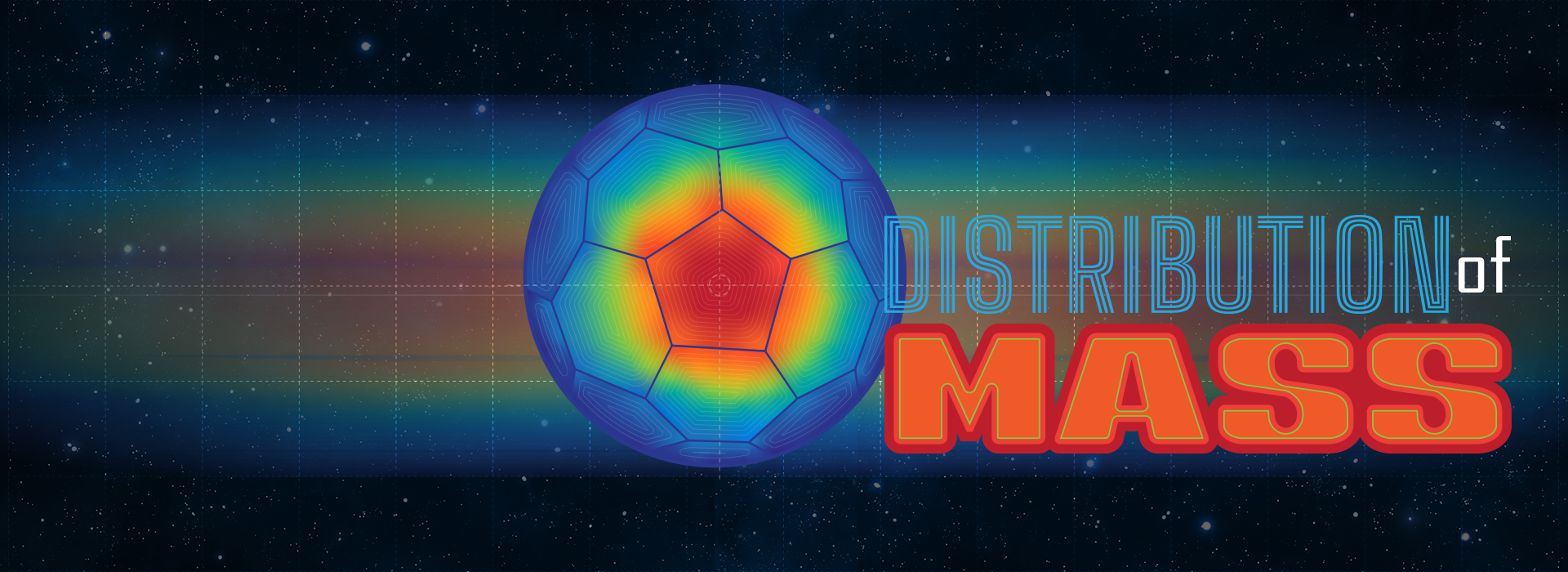
Understanding Mass Distribution Through Soccer Balls
Mass distribution is a fundamental concept that influences various fields, from astrophysics to aerospace engineering. It plays a crucial role in understanding the behavior of objects, including the design of sports equipment like soccer balls. This article explores how mass distribution affects the performance of soccer balls and highlights recent experiments conducted in microgravity to enhance their design.
The Significance of Mass Distribution
Mass distribution refers to how mass is spread within an object, which can significantly affect its motion and stability. In the case of a soccer ball, engineers focus on achieving an even distribution of mass to ensure optimal performance. A well-balanced soccer ball will spin smoothly and travel predictably when kicked. If one part of the ball is heavier than another, its center of mass shifts, leading to erratic movements.
The center of mass is the unique point around which an object’s mass is perfectly balanced. For a soccer ball to perform well, this center must be located at its geometric center. Engineers utilize precision scales, computer models, and extensive testing to analyze and refine the mass distribution of soccer balls, ensuring they meet performance standards.
Engineering Challenges in Ball Design
Designing a high-quality soccer ball involves more than just aesthetic considerations; it requires intricate engineering solutions. Engineers strive for dynamic balance, which allows the ball to travel smoothly without unexpected deviations during flight. Achieving this balance involves meticulous planning and testing throughout the design process.
On Earth, gravity can obscure some aspects of how objects move. To gain clearer insights into motion dynamics, NASA partnered with Adidas in 2019 to send specially designed soccer balls to the International Space Station (ISS). This collaboration aimed to study how these balls behave in microgravity—a unique environment where gravitational effects are minimized.
Astronauts on the ISS conducted experiments that provided valuable data on ball motion that cannot be replicated on Earth. The findings from these experiments have already contributed to advancements in modern soccer ball design, enhancing their accuracy and consistency.
Conducting Experiments at Home
While space-based research offers invaluable insights into mass distribution and motion, individuals can also explore these concepts through simple experiments at home or school. One engaging activity involves using various types of sports balls—such as a soccer ball, basketball, and tennis ball—to observe their spinning behavior.
- Gather different types of sports balls.
- Spin each one on the ground or between your hands.
- Observe for wobbling or smooth spinning.
This hands-on approach allows participants to identify which balls are well-balanced and which may exhibit uneven mass distribution based on their spinning behavior. Such experiments not only provide practical experience but also deepen understanding of fundamental physics principles related to motion.
Career Opportunities in Mass Distribution Science
The study of mass distribution opens up numerous career paths for those interested in science and engineering. Several professions focus on designing and analyzing objects with optimal mass distribution:
- Computer-Aided Design (CAD) Technician/Drafter: These professionals convert sketches into technical drawings using specialized software. A two-year associate degree from a technical or community college is typically required for this role.
- Computational Fluid Dynamics Engineer: These engineers model fluid behavior using computer simulations. They may analyze airflow around sports equipment or improve aircraft designs. A strong engineering background is essential for success in this field.
- Physicist: Physicists study matter and energy, developing theories and conducting experiments to understand physical phenomena. Advanced degrees are usually necessary for careers in physics due to the complex nature of the work involved.
What This Means
The exploration of mass distribution through practical examples like soccer balls illustrates its importance across various domains. Understanding how mass affects motion not only enhances sports equipment design but also contributes to advancements in aerospace engineering and other scientific fields. For aspiring scientists and engineers, delving into this area offers promising career opportunities while fostering a deeper appreciation for the underlying principles that govern our physical world.
For more information, read the original report here.