




















Hubble Space Telescope Captures Stunning Image of Trifid Nebula
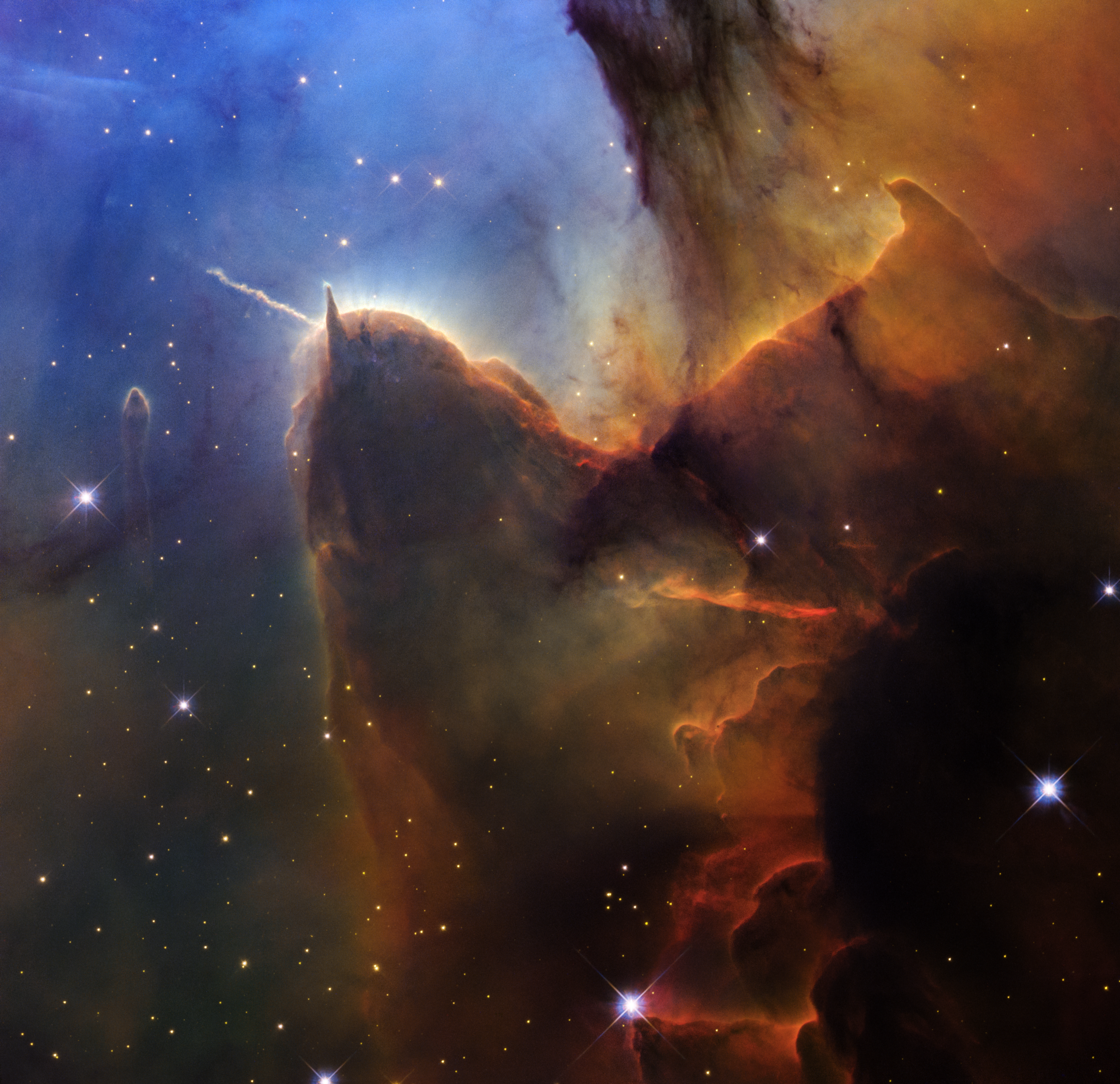
The Hubble Space Telescope has unveiled a breathtaking image of the Trifid Nebula, located approximately 5,000 light-years away from Earth. Released on April 20, 2026, this detailed view celebrates the 36th anniversary of Hubble’s launch on April 24, showcasing vibrant colors and intricate structures that resemble an underwater scene filled with sediment.
Understanding the Trifid Nebula
The Trifid Nebula, known scientifically as M20, is a region of active star formation. It is characterized by its unique appearance, which combines both emission and reflection nebulae. The bright colors captured in Hubble’s latest image are a result of various gases and dust interacting with the intense radiation emitted by nearby stars.
This nebula has been influenced by massive stars that have existed in this area for at least 300,000 years. These stars generate powerful stellar winds that create an expansive bubble within the surrounding gas and dust. The image reveals only a small portion of this bubble, which plays a crucial role in compressing the cloud material and triggering new waves of star formation.
The Science Behind the Image
Hubble’s visible light imaging capabilities allow for detailed observations of celestial phenomena. The telescope utilizes advanced technology to capture light across different wavelengths, providing scientists with insights into the composition and behavior of cosmic structures. In this instance, the vibrant colors represent various elements: hydrogen emits red light, while blue hues indicate the presence of young stars illuminating surrounding dust.
This latest image not only highlights Hubble’s technical prowess but also underscores its importance in advancing astronomical research. By studying regions like the Trifid Nebula, astronomers can gain a deeper understanding of how stars form and evolve over time.
Impact on Astronomical Research
The release of this image comes at a time when interest in space exploration and astronomy is surging. Hubble has been instrumental in numerous discoveries since its launch in 1990, contributing to our knowledge about galaxies, black holes, and planetary systems. The telescope’s ability to capture high-resolution images continues to inspire both scientists and the public alike.
Furthermore, as new telescopes like the James Webb Space Telescope begin operations, Hubble’s legacy remains vital. The two telescopes complement each other; while Webb focuses on infrared observations to peer deeper into space and time, Hubble excels at visible light imaging. Together, they provide a more comprehensive view of our universe.
What This Means for Astronomy Enthusiasts
The stunning imagery released by Hubble serves not only as a visual feast but also as an educational tool for astronomy enthusiasts. It illustrates complex processes such as star formation and highlights the dynamic nature of cosmic environments. For those interested in learning more about space science, resources are available through NASA’s website and various educational platforms.
The ongoing exploration facilitated by telescopes like Hubble ensures that humanity continues to uncover the mysteries of the universe. As technology advances and new missions are launched, there will undoubtedly be more breathtaking discoveries waiting to be made.
For more information, read the original report here.