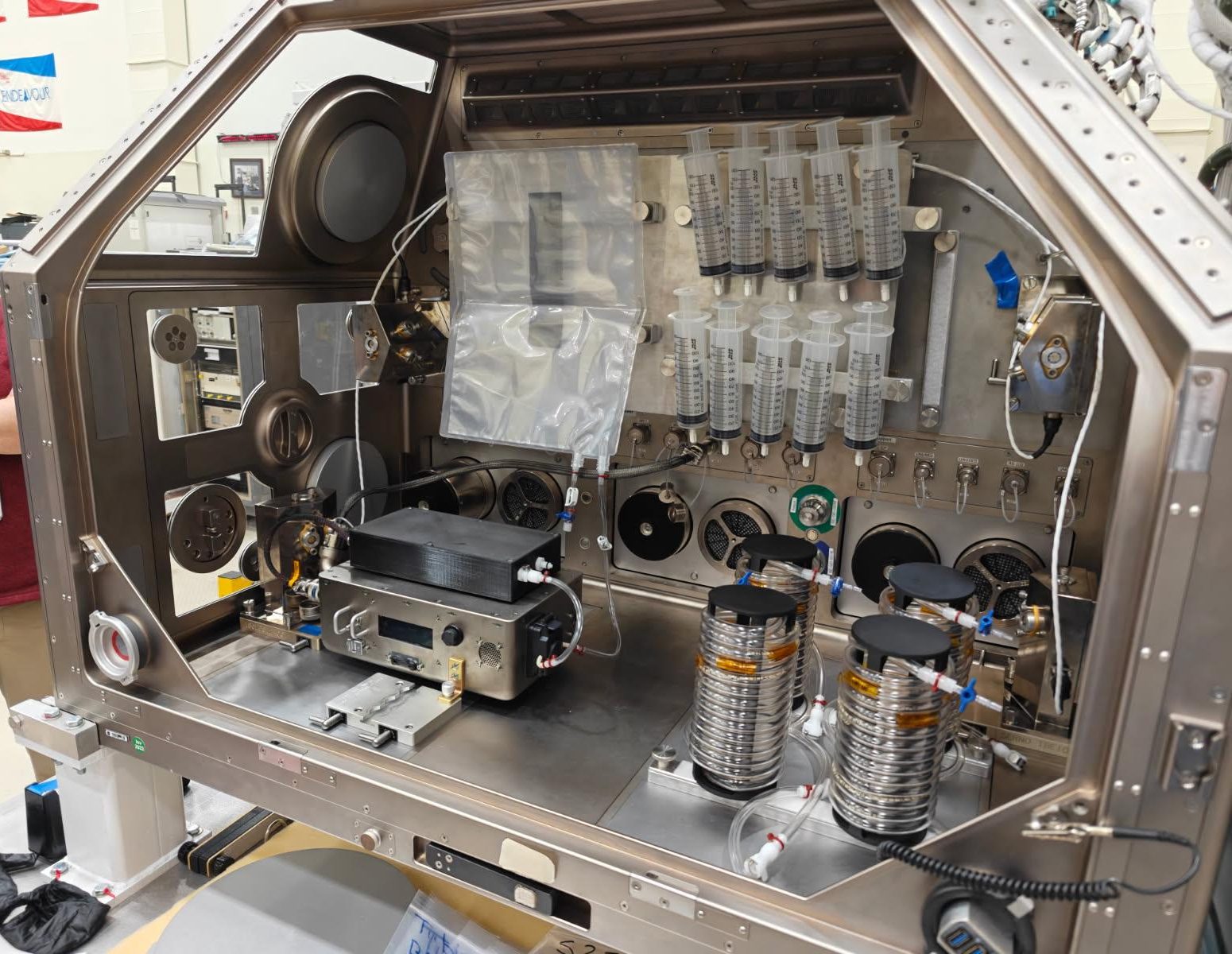
Nasa Develops On-Demand IV Fluid System for Deep Space Missions
Nasa is advancing its medical capabilities for long-duration space missions with the introduction of a new system that can generate intravenous (IV) fluid on-demand. This innovation, known as IntraVenous Fluid GENeration Miniaturized (IVGEN Mini), aims to address the challenges posed by the limited shelf life of prepackaged IV fluids, which currently only last 16 months. The system was launched to the International Space Station (ISS) on April 11, as part of NASA’s Northrop Grumman Commercial Resupply Services 24 mission.
Addressing Medical Needs in Space
During crewed missions beyond low Earth orbit, particularly those lasting up to three years, astronauts may face various medical emergencies that require immediate treatment. Dehydration and burns are among the conditions that IV fluids can effectively address. However, transporting sufficient quantities of prepackaged IV fluid poses logistical challenges due to their expiration dates and weight constraints.
The IVGEN Mini system is designed to produce sterile, medical-grade IV fluid using just water and sodium chloride. By transforming water from the ISS into IV fluid as needed, NASA aims to eliminate concerns regarding the shelf life of prepackaged supplies. This capability is especially critical for future missions to Mars and other distant destinations where resupply options are limited.
How IVGEN Mini Works
The operation of IVGEN Mini involves a straightforward yet effective process. Astronauts will add drinking water from the ISS into a large supply bag connected to the system. The water undergoes filtration to remove particulates and mineral ions before flowing into an output bag containing premeasured sodium chloride. The combination creates sterile IV fluid ready for medical use.
According to Courtney Schkurko, engineering project manager at NASA Glenn Research Center, tentative operations for testing the system are scheduled for May. Over two days, astronauts aboard the ISS will generate 10 liters of IV fluid, which will then be returned to Earth for analysis to ensure it meets safety standards.
Advancements Over Previous Technologies
The IVGEN Mini is a significant improvement over its predecessor, originally called IVGEN, which was tested aboard the ISS in 2010. The earlier version was larger due to additional sensing equipment required for validation purposes. With advancements in technology, NASA has been able to miniaturize the system while enhancing its efficiency.
Schkurko highlighted that this new iteration has reduced both size and weight significantly. The previous model relied on gaseous nitrogen for pumping fluids; however, the miniaturized pumps in IVGEN Mini optimize design and improve filtering processes.
Benefits for Future Missions
The implications of using IVGEN Mini extend beyond just addressing shelf life concerns. During long-duration missions such as those planned for Mars exploration, minimizing cargo weight is crucial. Traditional methods would require astronauts to carry large quantities of IV fluid that could expire during their journey. In contrast, with IVGEN Mini onboard, astronauts can produce what they need when they need it.
“On a mission to Mars,” Schkurko explained, “if you needed to fly 100 liters of IV fluid, those 100 one-liter bags will take up a large amount of space.” Instead of packing these heavy supplies, astronauts can rely on a compact device that generates fresh fluid as required—reducing both risk and resource consumption.
Future Testing and Standards Compliance
The current version of IVGEN Mini can produce 1.2 liters of IV fluid per hour—adequate for addressing potential medical emergencies during deep space missions. The team adheres to United States Pharmacopeia standards (a set of regulations ensuring quality in pharmaceuticals), ensuring that the produced fluid meets necessary pH values and salinity tolerances while remaining free from contaminants like bacteria or organic carbon.
Although testing aboard the ISS will not involve administering generated fluids directly to crew members, it sets the stage for future developments in space medicine technology. Following these initial tests, plans are already in place for shelf-life evaluations of the produced fluids as part of ongoing research aimed at supporting human exploration on both the Moon and Mars.
What This Means
The development of the IVGEN Mini represents a significant step forward in ensuring astronaut health during extended space missions. By providing an on-demand solution for generating essential medical supplies like intravenous fluids, NASA addresses critical logistical challenges associated with deep space travel. This innovation not only enhances crew safety but also optimizes cargo loads—key factors in successful long-duration missions beyond Earth’s orbit.
For more information, read the original report here.