Richat Structure: Unraveling the Mysteries of the Eye of the Sahara
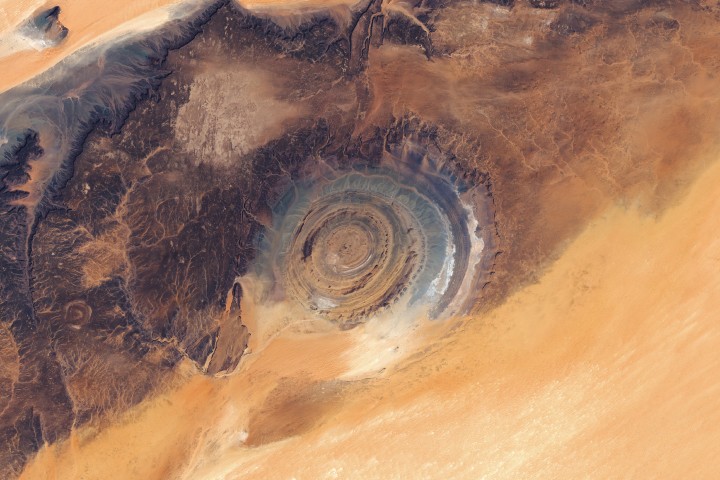
The Richat Structure, often referred to as the “Eye of the Sahara,” is a striking geologic formation located on the Adrar Plateau in northern Mauritania. Spanning approximately 40 kilometers (25 miles) in diameter, this unique feature has intrigued scientists and explorers since its discovery. Initially believed to be an impact crater, recent geological research has revealed its true nature as a deeply eroded geologic dome formed by ancient igneous activity.
Geological Significance of the Richat Structure
When viewed from space, the Richat Structure stands out as a remarkable circular formation composed of concentric ridges. French geographers first documented this geological marvel in the 1930s, dubbing it the “Richat buttonhole.” However, it was not until NASA astronauts Ed White and James McDivitt captured images of it during their Gemini IV mission that it gained international fame as “The Eye of the Sahara.”
The structure’s formation is attributed to a complex interplay of geological processes. Initially thought to be an impact crater due to its circular shape, researchers have since established that it is actually a geologic dome. This dome was formed by the uplift of rock over an underground intrusion of igneous material. As erosion wore away different rock types at varying rates, circular ridges known as cuestas emerged, creating a visually stunning landscape.
Understanding Its Formation
The Richat Structure’s distinctive appearance can be attributed to multiple geological factors. The contrasting colors observed in its ridges—orange and gray—represent different sedimentary and igneous rock types present in both the structure and its surrounding area. Over millions of years, natural forces such as wind and water have sculpted this landscape, resulting in the breathtaking vistas seen today.
Research has shown that erosion played a crucial role in shaping the Richat Structure. The varying resistance of different rock types to erosion has led to the development of its characteristic circular features. This process highlights not only the dynamic nature of Earth’s geology but also provides insights into historical climatic conditions that have influenced this region over time.
The Richat Structure in Context
The Richat Structure is not just a geological curiosity; it also holds immense cultural and historical significance. The surrounding Adrar Plateau is rich with human history, featuring Paleolithic stone tools and Neolithic cave paintings that testify to early human habitation. Additionally, remnants of medieval towns used by caravans traversing the Sahara Desert add layers to its historical narrative.
This region’s unique geology and rich history make it a subject of interest for both scientists and tourists alike. Geologists study its formation processes while historians explore its archaeological significance. The convergence of these fields underscores how natural landscapes can shape human culture and vice versa.
Future Research Directions
Ongoing research aims to further unravel the mysteries surrounding the Richat Structure. Recent studies have focused on understanding its age and formation history through advanced geophysical modeling techniques. These investigations are critical for developing comprehensive theories about not only this specific structure but also similar geological formations worldwide.
As interest in Earth’s geological wonders continues to grow, so too does awareness about preserving these natural sites for future generations. The Richat Structure serves as a reminder of Earth’s dynamic history and highlights the importance of ongoing scientific inquiry into our planet’s past.
What This Means
The Richat Structure represents more than just an extraordinary natural phenomenon; it embodies a rich tapestry of geological history intertwined with human culture. Its ongoing study offers valuable insights into Earth’s geological processes while fostering appreciation for our planet’s diverse landscapes. As researchers delve deeper into understanding this remarkable feature, they contribute not only to scientific knowledge but also to global heritage preservation efforts.
For more information, read the original report here.