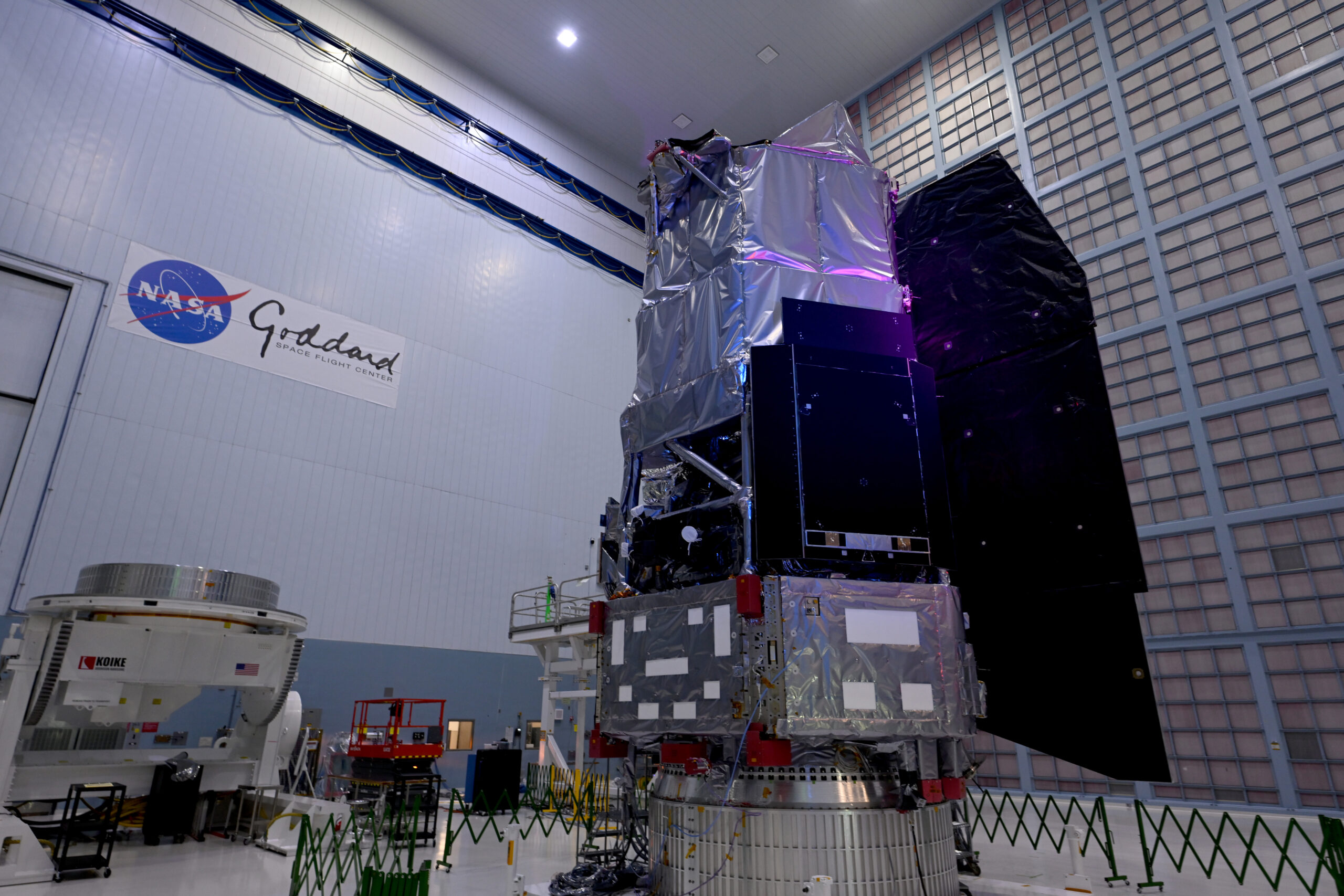
Nancy Grace Roman Space Telescope Launch Date Set for September 2026
The Nancy Grace Roman Space Telescope, a groundbreaking mission by NASA, is now scheduled for launch as early as September 2026. This timeline is ahead of the agency’s previous commitment to launch no later than May 2027, marking a significant milestone in the project’s development.
NASA Administrator Jared Isaacman announced this update during a news conference held on April 21 at the Goddard Space Flight Center in Greenbelt, Maryland. He emphasized that the accelerated development of the Roman telescope exemplifies the potential of public investment, institutional expertise, and private enterprise collaborating on ambitious scientific missions.
Mission Objectives and Capabilities
The Nancy Grace Roman Space Telescope is designed to revolutionize our understanding of the universe. With its large field of view and advanced infrared vision capabilities, the telescope will be able to survey extensive areas of the sky with unprecedented detail. While its primary mission focuses on investigating dark energy, dark matter, and exoplanets, the telescope’s observational power will enable astronomers to explore a wide array of cosmic phenomena.
Over its expected five-year primary mission, Roman is projected to generate an impressive 20,000 terabytes of data. This vast archive will facilitate the identification and study of approximately 100,000 exoplanets, hundreds of millions of galaxies, billions of stars, and rare astronomical objects and events that have yet to be observed by scientists. The data collected will not only advance knowledge in its targeted fields but also open new avenues for research across various domains in astronomy.
Launch Details and Collaboration
The Roman telescope will be launched aboard a SpaceX Falcon Heavy rocket from Launch Complex 39A at NASA’s Kennedy Space Center in Florida. As preparations progress, NASA and SpaceX are expected to provide further details regarding the specific launch date and other prelaunch activities.
This ambitious project is managed by NASA’s Goddard Space Flight Center with contributions from multiple organizations including NASA’s Jet Propulsion Laboratory (JPL), Caltech/IPAC in Southern California, and the Space Telescope Science Institute (STScI) located in Baltimore. The collaborative effort involves scientists from various research institutions who are dedicated to maximizing the scientific return from this mission.
The Significance of Roman’s Data Archive
The vast amount of data generated by the Nancy Grace Roman Space Telescope will be invaluable for both current and future astronomical research. With its capability to observe distant celestial objects at an unprecedented scale, researchers anticipate uncovering insights into fundamental questions about the universe’s structure and evolution.
For instance, studying dark energy—an enigmatic force driving the accelerated expansion of the universe—could lead to breakthroughs in understanding cosmic dynamics. Additionally, identifying a multitude of exoplanets may help scientists explore planetary systems beyond our own and assess their potential for hosting life.
What This Means for Astronomy
The upcoming launch of the Nancy Grace Roman Space Telescope represents a pivotal moment for astronomy. By combining cutting-edge technology with extensive collaboration among leading scientific institutions, this mission promises to expand humanity’s knowledge about the cosmos significantly. The insights gained from Roman’s observations could lead to transformative discoveries that reshape our understanding of fundamental astrophysical concepts.
As preparations continue for its launch in September 2026, anticipation grows within the scientific community regarding what new revelations await us from this powerful instrument. The Roman telescope stands poised not only to enhance our understanding of dark matter and energy but also to unveil previously hidden aspects of our universe.
For more information, read the original report here.