

















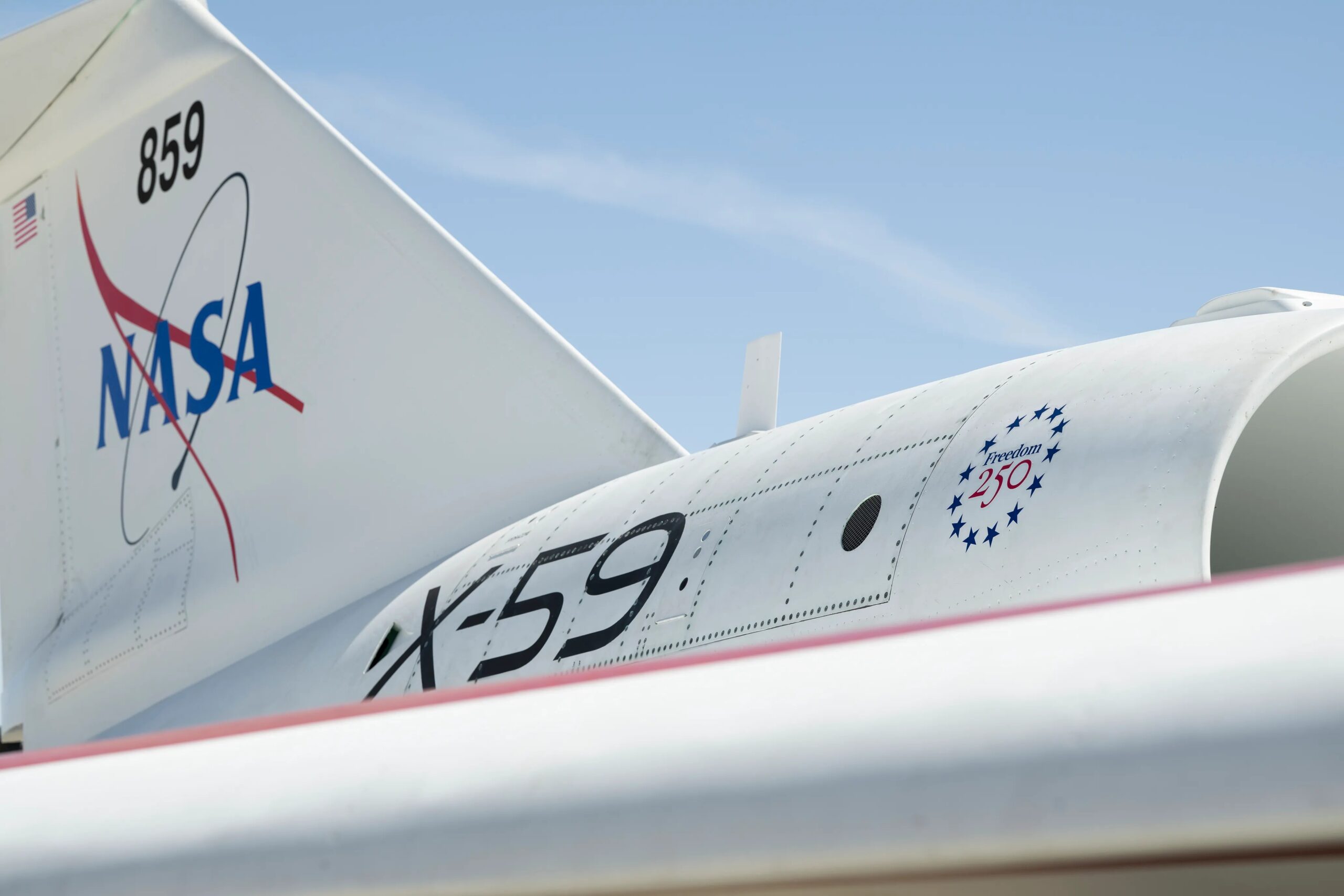
Nasa’s X-59 Unveils New Livery for Independence Day Celebration
Nasa’s X-59 aircraft has received a striking update to its livery, marking a significant moment as the nation prepares to celebrate the 250th anniversary of its independence. This unique research aircraft is at the forefront of Nasa’s Quesst mission, which aims to demonstrate the capability of flying supersonic—faster than the speed of sound—without producing disruptive sonic booms.
The Significance of the X-59
The X-59 QueSST (Quiet Supersonic Technology) is not just another aircraft; it represents a pivotal advancement in aerospace technology. Designed to fly at speeds exceeding Mach 1 (the speed of sound), the X-59 will test innovative technologies that can significantly reduce sonic booms to mere thumps. This research is crucial for reshaping public perception and regulatory policies surrounding supersonic flight, which has been largely restricted due to noise concerns.
The aircraft features a long fuselage and uniquely shaped wings, which are engineered to minimize shock waves that create sonic booms. By flying at altitudes above 50,000 feet, the X-59 aims to collect data on how these quieter sonic signatures are perceived by people on the ground. The success of this mission could pave the way for commercial supersonic flights in the future, potentially transforming air travel.
A Tribute to Independence
The updated livery of the X-59 pays homage to America’s rich history while also looking toward its future in aviation. The new paint job incorporates elements that reflect national pride and innovation, serving as a visual representation of Nasa’s commitment to advancing technology for peaceful purposes. The timing of this update coincides with a significant milestone in U.S. history, emphasizing the connection between technological progress and national identity.
This celebration not only highlights advancements in aeronautics but also serves as an inspiration for future generations interested in science, technology, engineering, and mathematics (STEM). By showcasing such innovations during a historic anniversary, Nasa aims to engage the public’s imagination and encourage interest in aerospace careers.
Looking Ahead: The Quesst Mission
The Quesst mission is set to commence its flight tests following extensive ground testing and simulations. Once airborne, the X-59 will gather data on noise levels experienced by communities below during its flights. This data will be invaluable for informing new regulations regarding supersonic travel over land—a critical step towards making such flights viable for commercial airlines.
NASA plans to share findings from these flights with regulatory bodies like the Federal Aviation Administration (FAA) and international aviation organizations. The ultimate goal is to establish guidelines that could allow for supersonic travel over land without disturbing residents below. This would mark a major shift in how air travel is perceived and regulated globally.
Community Engagement and Data Collection
As part of its outreach efforts, NASA intends to involve communities directly affected by supersonic flights in its research process. Residents living near flight paths will be invited to participate in studies assessing their experiences with noise levels during test flights. The feedback gathered will play an essential role in shaping future policies around supersonic aviation.
Additionally, NASA has launched a dedicated blog where updates about the Quesst mission can be followed closely. This platform aims to keep both aviation enthusiasts and the general public informed about ongoing developments related to the X-59 and its groundbreaking work.
What This Means
The unveiling of the new livery on NASA’s X-59 serves as more than just a visual update; it symbolizes a commitment to innovation while honoring national heritage. As NASA moves forward with its Quesst mission, it stands at the intersection of technological advancement and community engagement. The potential success of this project could reshape air travel as we know it, making supersonic flights not only feasible but also acceptable within populated areas—a significant leap forward for both aviation technology and societal acceptance.
For more information, read the original report here.