






















Unleashing the Power of Agentic AI for Enhanced Cybersecurity
In an era where cybersecurity threats are evolving at an unprecedented pace, enterprises are seeking innovative solutions to safeguard their digital infrastructures. A groundbreaking development in this field has been introduced by Trend Micro Incorporated, a global leader in cybersecurity, with their new cyber resilience model that leverages agentic AI and digital twin technology. This transformative model is poised to redefine how organizations approach proactive security, offering a robust and adaptive method to combat cyber threats.
Trend Micro’s Revolutionary Cyber Resilience Model
On July 31, 2025, Trend Micro Incorporated announced their latest advancement in cybersecurity at a press event in Dallas. The focal point of this announcement was the unveiling of their new cyber resilience model. This model is built on the foundation of NVIDIA AI, a leading technology in artificial intelligence, which provides a data-driven approach to enhance decision-making processes for cybersecurity teams.
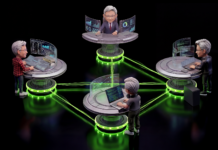
At the heart of this model is the introduction of digital twin technology. This innovative approach allows organizations to create a high-fidelity simulation of their entire digital infrastructure. Essentially, it acts as a virtual replica of an organization’s network, continuously updated to reflect real-world conditions. This simulation empowers security teams to visualize risks, test various threat scenarios, and adapt their security policies in real-time to improve resilience.
The shift from periodic assessments to continuous simulation marks a significant evolution in proactive cybersecurity. With this dynamic approach, organizations can stay ahead of cyber adversaries, fortify their systems against threats, and safeguard mission-critical operations. This change transforms security practices from being static and reactive to becoming dynamic and predictive, ensuring measurable improvements across various use cases.
The Role of Agentic AI in Cybersecurity
Agentic AI plays a pivotal role in this new model. It refers to AI systems that can act independently to make decisions and perform tasks. In the context of cybersecurity, this means using AI-driven models to simulate potential cyber threats, evaluate the effectiveness of current security measures, and suggest improvements. This proactive approach allows enterprises to anticipate and neutralize threats before they can cause harm.
Bartley Richardson, Senior Engineering Director for Agentic AI at NVIDIA, emphasized the importance of proactive solutions in today’s cybersecurity landscape. He noted that with the power of NVIDIA NIM microservices, Trend Micro’s cybersecurity digital twins bring AI-driven protection to enterprise infrastructure. This integration of AI with digital twin technology provides an unprecedented level of security for organizations.
Real-World Applications and Benefits
The practical applications of Trend Micro’s digital twin technology are vast. For instance, it enables organizations to conduct scenario planning, where AI agents simulate potential threats and tactics within the digital twin environment. This allows enterprises to test their current mitigation strategies in a continuous cycle, enhancing their resilience planning for sensitive and complex digital environments.
Moreover, decision-makers can use this technology to introduce new tools, policies, or architectural changes in a controlled, virtual setting. This results in better-informed, data-driven investment decisions, ensuring that cybersecurity resources are allocated effectively.
Enhancing Business Resilience
Digital twin technology also plays a crucial role in optimizing business resilience. By simulating business-critical failure scenarios, organizations can gain insights into how data flows, how decisions are made, and how disruptions impact IT and operational technology (OT) systems and teams. These real-time risk insights enhance enterprise security planning capabilities without causing disruptions to production systems.
Stuart Samples, Chief Technology Officer at Northeast Georgia Health System, highlighted the transformative impact of Trend Micro’s digital twin approach. He stated that it completely changes their ability to understand risk in real-time, helping them identify threats they might not have anticipated. This allows their team to focus on innovation rather than constantly dealing with crises.
Empowering Organizations to Manage Risk
Trend Micro’s cybersecurity digital twin technology is powered by NVIDIA’s accelerated computing and AI enterprise software. This enterprise-grade software enables the delivery of agentic AI models, optimized inference, and secure, scalable deployment. It combines the simplicity of APIs with the flexibility of self-hosted infrastructure, strengthening cybersecurity outcomes with AI-driven precision.
The digital twin model empowers organizations to proactively manage risk across their entire infrastructure, from on-premises systems to cloud environments, IT to OT, and legacy to next-generation AI-powered systems. This capability comes at a time when governments and industry leaders are accelerating investments in AI infrastructure to bolster their cybersecurity defenses.
Industry Reactions and Future Prospects
Industry experts have lauded Trend Micro’s innovative approach to cybersecurity. Frank Dickson, Group Vice President for Security & Trust at IDC, emphasized the critical importance of proactive security as threats migrate to operational technology (OT). He noted that Trend Micro’s digital twin technology introduces a new operational model for enterprise cybersecurity, emphasizing the value of continuous adversary simulation and defensive validation.
This announcement is the latest in a series of innovation-driven projects by Trend Micro aimed at helping network defenders harness AI, close skill gaps, and improve security outcomes. Recently, Trend Micro announced plans to open source its Trend Cybertron AI model and agent framework to accelerate the development of autonomous cybersecurity agents. Their work has also expanded to cover protection for GenAI workloads and advances to sovereign AI infrastructure.
Rachel Jin, Chief Enterprise Platform Officer at Trend Micro, highlighted the challenges faced by enterprises in defending complex, dynamic infrastructure environments from highly adaptive, AI-powered adversaries. She noted that reactive, point-in-time risk assessments are no longer sufficient. Trend Micro’s digital twin technology empowers customers to simulate threats and safely validate security controls, bridging the gap between digital transformation and defensive readiness.
About Trend Micro
Trend Micro is a global leader in cybersecurity, dedicated to making the world a safer place for exchanging digital information. With decades of security expertise, global threat research, and continuous innovation, Trend Micro’s AI-powered cybersecurity platform protects hundreds of thousands of organizations and millions of individuals across clouds, networks, devices, and endpoints. As a leader in cloud and enterprise cybersecurity, Trend Micro’s platform delivers advanced threat security techniques optimized for environments like AWS, Microsoft, and Google, providing centralized visibility for better, faster detection and response. With 7,000 employees across 70 countries, Trend Micro enables organizations to simplify and secure their connected world.
For more information, visit their website at Trend Micro.
In conclusion, Trend Micro’s innovative cyber resilience model, powered by agentic AI and digital twin technology, represents a significant leap forward in the field of cybersecurity. By enabling organizations to visualize risks, simulate threats, and make data-driven decisions in real-time, this model empowers enterprises to stay ahead of cyber adversaries and secure their digital infrastructures effectively.
For more Information, Refer to this article.