

















Strengthening Space Collaboration: U.S. and Australia Sign New Framework Agreement
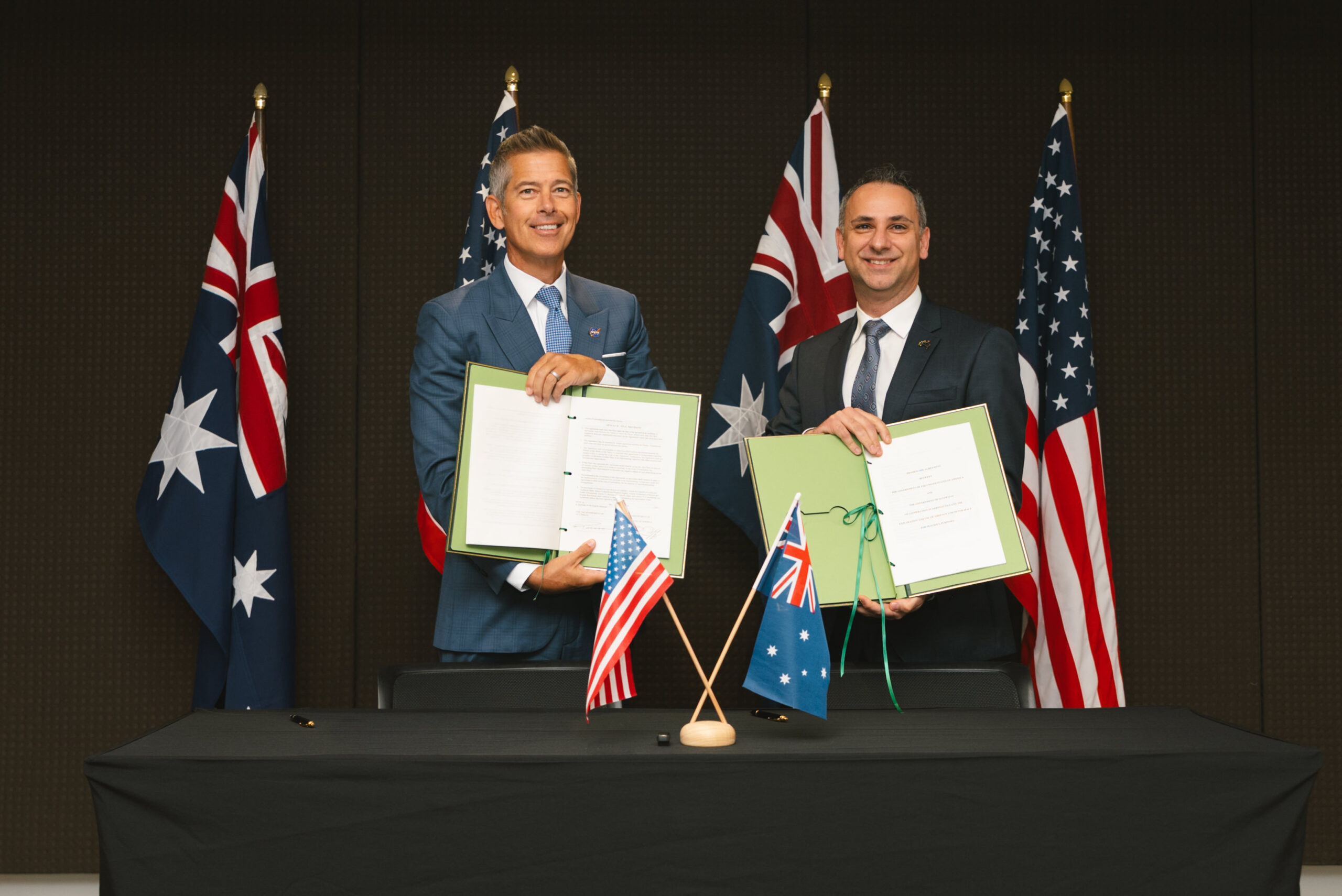
In a significant development in international space collaboration, representatives from the United States and Australia convened at the International Astronautical Congress (IAC) in Sydney this past week. A pivotal moment marked the event as both nations signed a framework agreement designed to bolster cooperation in the fields of aeronautics and space exploration.
Acting NASA Administrator Sean Duffy and the Head of the Australian Space Agency, Enrico Palermo, were the key signatories of this agreement on behalf of their respective countries. This strategic pact underscores the long-standing partnership between the two nations, enhancing their joint efforts in the realm of space science and exploration.
“Australia has always been a vital partner in our space endeavors, from the iconic Apollo missions to the forward-looking Artemis program,” remarked Sean Duffy. He highlighted the significance of international agreements like this one, emphasizing how they enable leveraging resources, expanding capabilities, and maximizing scientific outcomes. This collaboration is essential for NASA’s ambitious plans that span from low Earth orbit to the Moon, Mars, and beyond.
Tim Ayres, the Australian Minister for Industry and Innovation and the Minister for Science, expressed his enthusiasm about the agreement. He noted that strengthening ties with the U.S. and NASA opens new avenues for Australian innovation and technology. It promises to enhance Australia’s industrial capabilities, boost productivity, and foster economic resilience.
The agreement, formally known as the "Framework Agreement between the Government of the United States of America and the Government of Australia on Cooperation in Aeronautics and the Exploration and Use of Airspace and Outer Space for Peaceful Purposes," lays down the legal groundwork for collaborative endeavors. It aims to foster mutually beneficial cooperation in various domains including space exploration, space science, Earth science with a focus on geodesy, space medicine, life sciences, aeronautics research, and technology development.
The history of collaboration between NASA and Australia dates back to 1960, marked by the signing of their first cooperative space agreement. The Canberra Deep Space Communication Complex has been instrumental in supporting NASA’s missions, most notably during the famous Apollo 13 mission. Today, this complex remains a vital part of NASA’s Deep Space Network, which is crucial for both robotic and human spaceflight missions.
Australia was also among the initial countries to sign the Artemis Accords, joining the United States and several other nations in October 2020. These accords establish a set of principles guiding the safe and responsible use of space. This week’s IAC event in Sydney brought together global space leaders from many of the 56 signatory countries to further their implementation efforts.
As part of an ongoing partnership with NASA, the Australian Space Agency is developing a semi-autonomous lunar rover. This rover, equipped with a NASA analysis instrument, aims to demonstrate cutting-edge technology for scientific and exploratory purposes. It is expected to be launched by the end of this decade under NASA’s Commercial Lunar Payload Services (CLPS) initiative.
NASA’s commitment to peaceful and collaborative space exploration is evident in its international partnerships. These alliances have been a cornerstone of NASA’s progress, from the space shuttle era to the International Space Station, and now the Artemis program. Such partnerships are critical to NASA’s plans for lunar exploration under the Artemis campaign and the future human exploration of Mars.
Understanding the Agreement’s Impact
This agreement is not just a ceremonial gesture but a profound step towards strengthening the scientific and industrial ties between the two nations. By pooling resources and expertise, both countries can achieve more than they could independently. For instance, the collaborative development of the semi-autonomous lunar rover exemplifies how combined efforts can lead to technological advancements that benefit both parties.
The inclusion of diverse areas such as space medicine and life sciences indicates a comprehensive approach to space exploration. These fields play a crucial role in understanding how space conditions affect human biology, which is essential for long-duration missions, such as those planned for Mars.
Furthermore, the focus on Earth science highlights the importance of using space-based technologies to address terrestrial challenges. Geodesy, the science of measuring Earth’s shape, orientation in space, and gravity field, can significantly contribute to understanding climate change, natural disaster management, and resource mapping.
Broader Implications for the Global Space Community
The framework agreement between the U.S. and Australia sends a strong message to the global space community about the power of international collaboration. It sets a precedent for other nations to follow, encouraging them to form similar partnerships that can accelerate advancements in space technology and exploration.
This agreement also aligns with broader global initiatives like the Artemis Accords, which aim to ensure that space exploration is conducted peacefully and sustainably. By adhering to these principles, countries can work together to explore new frontiers while respecting each other’s interests and ensuring the long-term viability of outer space activities.
Public Reaction and Industry Insights
The signing of this agreement has been well received by the public and industry experts alike. Many see it as a positive step towards a more interconnected and cooperative global space community. Industry leaders have praised the initiative for its potential to stimulate innovation and create new opportunities within the space sector.
Experts believe that such agreements are crucial for developing a robust space economy. They argue that international partnerships can lead to more efficient use of resources and foster the sharing of knowledge and expertise, which are vital for overcoming the challenges of space exploration.
Conclusion
The new framework agreement between the United States and Australia represents a significant milestone in international space cooperation. It reflects a shared vision for the future of space exploration and underscores the importance of collaboration in achieving ambitious goals. As both nations continue to work together, their joint efforts will likely pave the way for groundbreaking advancements in space science and technology, benefiting not only their citizens but the global community as a whole.
For more detailed information on NASA’s international partnerships and ongoing collaborative projects, interested readers can visit NASA’s official website.
For more Information, Refer to this article.