In an era where urbanization is accelerating at an unprecedented pace, cities around the world are grappling with significant challenges related to infrastructure and population growth. The increasing number of inhabitants in urban areas is putting immense pressure on existing systems, leading to issues like traffic congestion, and causing delays in emergency services. Additionally, the fragmented nature of data pipelines, along with isolated government processes and disparate systems, creates technical barriers that hinder cities from accessing the critical, real-time insights necessary for effective decision-making and efficient city management.
To address these challenges, leading cities and technology partners are turning to smart solutions powered by artificial intelligence (AI). One of the most promising developments in this arena is the NVIDIA Blueprint for smart city AI, a comprehensive reference application that provides a full software stack for building, testing, and operating AI agents within simulation-ready digital twins. A digital twin is a virtual model of a physical entity that allows cities to test scenarios and analyze data in a risk-free environment.
The backbone of this innovative approach is OpenUSD, an open and extensible framework that seamlessly integrates with every stage of the physical AI workflow. OpenUSD-enabled digital twins act as SimReady environments, where cities can simulate various “what if” scenarios and generate sensor data that is physically accurate. This capability is pivotal for cities as it allows them to anticipate potential issues and optimize operations proactively.
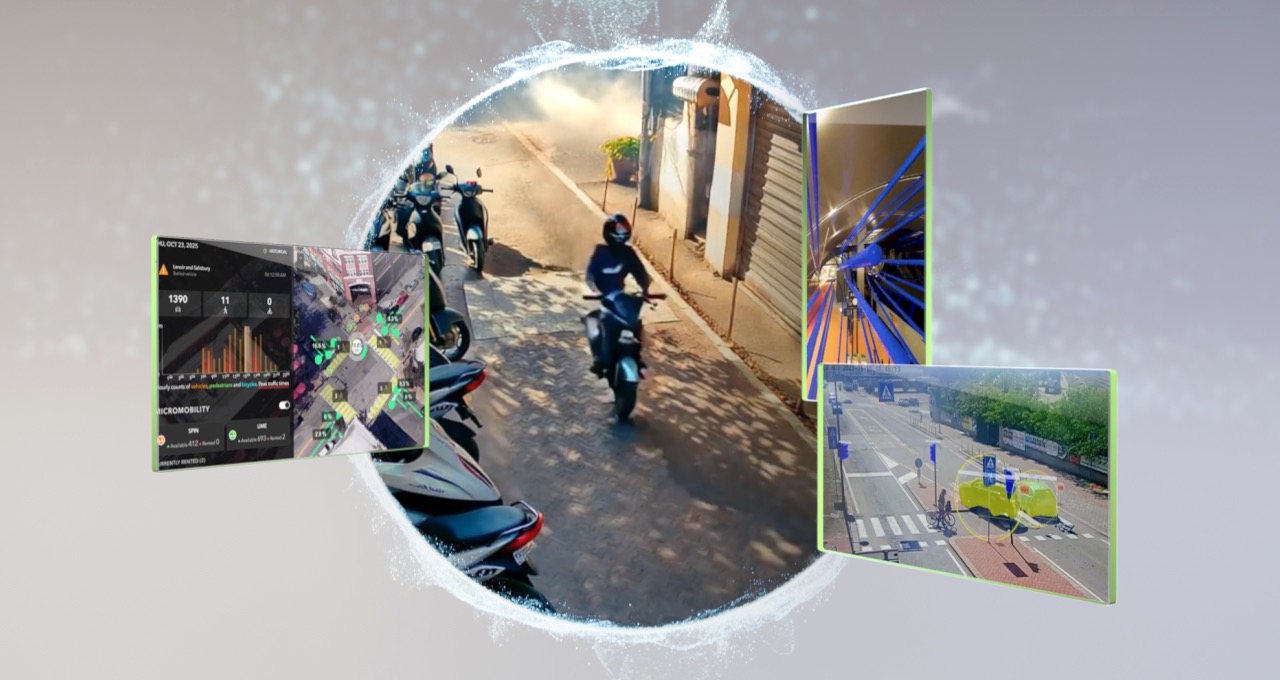
The NVIDIA Blueprint supports a three-stage workflow designed to transform urban operations from reactive to proactive. Firstly, cities can simulate scenarios using the NVIDIA Cosmos platform and NVIDIA Omniverse libraries to generate synthetic data. This synthetic data is crucial for training and fine-tuning vision AI models, which is the second stage of the workflow. Finally, in the third stage, cities can deploy real-time video analytics AI agents using the NVIDIA Metropolis platform and the NVIDIA Blueprint for video search and summarization (VSS). This deployment enables cities to enhance their operational efficiency and responsiveness significantly.
By leveraging these simulations, cities can deploy operational platforms where diverse data such as weather information, traffic sensors, and emergency response systems converge. This integration supports rapid testing of rare scenarios, real-time monitoring, and optimization of city infrastructure and urban systems.
Globally, several cities are already reaping the benefits of AI-powered digital twins and agents. For instance, in Kaohsiung City, Taiwan, the use of AI for street-level insights has reduced incident response times by 80%. Similarly, Raleigh, North Carolina, has achieved a 95% vehicle detection accuracy, which enhances traffic analysis workflows and infrastructure planning. French rail networks are also benefiting from these technologies, with a reported 20% reduction in energy consumption.
### Smart Cities in Action
#### Akila and SNCF Gares & Connexions: Revolutionizing Rail Operations
A notable application of digital twins is seen in Akila’s collaboration with SNCF Gares & Connexions, a French rail operator. This partnership optimizes the operation of nearly 14,000 daily trains through live scenario planning involving solar heating, air flow, and crowd movement. By utilizing OpenUSD-enabled digital twins, the rail network has achieved a 20% reduction in energy consumption, ensured 100% on-time preventive maintenance, and halved both downtime and response times.
#### Linker Vision: Enhancing Street-Level Intelligence
Linker Vision’s physical AI system is another example of smart city technology in action. In Kaohsiung City, this system detects infrastructure events such as damaged streetlights and fallen trees, which previously required manual inspection. By eliminating these manual processes, the system enables quicker emergency responses. To expand its street-level intelligence to more cities, Linker Vision utilizes Omniverse libraries for simulation, Cosmos Reason for world understanding, and the VSS blueprint for deployment powered by OpenUSD.
#### Esri and Microsoft: Urban Intelligence in Raleigh
The City of Raleigh has also embraced smart city technology, achieving remarkable success with a 95% vehicle detection accuracy using the NVIDIA DeepStream software development kit. This achievement has significantly boosted traffic analysis workflows for engineers. Moreover, Raleigh’s digital twin, powered by Esri’s ArcGIS geospatial platform, supports visualization and analysis necessary for critical infrastructure planning and management. The integration of this computer vision pipeline with a vision AI agent powered by the NVIDIA VSS blueprint provides comprehensive real-time visibility and insights in ArcGIS on the Azure Cloud.
#### Milestone Systems: Automating Video Review
Milestone Systems is on the verge of launching its Hafnia VLM, which includes a VLM plug-in for its XProtect video management software and a VLM-as-a-service. This system, fine-tuned on over 75,000 hours of video data, aims to reduce operator alarm fatigue by up to 30% by automating video review and filtering out false alarms. Developed with NVIDIA Cosmos Reason VLMs and Metropolis, the Hafnia VLM plug-in for XProtect will make generative AI more accessible to XProtect operators and users.
#### K2K: Analyzing Video Streams in Italy
In Italy, K2K’s platform utilizes NVIDIA Cosmos Reason and the VSS blueprint to analyze more than 1,000 video streams in Palermo. This platform processes 7 billion events annually and automatically notifies city officials through natural language queries and video events when critical conditions are identified and analyzed.
For those interested in delving deeper into how cities are transforming through simulation, vision AI, and digital twins, NVIDIA offers an on-demand GTC session titled “Leadership Strategies to Transform Public Services.”
### Getting Started with Smart City AI
To explore more about OpenUSD and computer vision workflows, and to stay updated with the latest developments, consider subscribing to NVIDIA Omniverse news. Joining the Omniverse community can also provide valuable insights and opportunities for collaboration. For continuous updates, you can follow Omniverse on various social media platforms including Discord, Instagram, LinkedIn, Threads, X, and YouTube.
These advancements in smart city technology illustrate a promising future where urban areas can manage their operations more efficiently and respond to challenges proactively, leading to improved quality of life for residents and sustainable city growth.
For more Information, Refer to this article.