
























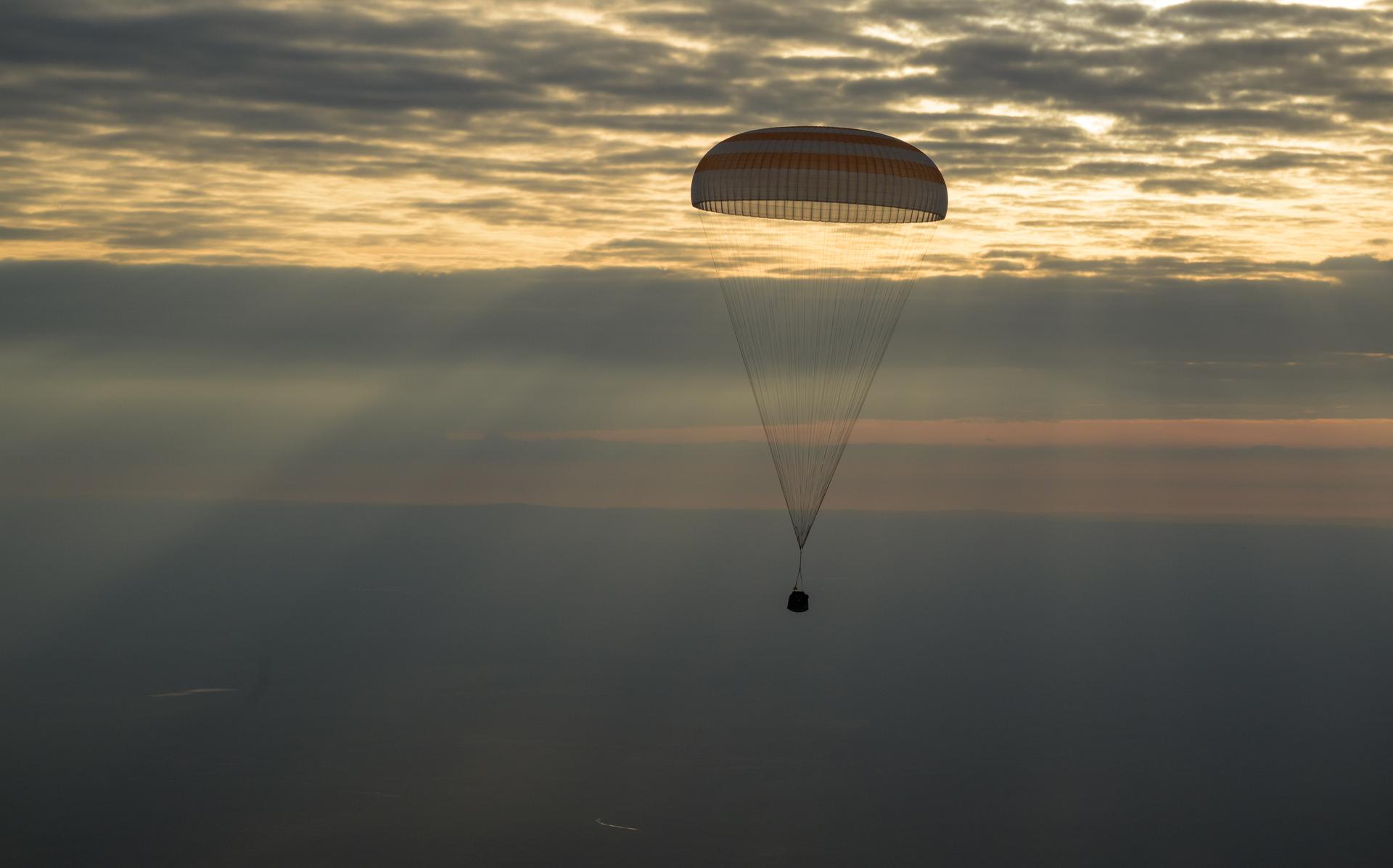
In an exciting development from the world of space exploration, NASA astronaut Jonny Kim, along with Roscosmos cosmonauts Sergey Ryzhikov and Alexey Zubritsky, is set to make a return journey to Earth from the International Space Station (ISS). Their departure is scheduled aboard the Soyuz MS-27 spacecraft, marking the end of an extensive mission that has contributed significantly to the body of knowledge regarding space travel and habitation.
The trio will initiate their journey by undocking from the ISS’s Prichal module on Monday, December 8, at precisely 8:41 p.m. Eastern Standard Time (EST). They are expected to touch down on Earth at 12:04 a.m. on Tuesday, December 9, local time in Kazakhstan (10:04 a.m.). The landing will occur on the expansive steppes of Kazakhstan, southeast of the city of Dzhezkazgan. This return marks the conclusion of a 245-day mission, during which the crew orbited Earth a staggering 3,920 times and covered nearly 104 million miles.
For those interested in witnessing this momentous return, NASA has arranged live coverage accessible through various platforms, including NASA+, Amazon Prime, and YouTube. Interested viewers can also find streaming options through NASA’s online resources and social media channels, ensuring that space enthusiasts can follow the event from virtually anywhere.
The Change of Command Ceremony
Before their return, a significant change of command ceremony is slated to take place. This event will be broadcast live on NASA+ and YouTube on Sunday, December 7, at 10:30 a.m. Ryzhikov will pass the command of the space station to NASA astronaut Mike Fincke, who will lead Expedition 74. This transition is timed to coincide with the undocking of the Soyuz MS-27, symbolizing the seamless continuation of operations aboard the ISS.
Mission Achievements and Crew Experiences
Jonny Kim and his fellow crew members have spent over eight months on the ISS, conducting numerous scientific experiments and contributing to the understanding of long-duration spaceflight. For Kim and Zubritsky, this mission marked their inaugural journey to the orbiting laboratory, providing them with invaluable experience and insights into the complexities of living and working in space. Ryzhikov, on the other hand, concludes his third mission to space, further cementing his status as an experienced cosmonaut.
Upon their safe return to Earth, the crew will be transported by helicopter to Karaganda, Kazakhstan. From there, Kim will travel back to the United States and return to Houston aboard a NASA aircraft. Meanwhile, Ryzhikov and Zubritsky will head to their training base in Star City, Russia, to debrief and prepare for future missions.
Coverage Schedule and Key Events
NASA has outlined a detailed schedule for the coverage of the crew’s return, all in Eastern Time and subject to changes based on real-time operations. This schedule allows audiences to follow each phase of the return mission closely.
Sunday, Dec. 7:
10:30 a.m. – The change of command ceremony will commence, accessible through NASA+, Amazon Prime, and YouTube.
Monday, Dec. 8:
4:45 p.m. – Coverage of farewells and the closing of the spacecraft hatch will begin. This can be viewed on NASA+, Amazon Prime, and YouTube.
5:10 p.m. – The hatch will be officially closed in preparation for the undocking.
8:15 p.m. – Coverage of the undocking process will start, available on the same platforms.
8:41 p.m. – The Soyuz MS-27 will undock from the ISS, commencing its journey back to Earth.
10:30 p.m. – Coverage of the deorbit and landing phases will begin.
Tuesday, Dec. 9:
12:04 a.m. – The spacecraft will land in Kazakhstan, bringing the mission to a successful close.
The Importance of the International Space Station
For over 25 years, the International Space Station has been a hub of continuous human presence in space, fostering significant scientific advancements and research that are unattainable on Earth due to its unique microgravity environment. The ISS serves as a critical testbed for understanding and addressing the challenges posed by long-duration space missions, paving the way for humanity’s future endeavors in space exploration.
As the framework for a robust low-Earth orbit economy develops, commercial entities are increasingly taking on the roles of providing human space transportation services and establishing new destinations in orbit. This shift allows NASA to allocate more resources toward deep space missions, particularly the Artemis program, which aims to return humans to the Moon and eventually send them to Mars.
For more information on the ongoing research and operations of the International Space Station, interested readers are encouraged to visit NASA’s official page dedicated to the station at NASA Station.
In summary, the return of Jonny Kim, Sergey Ryzhikov, and Alexey Zubritsky from the ISS not only marks the successful completion of their mission but also underscores the collaborative efforts of international space agencies in pushing the boundaries of human exploration. As we look forward to future missions, the knowledge gained from this mission will undoubtedly play a crucial role in shaping the future of space travel.
For more Information, Refer to this article.