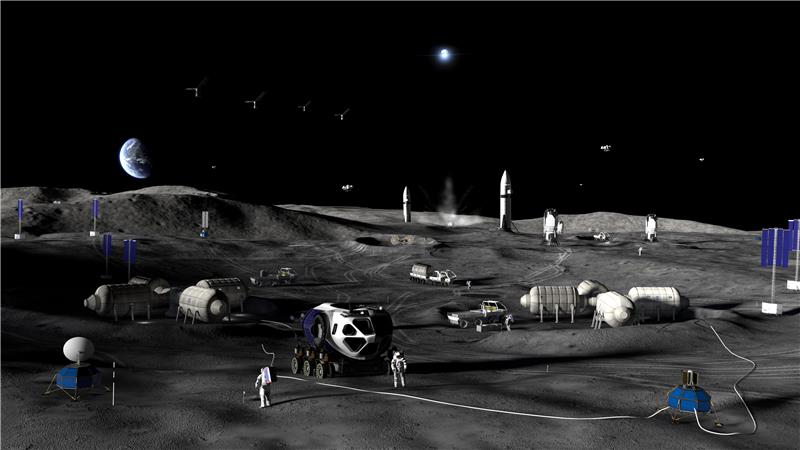
NASA recently announced a series of initiatives during its “Ignition” event to achieve President Trump’s National Space Policy and enhance American leadership in space. The agency highlighted the importance of aligning with national imperatives to accomplish ambitious goals, such as returning to the Moon, building a lunar base, and ensuring American dominance in space exploration.
Administrator Jared Isaacman emphasized the urgency of the current great-power competition and the need for NASA to focus its resources on achieving the objectives outlined in the National Space Policy. By removing unnecessary obstacles and harnessing the workforce and industrial capabilities of the nation and its partners, NASA aims to surpass its current achievements and pave the way for significant advancements in space exploration.
NASA Associate Administrator Amit Kshatriya outlined the agency’s strategic shifts, including a phased approach to building a lunar base and a more focused architecture for lunar missions. By leveraging commercial partnerships and reusable technologies, NASA plans to establish a sustainable human presence on the Moon, with the goal of sending crewed missions every six months.
In addition to its lunar initiatives, NASA is also committed to maintaining a presence in low Earth orbit (LEO) by transitioning to commercial stations. The agency plans to procure a government-owned Core Module that will attach to the International Space Station, paving the way for a robust commercial ecosystem in LEO.
NASA’s science missions continue to push the boundaries of exploration, with upcoming projects like the Nancy Grace Space Telescope, Dragonfly mission to Saturn’s moon Titan, and the Mars Organic Molecule Analyzer (MOMA) instrument. The agency is also accelerating its lunar science efforts through the Commercial Lunar Payload Services (CLPS) program, which will facilitate the delivery of scientific instruments and technology demonstrations to the lunar surface.
One of the most significant announcements from NASA is the launch of the Space Reactor-1 Freedom, a nuclear-powered spacecraft destined for Mars. This mission represents a major step forward in nuclear propulsion technology and will pave the way for future deep space exploration beyond Jupiter.
To support these ambitious initiatives, NASA is investing in its workforce by converting contractor positions to civil service, providing opportunities for interns and early-career professionals, and creating pathways for experienced industry talent to contribute to the agency’s mission. These changes will be implemented in the coming months to ensure a smooth transition and continued progress in key programs and partnerships.
Overall, NASA’s Ignition event marks a pivotal moment in the agency’s history, as it embarks on a new era of space exploration and scientific discovery. By aligning with national priorities and leveraging the expertise of its workforce and partners, NASA is poised to achieve remarkable feats in the years ahead.
For more information on NASA’s Ignition event and its initiatives, visit https://www.nasa.gov/ignition.
For more Information, Refer to this article.