NASA’s Artemis II Mission Breaks Records in Space Exploration
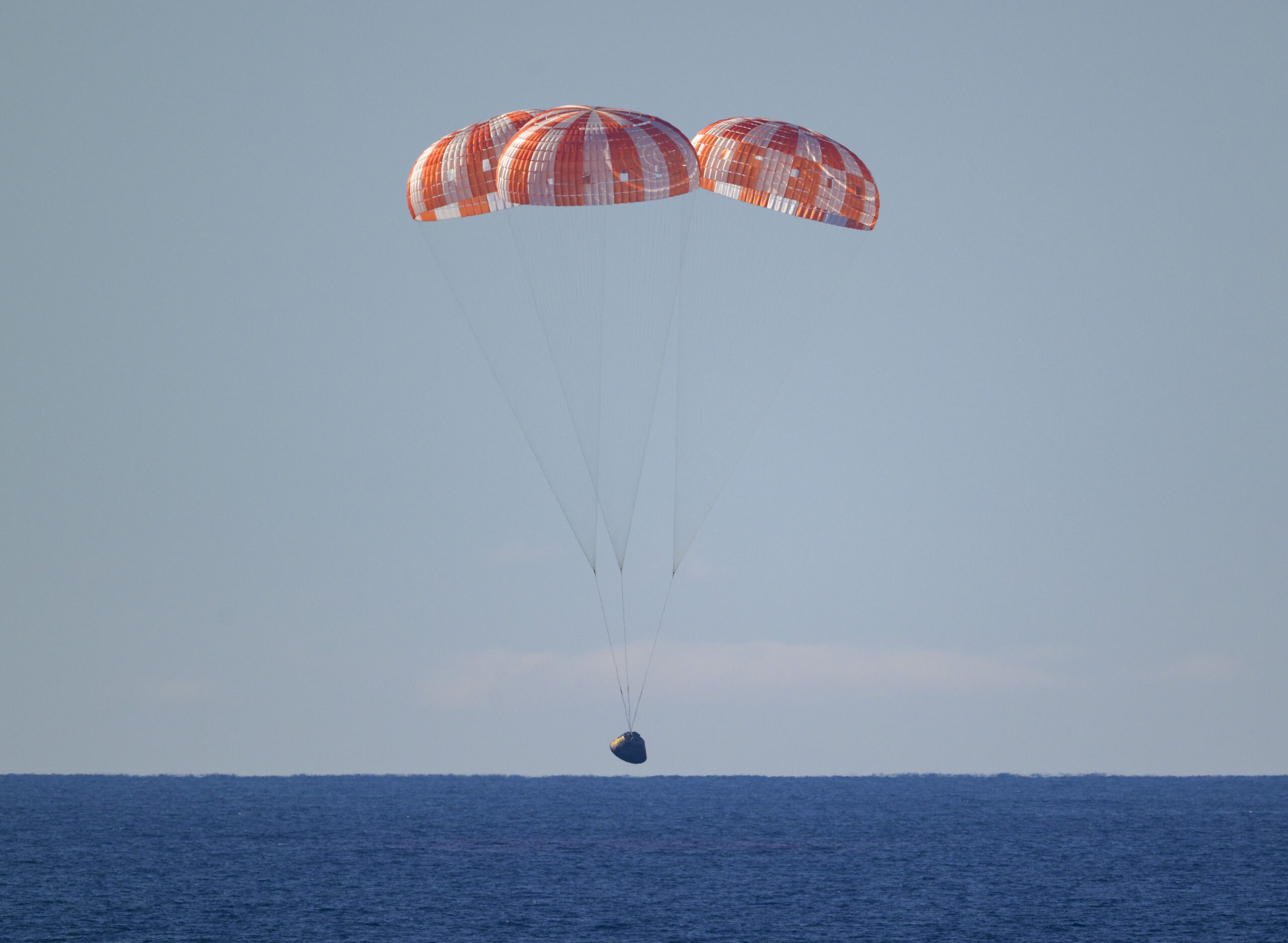
On April 10, 2026, NASA’s Orion spacecraft made a historic splashdown in the Pacific Ocean, marking the successful conclusion of the Artemis II mission. This nearly ten-day journey not only set a new record for the farthest crewed spaceflight, surpassing the Apollo 13 mission, but also provided astronauts with unprecedented views of the Moon’s far side. The Artemis program aims to expand human exploration of the Moon and lay the groundwork for future crewed missions to Mars.
Milestones Achieved During Artemis II
The Artemis II mission was significant for several reasons. First and foremost, it involved a crewed flight that ventured farther from Earth than any previous manned mission since Apollo 13 in 1970. This achievement underscores NASA’s commitment to pushing the boundaries of human space exploration.
During their journey, astronauts aboard Orion conducted various scientific experiments and gathered valuable data that could inform future missions. The crew experienced multiple phases of microgravity and were able to test life support systems that will be crucial for longer missions, especially those aimed at Mars.
Moreover, this mission allowed astronauts to capture stunning images of the Moon’s far side—a region that remains largely unexplored. These high-resolution images are not only visually captivating but also hold scientific significance as they may reveal new geological features and insights about lunar history.
The Broader Goals of the Artemis Program
The Artemis program is designed to facilitate a series of increasingly challenging missions aimed at exploring more of the Moon. NASA envisions these expeditions as vital steps toward achieving broader objectives in space exploration. The program is expected to yield scientific discoveries that can enhance our understanding of both lunar geology and potential resources.
In addition to scientific benefits, Artemis aims to stimulate economic opportunities through partnerships with commercial entities. By establishing a sustainable presence on the Moon, NASA hopes to create an environment conducive to innovation and investment in space technologies.
Ultimately, these lunar missions are intended to build on existing knowledge and experience as humanity prepares for its first crewed missions to Mars. The lessons learned from Artemis II will inform strategies for life support, navigation, and resource utilization on future interplanetary journeys.
Public Engagement and Future Missions
The success of Artemis II has captured public interest, with many eager to follow NASA’s next steps in space exploration. The agency plans to continue sharing multimedia content from the mission, including photographs and videos that highlight key moments during the flight. Such transparency fosters a connection between NASA and the public while encouraging educational initiatives related to science and technology.
Looking ahead, NASA has outlined plans for subsequent Artemis missions that will further extend human presence on the Moon. These include landing astronauts at the lunar South Pole—an area believed to contain water ice—and establishing a sustainable outpost that could serve as a launchpad for deeper space exploration.
What This Means for Future Space Exploration
The achievements of Artemis II signal a renewed commitment by NASA to lead in human space exploration. By breaking records and expanding scientific knowledge about our celestial neighbor, this mission lays crucial groundwork for future endeavors beyond Earth.
The implications extend beyond mere exploration; they encompass economic growth through technological advancements and international collaboration in space science. As humanity stands on the brink of interplanetary travel, missions like Artemis II serve as vital stepping stones toward realizing ambitious goals such as colonizing Mars.
For more information, read the original report here.