Salesforce Integrates Slack for Enhanced Productivity
Salesforce has announced a significant integration with Slack, aiming to streamline workflows for sales and service teams. This new functionality, set to roll out starting May 15, allows Salesforce customers to access a free Slack workspace automatically linked to their CRM data. This integration is designed to eliminate the inefficiencies caused by switching between multiple applications, thereby enhancing team collaboration and productivity.
Unified Experience from Day One
Beginning this summer, every new Salesforce instance will come with a complimentary Slack workspace that is immediately connected to CRM data. There is no need for additional setup or IT involvement, making it accessible at no extra cost. Existing Salesforce customers can also connect Slack through their admin settings without incurring any fees.
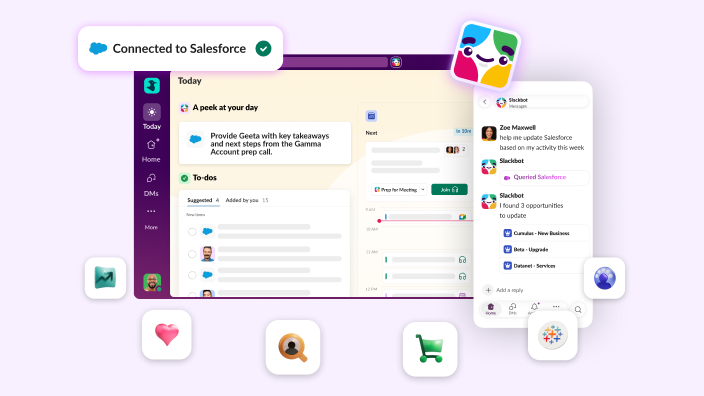
In this integrated environment, Salesforce data becomes an integral part of daily operations within Slack. Users can access records, alerts, and lists directly from the platform’s sidebar. This seamless connection allows teams to discuss strategies or resolve customer cases while having all relevant information at their fingertips. The integration aims to ensure that vital conversations and decisions are automatically linked to the corresponding Salesforce records.
The Role of Slackbot in Enhancing Workflow
A key feature of this integration is the introduction of Slackbot, an AI-powered assistant designed to facilitate interactions with Salesforce data. Slackbot enables users to perform various tasks directly within Slack without needing to switch tabs or applications. For instance, users can log calls, update opportunities, and manage service cases simply by conversing with the bot.
- Slackbot can send messages, create channels, and initiate workflows on behalf of users.
- It can also draft emails and schedule meetings without leaving the platform.
- With reusable Skills, users can build workflows that integrate multiple tools seamlessly.
- Slackbot understands user context, allowing it to respond appropriately based on ongoing tasks or discussions.
- The redesigned Thinking Steps feature provides transparency into how Slackbot arrives at its conclusions.
- It can read complex documents and summarize key points without manual input.
This AI teammate not only manages CRM-related tasks but also extends its capabilities across various tools that teams rely on. By centralizing these functions within a single platform, organizations can expect significant productivity gains.
New Productivity Features for Focused Work
To further enhance productivity, Slack has introduced two new features: Today view and Activity tab. The Today view serves as a personalized briefing that highlights priorities, calendar events, and pressing tasks from all connected applications. This feature aims to reduce the time spent hunting for information by providing a curated list of actionable items each day.
The Activity tab consolidates notifications into a single filtered view that focuses on relevant conversations related to specific accounts or deals. This streamlined approach eliminates distractions and helps teams maintain focus on what truly matters in their workflow.
The Importance of Integration for AI Investments
This integration between Salesforce and Slack is positioned as a critical advancement for organizations looking to maximize their investments in AI technologies. By ensuring that all customer data and communication occur within one unified platform, companies can leverage their existing tools more effectively. The combination of Salesforce’s robust CRM capabilities with Slack’s collaborative features creates an environment where employees can operate more efficiently than ever before.
What This Means for Businesses
The integration of Slack with Salesforce represents a significant step toward simplifying workflows in sales and service environments. With immediate access to CRM data through a dedicated workspace in Slack, teams can collaborate more effectively without losing context or wasting time toggling between applications. As businesses increasingly rely on AI-driven solutions for efficiency gains, this integration ensures that every investment made in technology contributes directly to improved performance across the organization.
For more information, read the original report here.