Nasa Prepares for Launch of Nancy Grace Roman Space Telescope with New Equipment
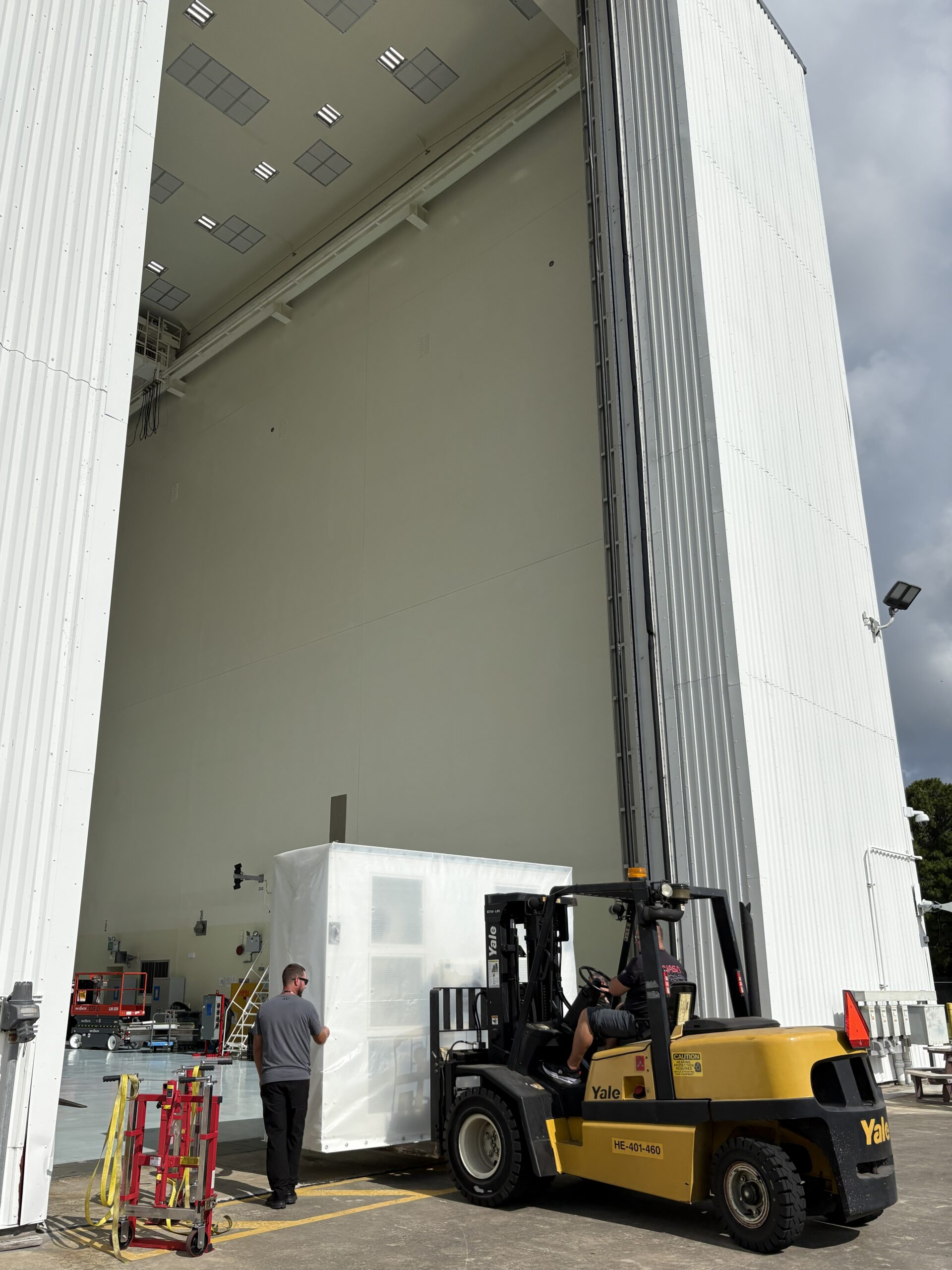
On April 27, technicians at NASA’s Payload Hazardous Servicing Facility (PHSF) at the Kennedy Space Center in Florida successfully offloaded eight high-efficiency particulate air (HEPA) wall modules along with additional ground support equipment. This equipment is crucial for the launch processing of the upcoming Nancy Grace Roman Space Telescope, which aims to deepen our understanding of the universe.
Enhancing Clean Room Standards
The newly delivered HEPA wall modules, each weighing 1,800 pounds, are designed to bolster the PHSF’s clean room systems. These enhancements are essential for meeting the stringent cleanliness requirements necessary for the telescope during its stay in the facility. The clean room will be instrumental in various pre-launch operations, including spacecraft fueling and other critical tasks that ensure the telescope is free from contaminants.
The importance of maintaining a clean environment cannot be overstated when it comes to space instrumentation. Any particulate matter can interfere with the sensitive equipment onboard the Roman telescope, potentially compromising its scientific objectives. By implementing advanced HEPA filtration technology, NASA aims to mitigate these risks effectively.
Scientific Goals of the Roman Space Telescope
The Nancy Grace Roman Space Telescope is set to observe the universe primarily in infrared light using its Wide Field Instrument and a Coronagraph Instrument technology demonstration. With its expansive field of view, Roman will capture panoramic images that will aid astronomers in exploring some of the most profound mysteries of cosmology, such as the accelerating expansion of the universe.
One of Roman’s key missions involves charting how the universe has evolved over cosmic time. The telescope will utilize multiple complementary techniques to provide new insights into dark energy—an enigmatic force believed to drive this acceleration. Additionally, Roman will contribute significantly to exoplanet research and enhance our understanding of both normal matter and dark matter distribution throughout space.
Launch Timeline and Future Prospects
NASA teams are currently targeting a launch window as early as September aboard a SpaceX Falcon Heavy rocket from Launch Complex 39A at Kennedy Space Center. This timeline reflects NASA’s commitment to advancing space exploration and scientific discovery through innovative technologies and collaborative efforts.
The successful deployment of the HEPA modules marks a significant step forward in preparing for this ambitious mission. As preparations continue, scientists and engineers remain focused on ensuring that all systems function optimally to maximize the telescope’s potential once it reaches orbit.
What This Means for Astronomy
The launch of the Nancy Grace Roman Space Telescope represents a pivotal moment in astronomical research. By addressing fundamental questions about dark energy and cosmic evolution, Roman has the potential to reshape our understanding of the universe. The telescope’s ability to conduct wide-field surveys will enable astronomers to gather unprecedented data that could lead to groundbreaking discoveries in both cosmology and planetary science.
As NASA moves closer to launch day, anticipation builds within both scientific communities and space enthusiasts alike. The insights gained from this mission could pave the way for future explorations and deepen humanity’s connection with the cosmos.
For more information, read the original report here.