
























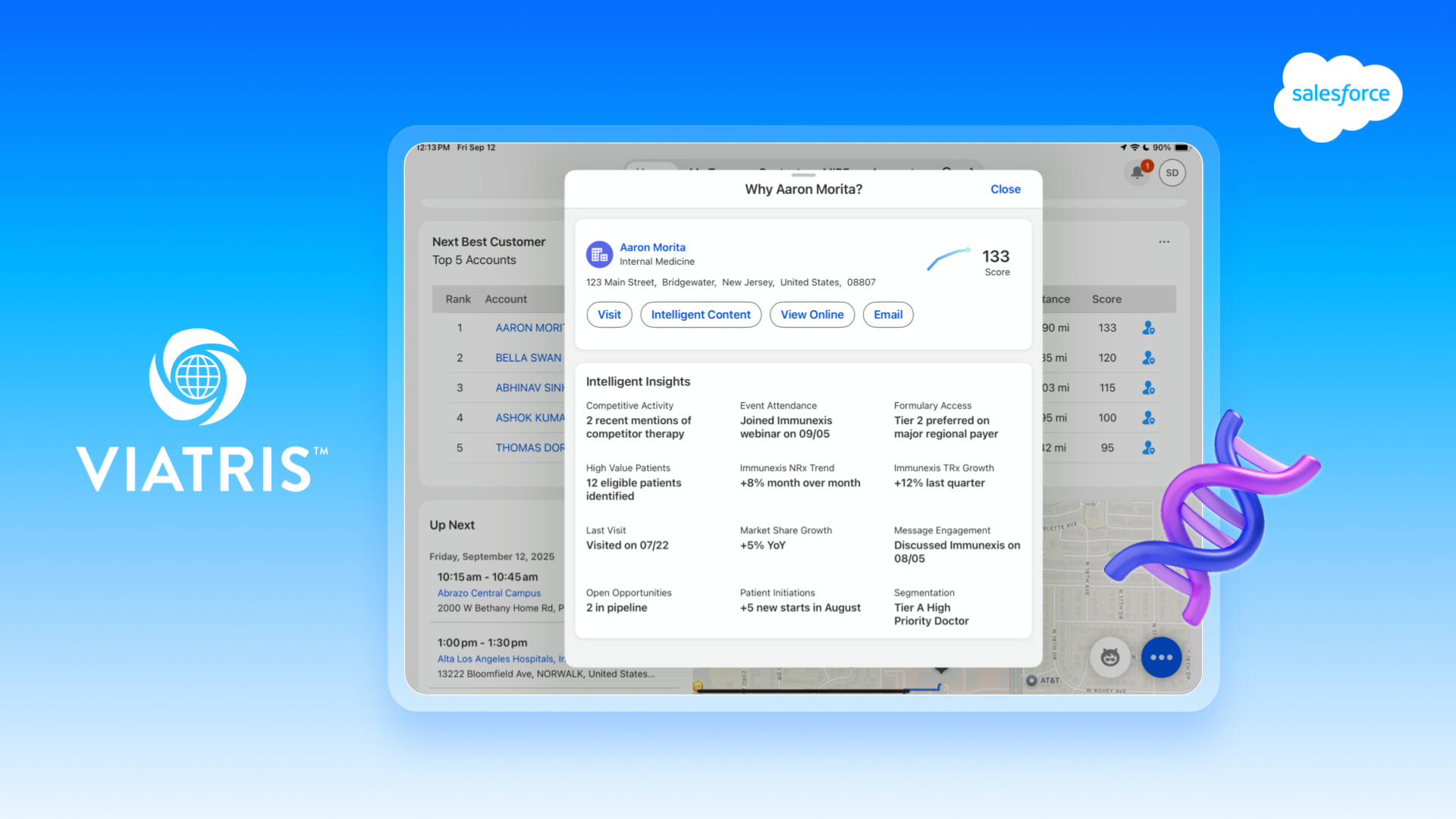
Salesforce Partners with Viatris to Enhance Global Customer Engagement
Salesforce has announced a significant partnership with Viatris, a global healthcare company, to implement its Agentforce Life Sciences for Customer Engagement platform. This collaboration aims to enhance Viatris’ ability to connect with customers and healthcare professionals worldwide, facilitating comprehensive engagement across medical, commercial, and patient support functions. The integration of Salesforce’s platform is expected to enable more connected and data-driven interactions within Viatris’ global operations.
Key Features of the Agentforce Life Sciences Platform
The selection of the Agentforce Life Sciences for Customer Engagement platform brings several advanced features designed to modernize and streamline Viatris’ customer engagement strategies:
- A Unified Customer View: The platform offers a single, real-time view of customer information and interactions. This feature is crucial for modernizing engagement across various markets and supporting Viatris’ extensive global commercial organization.
- Real-Time Insights: By leveraging advanced automation, analytics, and Agentforce AI capabilities, the platform enables more personalized engagement tailored to Viatris’ diverse commercial segments, channels, and geographical regions.
- Multichannel Engagement at Scale: Designed for flexibility and security, the platform can scale across Viatris’ operations in over 165 countries. It supports evolving customer engagement models while managing field visits, event logistics, and approval workflows. Additionally, it integrates seamlessly with Agentforce Marketing campaigns delivered through email, SMS, and other digital channels.
- Mobile-First Capabilities: The commercial teams at Viatris will benefit from robust desktop and tablet functionality that includes offline sync. This ensures that teams can engage healthcare professionals (HCPs) and partners effectively, regardless of their location.
Strategic Importance of the Partnership
This partnership underscores a broader trend in the healthcare industry towards adopting advanced technology solutions for customer engagement. As healthcare organizations increasingly recognize the need for personalized interactions with patients and providers, platforms like Salesforce’s Agentforce are becoming essential tools. Joe Ferraro, Senior Vice President and General Manager of Agentforce Life Sciences at Salesforce, emphasized the significance of this collaboration by stating that it reflects a readiness among leading global healthcare companies to embrace intelligent customer engagement strategies.
The integration of AI-driven insights into customer interactions marks a shift away from traditional Customer Relationship Management (CRM) systems. By focusing on delivering personalized experiences at scale, Salesforce aims to set new standards for commercial excellence in the life sciences sector.
Implications for Healthcare Providers
The adoption of Salesforce’s platform by Viatris is likely to have far-reaching implications not only for the company but also for healthcare providers globally. With enhanced data analytics capabilities and real-time insights into customer behavior, healthcare organizations can better tailor their services to meet the needs of both patients and providers. This evolution in customer engagement could lead to improved patient outcomes as well as increased operational efficiency within healthcare systems.
The multichannel capabilities offered by Agentforce will allow Viatris to reach customers through various touchpoints effectively. Whether through direct communication via email or SMS or engaging HCPs during field visits, this comprehensive approach ensures that all interactions are meaningful and relevant.
What This Means
The partnership between Salesforce and Viatris signifies a pivotal moment in how healthcare companies approach customer engagement. By leveraging advanced technology solutions like Agentforce Life Sciences for Customer Engagement, organizations can enhance their operational effectiveness while providing more personalized experiences to customers. As this trend continues to grow within the industry, it may reshape how healthcare providers interact with patients and stakeholders alike—ultimately leading to improved health outcomes and greater satisfaction among all parties involved.
For more information, read the original report here.