






















NVIDIA Unveils Innovative AI Models at CVPR 2023
NVIDIA Research has introduced three groundbreaking papers at the Computer Vision and Pattern Recognition (CVPR) conference, focusing on enhancing physical AI capabilities. These advancements aim to improve the versatility of robotic systems, accelerate decision-making in autonomous vehicles, and train embodied agents in varied virtual environments. By leveraging large-scale training techniques, these models are designed to generalize across diverse applications, addressing some of the most pressing challenges in AI development.
The First Foundation Model for Grasping: GraspGen-X
Traditional AI systems for robotic grasping often suffer from limitations due to their specialized nature. For instance, a vision-language-action policy designed for a specific two-finger gripper can only function with that particular configuration. This specialization necessitates repeated training cycles whenever a new gripper is introduced, which can be time-consuming and resource-intensive.
GraspGen-X emerges as the first foundation model for grasping that aims to eliminate this bottleneck. It utilizes an extensive dataset generated from 2 billion simulated grasps across thousands of object shapes and synthetic gripper configurations. This allows GraspGen-X to apply its understanding of geometry and contact dynamics to any robotic gripper it encounters.
By generating reliable grasp pose proposals based on the geometry of new grippers and unfamiliar objects, this model significantly reduces the need for per-gripper training cycles. Developers can utilize GraspGen-X out of the box with several commonly used grippers, streamlining the integration process in various robotic applications. Coupled with curoboV2, a new CUDA-accelerated motion planning library, GraspGen-X enables robots to achieve effective grasp poses even in unpredictable environments.
Enhancing Autonomous Vehicle Decision-Making with LCDrive
As autonomous vehicles become more prevalent, the ability to process information quickly is paramount. Researchers have established that allowing AI systems to reason through intermediate steps enhances decision-making accuracy. However, implementing this reasoning on the hardware found in vehicles presents challenges due to processing constraints associated with text-based reasoning.
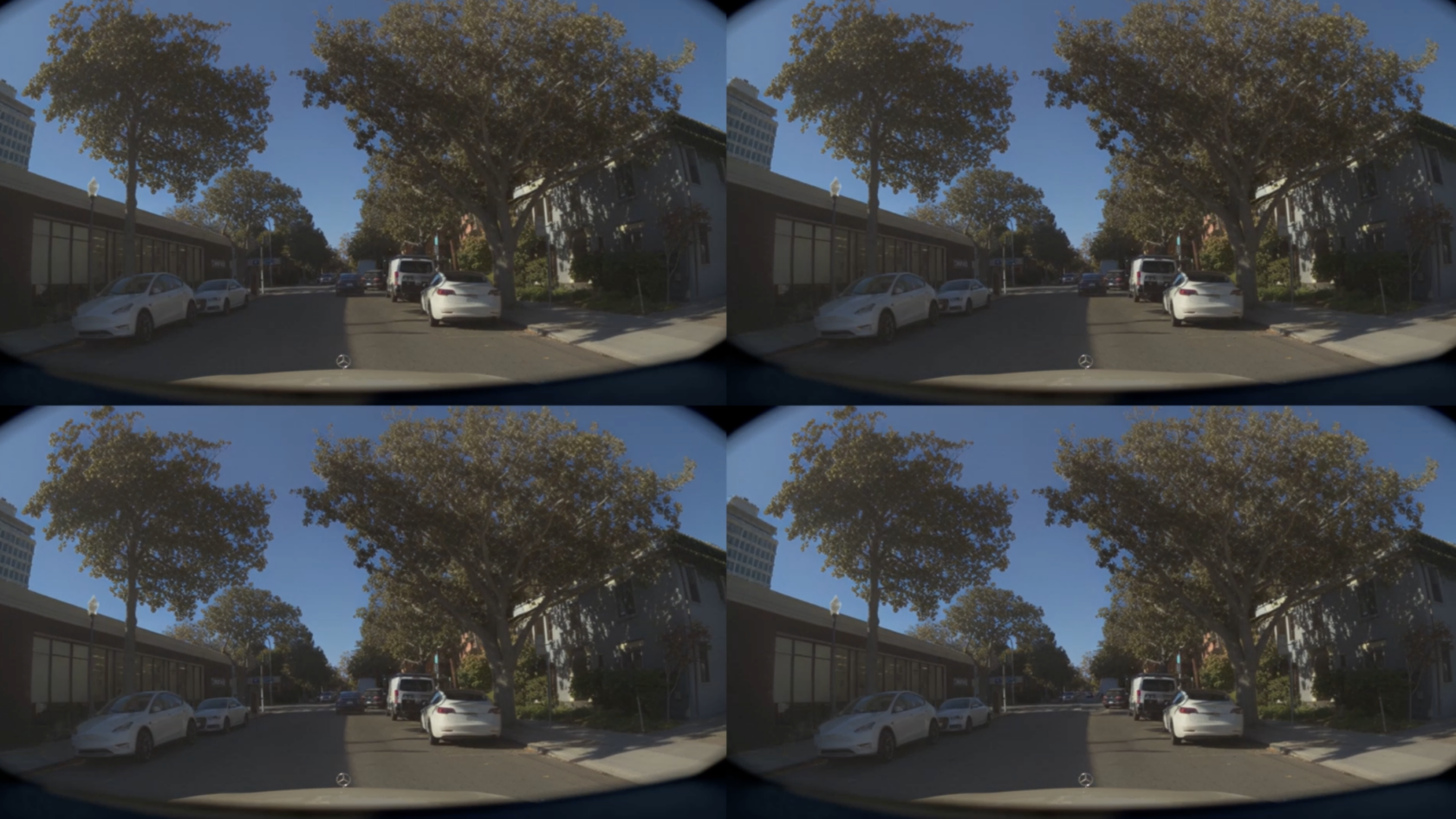
LCDrive addresses these challenges by replacing traditional text-based reasoning with compact latent representations. Instead of generating human-readable steps that consume time and processing power, LCDrive operates within a compressed latent space that captures spatial information efficiently.
This innovative approach allows autonomous vehicles to propose candidate actions and predict potential outcomes without relying on lengthy text processing. The result is a system that maintains comparable output quality while using approximately half the tokens required by conventional methods. Built on NVIDIA’s Alpamayo architecture and trained using existing vehicle data, LCDrive represents a significant leap forward in enabling faster decision-making capabilities for autonomous systems.
NitroGen: Training Agents in Virtual Environments
NVIDIA’s Isaac GR00T serves as a foundation model for humanoid robots built on the principle that exposure to diverse situations facilitates generalization in unencountered scenarios. NitroGen extends this concept into virtual environments by utilizing GR00T architecture to train embodied agents across various gaming landscapes.
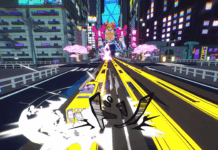
Video games provide rich training grounds due to their structured worlds, defined goals, and well-specified success conditions. NitroGen capitalizes on this by exposing agents to over 1,000 games and 40,000 hours of interaction. The resulting agents learn adaptable behaviors applicable across different environments, enhancing their ability to tackle real-world tasks such as organizing household items based on broad instructions.
This model demonstrates remarkable performance improvements—up to 52%—in low-data conditions where agents have limited exposure to new environments compared to previous state-of-the-art methods. NitroGen’s open-source availability on platforms like GitHub and Hugging Face further encourages collaboration and innovation within the AI community.
New Physical AI Agent Skills Unveiled
Alongside these foundational models, NVIDIA has also unveiled new physical AI agent skills aimed at accelerating research and development in autonomous vehicles, robotics, and vision AI systems. These skills enhance existing frameworks by providing developers with tools that facilitate more efficient experimentation and deployment of advanced AI technologies.
What This Means
The advancements presented by NVIDIA at CVPR 2023 signify a substantial step forward in addressing key challenges faced by developers working with robotics and autonomous systems. With models like GraspGen-X streamlining robotic grasping capabilities, LCDrive enhancing decision-making speed in vehicles, and NitroGen providing robust training environments for embodied agents, these innovations are poised to accelerate progress across multiple sectors including manufacturing, logistics, gaming, and domestic automation. As these technologies continue to evolve and become more accessible through open-source platforms, they will likely drive further advancements in artificial intelligence applications worldwide.
For more information, read the original report here.