






























Northern Territory Wildfires: A Controlled Approach to Landscape Management
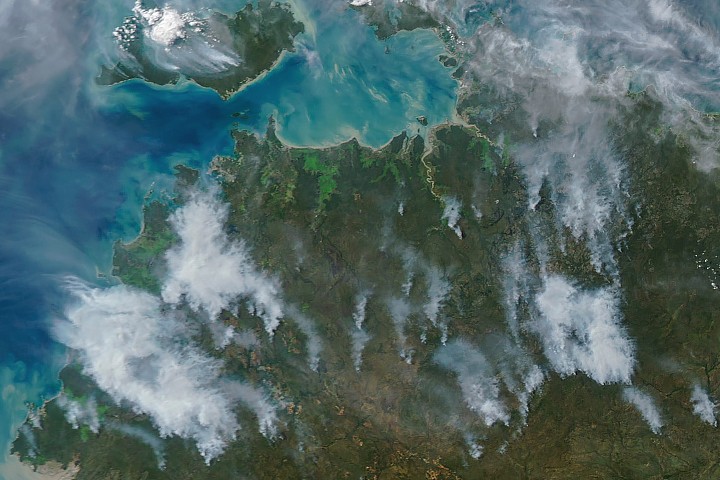
NASA satellites have detected a significant uptick in wildland fires across the Top End and Arnhem Land regions of Australia’s Northern Territory during late May and early June 2026. These fires, often appearing as substantial blazes in satellite imagery, are part of a broader strategy involving prescribed burns aimed at managing the landscape and mitigating more destructive fires later in the dry season.
Understanding Prescribed Fires
Prescribed fires are intentionally set by land managers to reduce fuel loads and create firebreaks, helping to control future wildfires. This technique is particularly effective in the tropical savanna ecosystems of Northern Australia, where fire-adapted grasses and underbrush dominate the landscape. NASA’s Aqua satellite captured striking images of smoke plumes from these fires on May 28, 2026, illustrating the scale of the burning. On days like this, strong updrafts and moderate winds can carry smoke far from its source, creating visible plumes that can be detected from space.
In contrast, satellite observations taken just days before and after this date revealed minimal smoke despite numerous thermal anomalies (hotspots indicating fire activity). This discrepancy highlights how the timing and intensity of prescribed burns can vary significantly throughout the day. Typically, these fires are ignited in the morning when conditions are favorable for controlled burning.
Indigenous Practices Meet Modern Technology
The integration of Indigenous land management practices with contemporary technologies has been pivotal in establishing large-scale landscape management programs in Northern Australia. Projects such as the West Arnhem Land Fire Abatement (WALFA) project and Arnhem Land Fire Abatement aim to harness traditional ecological knowledge alongside modern scientific methods. These initiatives focus on early-season burns to manage vegetation effectively, thereby reducing the risk of more intense fires later in the dry season.
The dry season in this region generally spans from May to September, during which time land managers aim to conduct prescribed burns before conditions become too dry and fire-prone. By strategically managing fire activity early in the season, these programs seek to minimize both emissions and ecological damage associated with uncontrolled wildfires.
Impact on Fire Activity and Emissions
Research indicates that these prescribed burning efforts are achieving their intended outcomes. Satellite analyses suggest a notable shift in fire activity from late to early in the dry season, which correlates with a reduction in high-intensity fires and associated greenhouse gas emissions. This shift not only aids in preserving biodiversity but also contributes positively to climate change mitigation efforts.
By utilizing both traditional Indigenous knowledge and advanced monitoring technologies, land managers are better equipped to respond to changing environmental conditions while promoting sustainable practices that benefit both local communities and ecosystems.
The Future of Fire Management
The ongoing research into these prescribed burning techniques continues to evolve, with studies examining their effectiveness in various contexts across Australia. As climate change intensifies weather patterns and increases fire risks globally, such innovative approaches may serve as models for other regions facing similar challenges.
What This Means
The developments in fire management practices within Australia’s Northern Territory underscore a critical balance between cultural heritage and modern science. By embracing both Indigenous methods and contemporary technology, land managers can effectively address wildfire risks while fostering ecological health. This approach not only protects local biodiversity but also contributes significantly to global efforts aimed at reducing carbon emissions associated with large-scale wildfires.
For more information, read the original report here.







