






























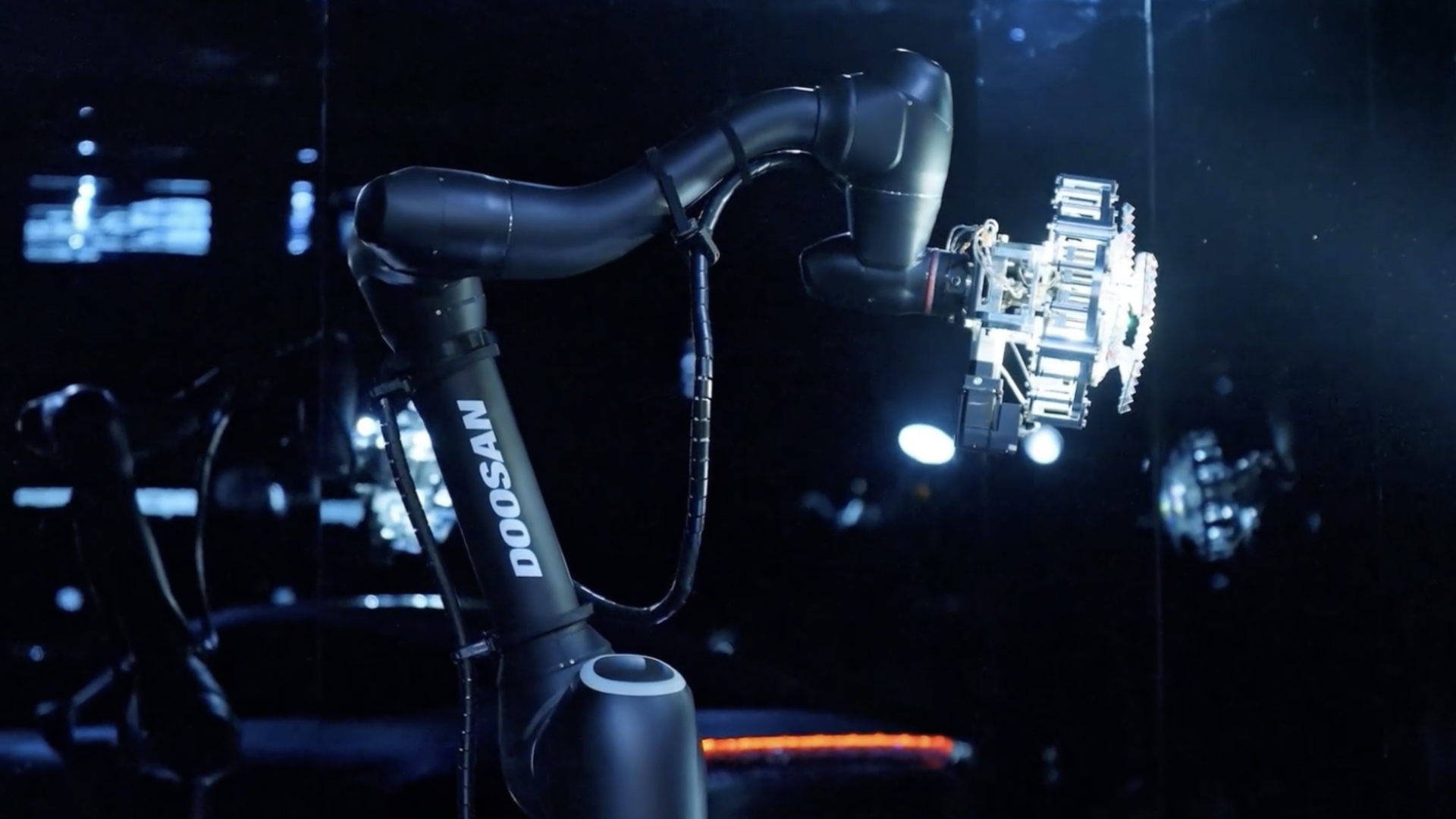
NVIDIA and Doosan Group Enhance Collaboration in AI and Robotics
NVIDIA and Doosan Group have announced an expansion of their partnership aimed at advancing physical AI, robotics, and AI factory infrastructure. This collaboration, which encompasses various sectors including Doosan Robotics, Doosan Bobcat, Doosan Enerbility, and Doosan Corporation Electro-Materials BG, seeks to leverage NVIDIA’s advanced computing platforms alongside Doosan’s expertise in industrial automation and power generation.
The partnership will explore the integration of NVIDIA’s full-stack accelerated computing technologies with Doosan’s capabilities to create next-generation AI infrastructure. This initiative is particularly significant as it aims to enhance the efficiency and adaptability of industrial robots while addressing the growing power demands associated with accelerated computing.
Advancing Physical AI and Robotics
Doosan Robotics is set to incorporate several of NVIDIA’s open robotics frameworks into its operations. These include NVIDIA Isaac Sim and Isaac Lab, as well as the Cosmos open world foundation models. The integration aims to develop the Agentic Robot OS, a sophisticated AI-driven platform that connects perception, reasoning, simulation, learning, and on-device inference.
By utilizing NVIDIA’s physical AI technologies, Doosan Robotics intends to enhance the capabilities of its industrial robots. This includes improving their ability to perceive and react in complex environments through simulation-to-real workflows, physics calibration, and advanced AI reasoning. The collaboration also targets high-value industrial tasks such as depalletizing (the process of unloading products from pallets) and sanding while exploring new robotic designs like dual-arm and humanoid platforms.
This strategic move positions Doosan Robotics to transition from merely providing robotic arms to becoming a comprehensive AI-first robotics solution provider. The broader vision for this initiative encompasses not just robotics but extends into construction machinery and power equipment as well.
Exploring AI Factory Power Solutions
Doosan Enerbility is investigating ways to support NVIDIA’s AI factories through its extensive portfolio of large-scale power infrastructure solutions. This includes gas turbines, steam turbines, small modular reactors, and hydrogen fuel-cell systems from Doosan Fuel Cell. These technologies are critical for powering AI data centers that demand reliable energy sources capable of high efficiency.
The future collaboration may involve designing power supply systems tailored for AI factory deployments while optimizing generation equipment. Additionally, there is potential for evaluating low-carbon energy sources like small modular reactors to meet the increasing power requirements driven by accelerated computing technologies.
Supporting the NVIDIA MGX Ecosystem With Advanced PCB Materials
Doosan Corporation Electro-Materials BG plays a vital role in supporting next-generation AI data center infrastructure through its production of copper clad laminate (CCL), an essential material for printed circuit boards (PCBs). High-performance CCLs are crucial in networking equipment, AI accelerators, and server motherboards where low signal loss and reliability are paramount.
NVIDIA MGX provides a modular reference architecture designed for accelerated systems that aids system manufacturers in constructing servers and rack-scale AI factory infrastructure. As demand for high-performance servers increases alongside bandwidth requirements, advanced PCB materials like CCL will be instrumental in maintaining high-speed signal integrity across the data center ecosystem.
What This Means
The expanded collaboration between NVIDIA and Doosan Group signifies a concerted effort to push the boundaries of what is possible in industrial automation through advanced robotics and reliable power solutions. By integrating cutting-edge technologies from both companies, this partnership aims not only to enhance operational efficiencies but also to set new standards within the industry for autonomous equipment. As these developments unfold, they could reshape how industries approach automation, ultimately leading to more intelligent manufacturing processes that are better equipped to handle complex tasks autonomously.
For more information, read the original report here.







