
























NASA’s Microgravity Soccer Ball Experiment Enhances Understanding of Sports Technology
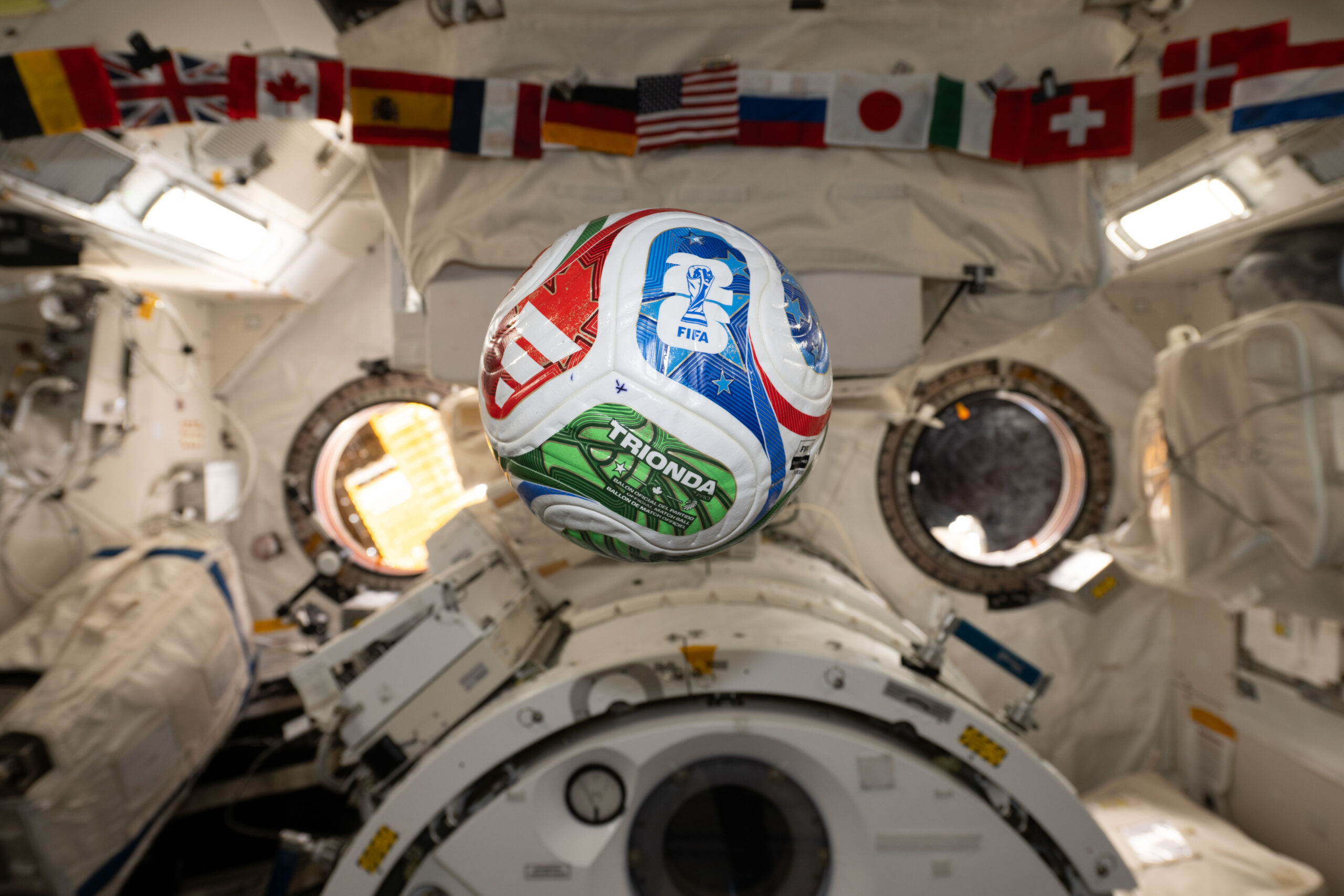
NASA has successfully conducted a unique experiment aboard the International Space Station (ISS) involving soccer balls to explore how internal mass affects motion and stability in microgravity. This research, carried out on March 2, 2026, aims to improve the performance of match-ball sensors used in soccer, ultimately benefiting athletes and fans alike during the FIFA World Cup.
Exploring Motion and Stability in Microgravity
The experiment involved testing soccer balls in a microgravity environment, where traditional physics principles can behave differently than on Earth. By observing how these balls floated and interacted with their surroundings, researchers gained valuable insights into the dynamics of motion in space. The findings are particularly relevant for understanding how embedded technologies, such as sensors designed to enhance player performance, can be optimized for use during games.
This research is part of NASA’s broader mission to leverage discoveries made in space for applications on Earth. The agency has long recognized that the unique conditions of microgravity can provide a fresh perspective on various scientific questions, including those related to sports technology.
The Intersection of Space Research and Sports
Nasa’s work with soccer balls is not an isolated incident; it reflects a growing trend where space exploration intersects with everyday life. As technology developed for space missions finds its way into consumer products, athletes are beginning to benefit from innovations that were once confined to laboratories. For instance, sensors embedded within soccer balls can track performance metrics such as speed, spin rate, and trajectory—data that can significantly enhance training regimens for players.
This particular experiment underscores the potential for space-derived technologies to influence sports science. By understanding how these soccer balls behave in microgravity, researchers can refine sensor designs and improve their accuracy and reliability when used in terrestrial conditions.
Implications for Future Sporting Events
The upcoming 2026 FIFA World Cup will serve as a testing ground for some of these advancements. With millions of fans tuning in worldwide, any improvements in match-ball technology could have a significant impact on gameplay and viewer experience. Enhanced sensor capabilities may allow coaches and teams to analyze player performance more effectively during matches, leading to better strategies and improved outcomes on the field.
Moreover, this research aligns with NASA’s commitment to fostering innovation that transcends traditional boundaries. By collaborating with sports organizations and leveraging its expertise in technology development, NASA is paving the way for advancements that could redefine how sports are played and experienced globally.
Broader Benefits Beyond Sports
The implications of NASA’s research extend beyond just soccer or sports technology. The methodologies developed through this experiment could be applied to various fields requiring precision measurement and analysis. For example, industries such as aerospace engineering, robotics, and even medicine could benefit from enhanced motion tracking technologies derived from this research.
Furthermore, by showcasing how scientific inquiry can lead to practical applications that resonate with the public interest—like sports—NASA continues to inspire future generations of scientists and engineers. This connection between high-level research and everyday activities fosters a culture of curiosity and innovation that is essential for tackling global challenges.
What This Means
The successful testing of soccer balls in microgravity by NASA highlights the agency’s ongoing commitment to translating space research into tangible benefits for life on Earth. As technologies developed for space exploration continue to influence sports science and athlete performance metrics, fans can expect a more dynamic viewing experience during major events like the FIFA World Cup. This intersection of science and sport not only enhances athletic performance but also serves as a reminder of the far-reaching impacts of space exploration on everyday life.
For more information, read the original report here.