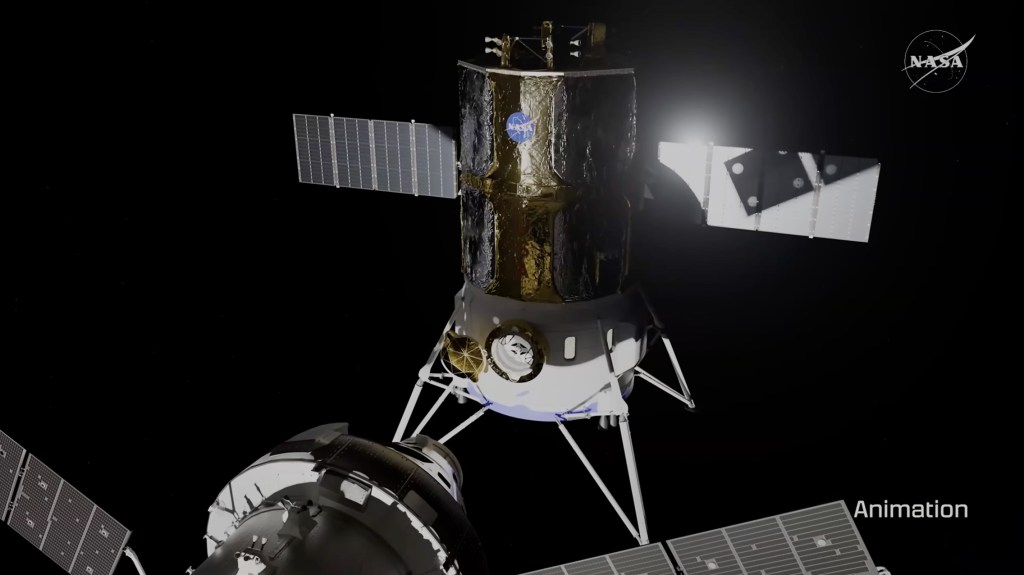
NASA Reveals Updated Plans for Artemis Lunar Landers
NASA has unveiled new details regarding the strategies that Blue Origin and SpaceX are implementing to expedite the development of lunar landers for the Artemis program. This announcement comes as part of NASA’s ongoing efforts to return humans to the Moon by 2025, a critical milestone in its broader goal of establishing a sustainable presence on the lunar surface.
Background on the Artemis Program
The Artemis program is NASA’s ambitious initiative aimed at landing “the first woman and the next man” on the Moon. The program seeks not only to explore lunar terrain but also to lay the groundwork for future missions to Mars. As part of this initiative, NASA has contracted multiple private companies, including Blue Origin and SpaceX, to develop lunar landers capable of transporting astronauts to and from the Moon’s surface.
In 2021, NASA awarded SpaceX a contract worth $2.89 billion to develop its Human Landing System (HLS), which is designed to deliver astronauts from lunar orbit down to the Moon’s surface. Meanwhile, Blue Origin has been working on its own lunar lander design under a separate contract, aiming to provide additional options for crewed lunar missions.
Revised Approaches from Blue Origin and SpaceX
The recent updates from NASA highlight significant adjustments in both companies’ approaches to their respective lunar lander projects. Blue Origin is focusing on a modular design that emphasizes flexibility and scalability. This strategy allows for easier upgrades and modifications in response to evolving mission requirements.
SpaceX, on the other hand, is leveraging its existing Starship technology, which has been under development for interplanetary travel. The company plans to adapt Starship for lunar operations by incorporating features specifically designed for landing on and launching from the Moon’s surface. This includes enhancements aimed at ensuring safety during descent and ascent phases of the mission.
Key Technical Innovations
Both companies are introducing innovative technologies that could significantly enhance their lunar landers’ capabilities. Blue Origin’s modular approach involves using a combination of reusable components that can be easily assembled or disassembled based on mission needs. This not only reduces costs but also shortens development timelines.
SpaceX’s adaptation of Starship includes advanced navigation systems that utilize autonomous landing technology. This system relies on real-time data processing and machine learning algorithms to ensure precise landings in varied terrains, which is crucial given the unpredictable nature of the Moon’s surface.
Challenges Ahead
Navigating these challenges will require both firms to maintain rigorous testing schedules while ensuring compliance with safety standards set forth by NASA. Collaboration between NASA engineers and private company teams will be essential in addressing any technical difficulties that arise during development.
What This Means for Future Lunar Missions
The accelerated efforts by Blue Origin and SpaceX signify a pivotal moment in humanity’s return to the Moon. By refining their designs and focusing on innovative technologies, both companies are positioning themselves as key players in future lunar exploration missions. The success of these landers will not only impact Artemis but could also influence how future missions are conducted beyond Earth’s orbit.
The advancements made through this collaboration between government agencies and private enterprises highlight a shift towards more agile space exploration strategies that could ultimately pave the way for sustained human presence on other celestial bodies.
For more information, read the original report here.