






























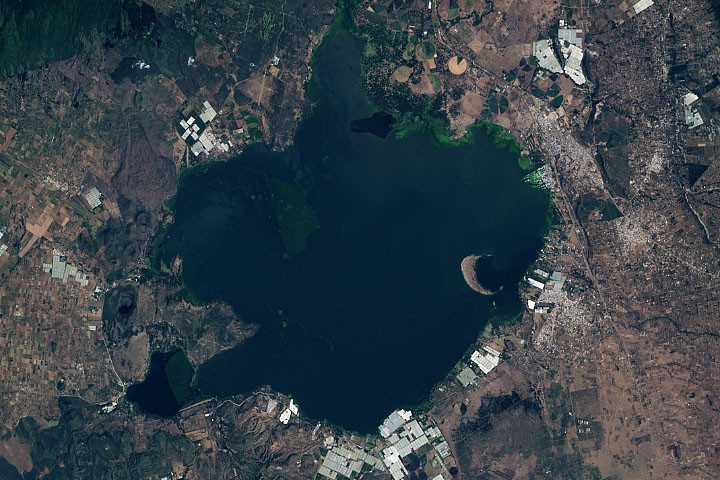
Lake Naivasha Faces Environmental Crisis Amid Rising Water Levels
Lake Naivasha in Kenya is undergoing significant ecological changes, marked by rapidly fluctuating water levels that threaten local communities and industries. Over the past 25 years, the lake has experienced an alarming increase in depth and area, prompting concerns from hydrologists and environmentalists alike. This situation poses a serious risk to the livelihoods of thousands who depend on the lake’s resources.
A Historical Perspective on Lake Naivasha
Historically, Lake Naivasha has been a vital resource for the Maasai people, who utilized its waters for cattle grazing during dry seasons. However, British colonization in the late 19th and early 20th centuries displaced these nomadic communities. The arrival of the “Happy Valley set,” a group of affluent expatriates in the 1920s through 1940s, transformed the area into a hub of luxury estates and excess. Their influence waned by the mid-20th century as Kenya moved towards independence, leading to a shift in focus towards wildlife tourism, flower farming, and geothermal energy production.
Current Environmental Changes
Recent satellite data reveals that Lake Naivasha’s depth has increased by approximately 7 meters (23 feet) since 2010, while its surface area has expanded by about 40 percent—adding roughly 50 square kilometers (19 square miles) of water. According to Mathew Herrnegger, a hydrologist at BOKU University in Vienna, this dramatic rise is primarily attributed to increased rainfall. Between 2010 and 2020, mean annual rainfall rose by around 30 percent compared to the previous decade, with high-intensity rainfall increasing by an astonishing 318 percent.
The implications of these changes are dire. Homes, flower farms, and roads along the lake’s shores have been inundated, displacing thousands of residents. Areas such as Kihoto have seen entire neighborhoods submerged under water, affecting infrastructure including police stations and power substations. The merging of Lake Oloidien with Naivasha has further complicated matters by introducing saline and alkaline water into what was once a freshwater system.
The Economic Impact on Local Communities
The economic ramifications of rising water levels are severe for local industries reliant on Lake Naivasha. The flower industry alone generates hundreds of millions of dollars annually in exports but is now facing significant losses due to flooding. Greenhouses that were once set back from the shoreline have now become lakeside properties. Communities such as Sulmac Village and Karagita are witnessing their agricultural lands vanish beneath rising waters.
Crescent Island, previously a peninsula near former colonial estates, has transformed into a wildlife sanctuary due to encroaching waters. As hippos increasingly inhabit areas formerly used for fishing or tourism, conflicts between humans and wildlife are becoming more frequent. This shift not only disrupts local economies but also alters traditional ways of life centered around fishing and agriculture.
Ecological Consequences and Future Research Needs
The ecological landscape around Lake Naivasha is also changing dramatically due to increased aquatic vegetation like water hyacinth. This invasive plant species has proliferated over the last two decades, complicating fishing activities and potentially contributing to rising water levels by reducing evaporation rates. Researchers like Jamie Shutler from the University of Exeter suggest that tectonic activity may also play a role in altering groundwater recharge rates into the lake.
“Given the large number of people who rely on this lake for food and their livelihoods,” Shutler stated, “the change we’re seeing from satellite imagery combined with stories of displacement is alarming.” He emphasized the need for further research to understand how much water volume is changing each year and what factors are driving these fluctuations.
What This Means
The ongoing crisis at Lake Naivasha underscores a pressing environmental challenge that extends beyond local communities to impact national economies reliant on agriculture and tourism. As climate change continues to influence weather patterns globally, it becomes increasingly crucial for stakeholders—including government agencies, scientists, and local communities—to collaborate on sustainable solutions that mitigate flooding risks while preserving vital ecosystems. Understanding these dynamics will be essential for safeguarding both human livelihoods and natural resources in this historically rich region.
For more information, read the original report here.







